What Is a Plastic Card Printer? A Complete Overview
Table of Contents []
- What Is a Plastic Card Printer? Your Complete Guide from Plastic Card ID
- Who Actually Uses Plastic Card Printers?
- Choosing the Right Printer for Your Volume and Needs
- Supplies and Consumables: Keeping Your Program Running
- Frequently Asked Questions About Plastic Card Printers
- Why In-House Card Printing Gives You Complete Control
- Get Started with Plastic Card ID Today
What Is a Plastic Card Printer? Your Complete Guide from Plastic Card ID
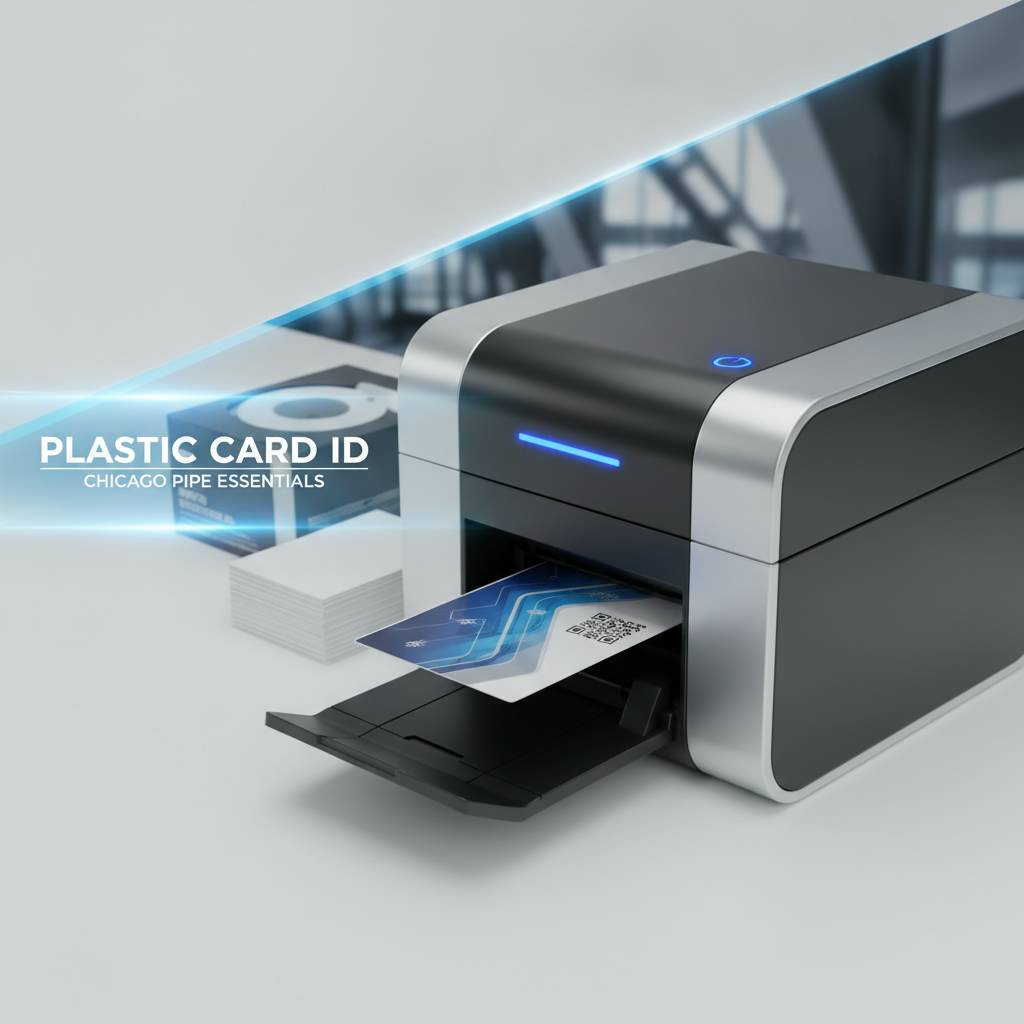 Picture this: your front desk hands a new employee a laminated paper badge held together with a lanyard clip, the edges already curling. Now picture handing them a crisp, durable, professionally printed PVC card with their photo, title, and an encoded magnetic stripe - ready to swipe at every secure door in your facility. That gap, from flimsy paper to professional plastic, is exactly what a plastic card printer bridges.
A plastic card printer is a specialized hardware device designed to print high-resolution images, text, barcodes, and other identifying data directly onto PVC plastic cards - the same CR80 credit-card-sized format most people carry in their wallets every day. These machines do far more than print. Depending on the model and configuration, they encode magnetic stripes, write to smart chips, apply laminate overlays, and produce edge-to-edge full-color output at speeds ranging from a handful of cards per hour to thousands per day.
Plastic Card ID has spent over 25 years putting these machines into the hands of businesses across every industry in the United States. With more than 100,000 customers served, the team at CPE has seen virtually every card printing challenge imaginable - and has the product lineup to match.
The Core Technology Behind Card Printing
Most plastic card printers use a process called dye-sublimation (or dye-sub) printing. A ribbon - typically a YMCKO ribbon containing panels of Yellow, Magenta, Cyan, Black, and Overlay - is heated by a thermal print head at precise temperatures. The dye converts from solid to gas and bonds directly into the surface of the PVC card, producing photographic-quality color output that resists fading and smearing.
This is fundamentally different from inkjet or laser printing. The colors are embedded into the card substrate rather than sitting on top of it. The result is an image that won't smudge when wet, peel when scratched, or fade after a few weeks in someone's wallet. For organizations where card durability and professional appearance are non-negotiable, dye-sublimation is the gold standard.
Some printers also support direct-to-card (DTC) and retransfer printing methods. Retransfer printing - used in premium systems like the Evolis Agilia - prints onto a clear film first, then thermally bonds the film to the card. This allows true edge-to-edge printing and is ideal for cards with uneven surfaces like smart card chips.
Single-Sided vs. Dual-Sided Printing
Entry-level printers typically print on one side of the card at a time. To print both sides, you manually flip the card and reinsert it - workable for low volumes, but tedious at scale. Mid-range and professional models include a built-in flipper module that automatically rotates the card and prints both sides in a single pass without operator intervention.
Dual-sided printing matters enormously for ID card programs. Think about a standard employee badge: the front carries the employee's photo, name, title, and company logo. The back might hold a magnetic stripe, barcode, emergency contact information, or department-specific access coding. Getting all that information on both sides cleanly and efficiently requires a printer with duplex capability.
Encoding: Beyond Just Printing
Here is where plastic card printers truly separate themselves from ordinary printers. Many models offered by CPE can be configured with encoding modules that write data to magnetic stripes (standard HiCo or LoCo formats), contact smart chips, and contactless RFID/proximity chips - all in a single pass through the printer.
This capability transforms a card printer into a complete card issuance system. An access control card printed and encoded in-house is immediately functional. A membership card with a magnetic stripe is ready to swipe at the point of sale the moment it exits the printer. No waiting on an outside vendor, no minimum order quantities, no lead times - just cards, on demand, exactly when you need them.
| Printer Model | Volume Range | Sides | Encoding Options | Best For |
|---|---|---|---|---|
| Evolis Badgy200 | Up to 1,000 cards/year | Single | None (base) | Small clubs, startups, schools |
| Evolis Zenius | 1,000 - 3,000 cards/month | Single | Mag stripe optional | Small-medium offices, gyms |
| Evolis Primacy2 | Up to 6,000 cards/month | Dual | Mag stripe, smart chip | Corporate ID programs, healthcare |
| Evolis Agilia | High volume | Dual | Full encoding suite | Premium ID, retransfer quality |
| Fargo / Zebra Models | Varies by model | Single or Dual | Security encoding options | Government, law enforcement, enterprise |
| Matica Event Printer | High-speed burst | Dual | Full suite | Events, conferences, on-site badging |
Who Actually Uses Plastic Card Printers?
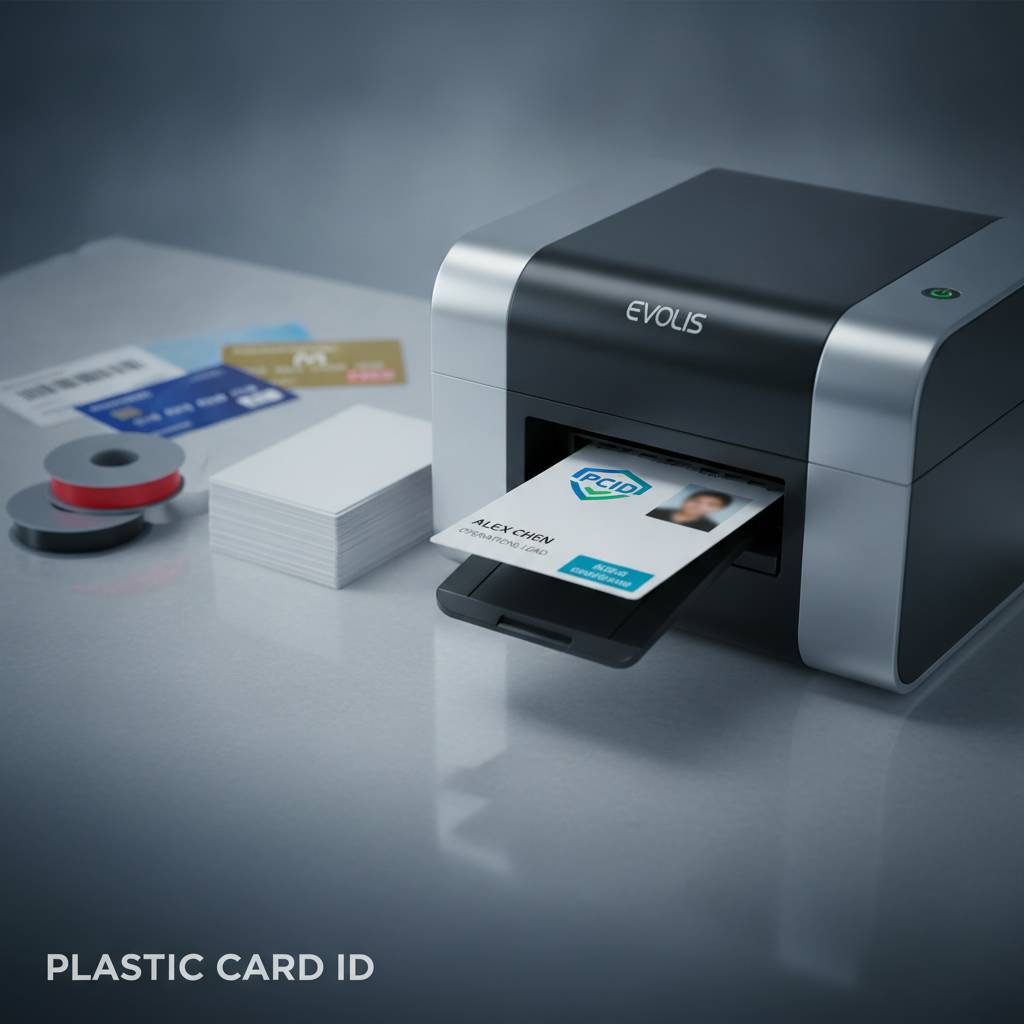 The honest answer is: far more organizations than most people initially assume. The moment you consider every situation where a person needs to carry a credential that identifies them, grants them access, rewards their loyalty, or facilitates a transaction - you're looking at a potential card printing application. That scope is enormous.
Plastic Card ID supports customers across virtually every vertical. Hospitals and healthcare networks print staff ID badges that double as access control credentials. Universities and school districts issue student IDs in the thousands every fall. Hotels encode key cards at the front desk. Retailers and restaurants run loyalty and membership card programs. Security-conscious enterprises deploy smart-chip access cards. Event organizers badge thousands of attendees in hours.
Employee ID and Access Control Programs
Corporate ID badge programs represent one of the largest and most consistent use cases for in-house card printing. Printing employee credentials in-house means a new hire can have a fully functional, photo ID access card on their first day - not two weeks later after a vendor fulfills a batch order. For companies with even moderate staff turnover, that responsiveness alone justifies the investment.
Access control cards - whether magnetic stripe, proximity, or smart chip - can be encoded directly at the printer during the card production process. This eliminates the need to send cards to a separate encoding station or third-party facility. The entire workflow, from template design to printed and encoded card, can happen at a single workstation in minutes.
Membership, Loyalty, and Gift Cards
Retail, fitness, healthcare, and hospitality businesses all benefit enormously from in-house card printing for member-facing programs. A professionally printed PVC loyalty card signals to your customer that their membership means something - it's not a paper punch card; it's a credential worth keeping in their wallet next to their credit cards.
Magnetic stripe encoding on loyalty and membership cards allows direct integration with most point-of-sale systems. Print the card, encode the member's account number on the stripe, and hand it over at the counter during signup - the entire process can take under three minutes. CPE carries the ribbons, blank cards, and encoding upgrades to support exactly this workflow.
Events, Conferences, and On-Site Badging
Event credential printing is a different beast entirely. Speed is everything. When 500 registrants show up in the first hour of your conference, you need a printer that can keep pace without overheating or jamming. The Matica Event Printer was engineered precisely for this scenario - high-speed, high-reliability burst printing for large-scale events where downtime is simply not an option.
On-site badge printing also offers event organizers enormous flexibility. Last-minute registrations, walk-ins, and VIP additions can all receive a properly printed, professionally branded credential on the spot. No pre-printed generic badges, no hand-written names - every attendee gets a personalized card that reflects the professionalism of your organization.
Choosing the Right Printer for Your Volume and Needs
Volume is the first filter. Buying a high-throughput industrial printer for an organization that prints 200 cards a year is wasteful. Buying an entry-level desktop unit for a company that needs 5,000 cards a month is a recipe for burned-out print heads and missed deadlines. Getting the match right matters enormously for both performance and cost of ownership.

Beyond raw volume, consider your encoding requirements, whether you need dual-sided printing, and how much operator involvement you can realistically support. A busy HR department that prints new hire badges daily will have very different workflow needs than an IT team that runs one large card batch per quarter.
Entry-Level: The Evolis Badgy200
For organizations printing fewer than 1,000 cards per year - think small nonprofits, community clubs, boutique hotels, or emerging startups - the Evolis Badgy200 is the straightforward answer. It delivers genuine professional-quality color output at a price point that makes in-house printing financially sensible even at modest volumes. Setup is simple, the software is beginner-friendly, and the card quality is well above anything you'd produce on a standard office printer.
The Badgy200 is single-sided and does not include encoding as a base configuration, which is perfectly adequate for the use cases it targets - photo ID badges, visitor passes, name badges, and basic membership cards. Ribbons and blank cards from Plastic Card ID keep the operating cost per card reasonable, and the printer's compact footprint means it fits comfortably on any desk or credenza.
Mid-Range: Evolis Zenius and Primacy2
The Zenius sits in a productive middle ground - higher throughput than the Badgy200, optional magnetic stripe encoding, and a more robust build suited for regular daily use. For gyms, medical clinics, mid-size businesses, and educational institutions printing 1,000 to 3,000 cards per month, it represents excellent value. The Primacy2 steps it up further with dual-sided printing capability and a broader range of encoding options, including both magnetic stripe and smart chip configurations.
The Primacy2 is genuinely the workhorse of many corporate ID programs. It handles the volumes that mid-size enterprises actually need, produces sharp, photographic-quality output on both sides of the card, and integrates seamlessly with most card issuance software platforms. If you're building a serious, scalable in-house card program, this is a strong starting point for the conversation.
Contact Plastic Card ID at 800.835.7919 to discuss which mid-range configuration best matches your card program's encoding and volume requirements.
Premium: Evolis Agilia and Enterprise-Grade Options
When card quality is absolutely non-negotiable - think executive ID programs, government-issued credentials, financial institution access cards, or premium membership programs where the card itself is part of the brand experience - the Evolis Agilia delivers retransfer printing with edge-to-edge coverage and output quality that is genuinely difficult to distinguish from cards produced by major commercial card manufacturers.
Fargo and Zebra printers occupy a similarly premium space, with particularly strong reputations in security-sensitive environments. Law enforcement agencies, correctional facilities, government contractors, and enterprise organizations with strict security standards frequently deploy these platforms. CPE stocks and supports the full lineup, and the team can advise on which platform best fits your security and integration requirements.
Supplies and Consumables: Keeping Your Program Running
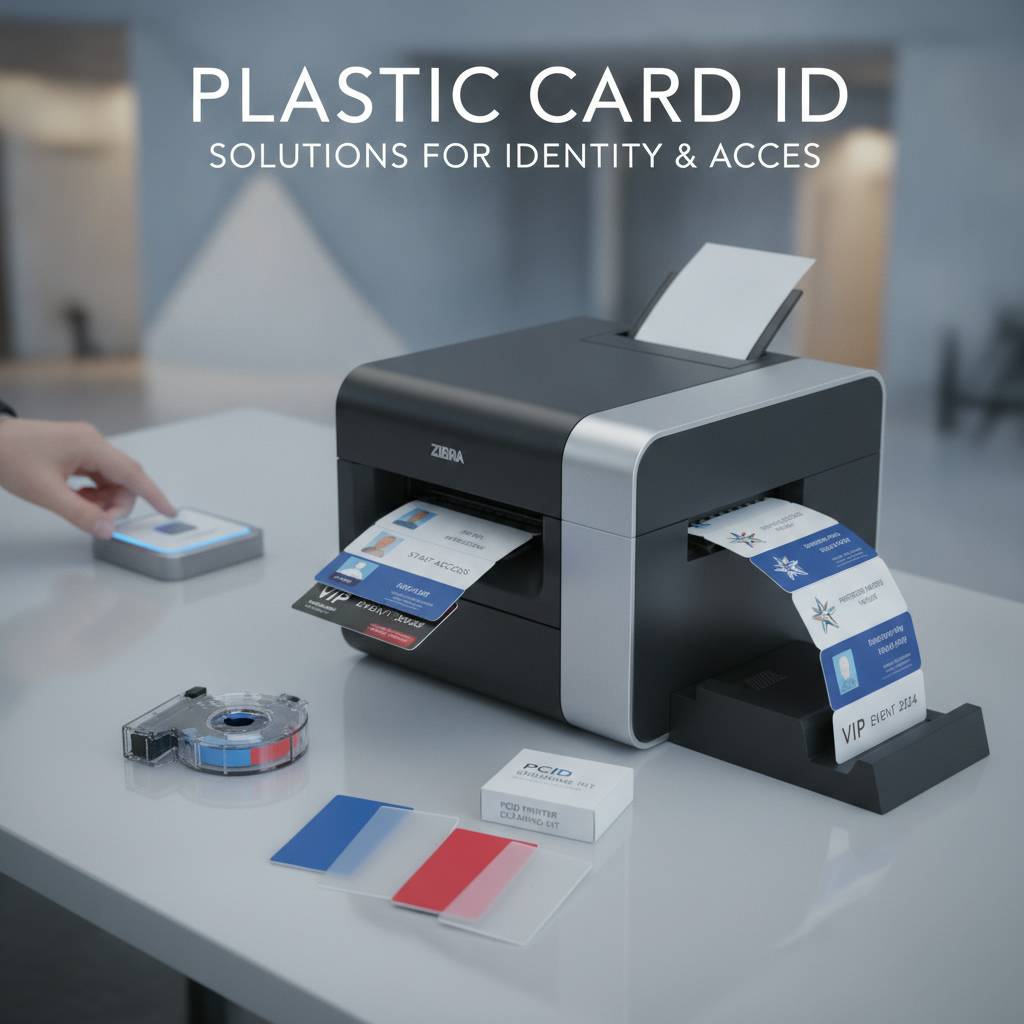 A card printer without supplies is just an expensive paperweight. The ongoing cost and availability of ribbons, cleaning kits, and blank cards is as important as the initial printer purchase - arguably more so over the lifetime of a card program. Plastic Card ID stocks the full range of consumables for every printer in its lineup, so customers are never left hunting for a compatible ribbon or wondering whether a generic substitute will damage their print head.
Using manufacturer-compatible ribbons and cleaning kits isn't just a best practice - it's often a requirement for maintaining printer warranties. Off-brand ribbons can run cooler or hotter than the print head is calibrated for, leading to degraded image quality, incomplete dye transfer, and accelerated wear on precision components. The investment in genuine supplies pays for itself in consistent output and reduced repair costs.
Ribbon Types and When to Use Each
YMCKO ribbons are the standard choice for full-color ID card printing. Each ribbon panel handles a specific function: Yellow, Magenta, and Cyan create the full-color image; the K panel prints sharp black text and barcodes; the Overlay panel applies a clear protective coating that significantly extends card life. For most employee ID and membership card applications, YMCKO is the correct default choice.
Monochrome ribbons - available in black, silver, gold, red, blue, and other colors - are used when full-color printing isn't needed. They print faster, cost less per card, and are ideal for applications like visitor badges, basic access cards, or loyalty cards where a single-color design is sufficient. Specialty ribbons for holographic overlays and security printing are also available for organizations with more demanding authentication requirements.
Cleaning Kits and Maintenance
Regular cleaning is not optional. Dust, card debris, and ribbon residue accumulate inside the printer and on the rollers, degrading print quality over time and eventually causing mechanical issues. Most card printers ship with a cleaning card to use after every ribbon change, and Plastic Card ID supplies cleaning kits - cleaning cards, cleaning swabs, and cleaning rollers - to keep machines running at peak performance between ribbon changes.
A printer that receives consistent, scheduled cleaning will routinely outlast a neglected machine by years. This is simple preventive maintenance with a significant return on investment. CPE recommends establishing a formal cleaning schedule tied to ribbon changes from day one of printer operation.
Input Hoppers, Card Carriers, and Accessories
For high-volume operations, extended input hoppers allow the printer to hold larger card batches without constant reloading - a meaningful productivity improvement when processing hundreds of cards at a time. Card carriers and sleeves protect completed credentials during distribution and storage, extending the usable life of each card and maintaining the professional appearance your program demands.
Lamination modules, available as add-ons for select printer models, apply a durable laminate layer to the card surface that dramatically increases scratch resistance and tamper evidence. For credentials that need to withstand heavy daily use - employee access cards, student IDs, healthcare worker badges - lamination is a worthwhile upgrade worth discussing with the Plastic Card ID team.
Frequently Asked Questions About Plastic Card Printers
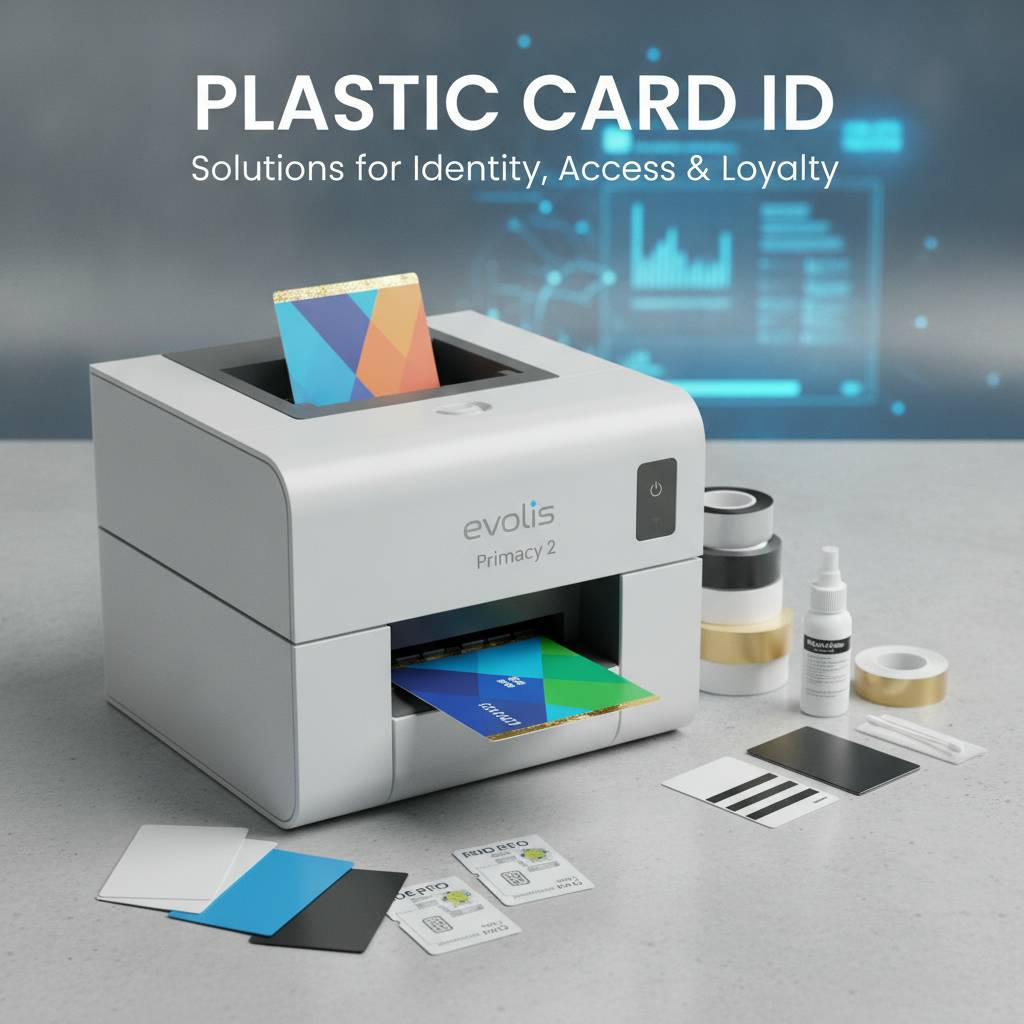 After 25 years and over 100,000 customers, the Plastic Card ID team has heard every question in the book. Here are the ones that come up most consistently from buyers who are new to in-house card printing.
What Does It Actually Cost to Print Cards In-House?
The cost calculation has two components: the upfront hardware investment and the ongoing cost per card. Entry-level printers like the Badgy200 start at accessible price points, while professional-grade systems like the Primacy2 or Agilia represent a larger initial investment. Ribbons for full-color YMCKO printing typically yield a cost per card in the $0.25-$1.00 range depending on the ribbon type and model, which is dramatically lower than ordering pre-printed cards from an outside vendor once you factor in setup fees, minimum orders, and lead times.
For organizations printing more than a few hundred cards per year, in-house printing almost always delivers a lower total cost of ownership within 12-18 months compared to outsourced card production. The break-even point arrives faster than most buyers initially expect, and the operational advantages - on-demand printing, immediate personalization, no vendor lead times - add value that doesn't appear in a simple cost-per-card calculation.
What Software Do I Need?
Most card printers come bundled with basic card design software adequate for straightforward ID badge programs. For more sophisticated programs - integrating with HR databases, pulling photos from Active Directory, managing card templates across multiple departments - third-party card issuance software platforms are available and compatible with all major printer brands CPE carries.
The good news is that none of the major card design platforms require specialized IT expertise to operate. Most HR coordinators or office administrators can learn the core workflow - importing data, laying out a template, connecting to the printer - within a few hours. If your needs are straightforward, the bundled software may be all you ever need.
How Long Does a Card Printer Last?
- Print head lifespan is typically rated in cards printed - most professional models are rated for 100,000 cards or more per print head under normal operating conditions.
- Regular cleaning directly extends print head life and overall printer longevity. Printers that receive scheduled maintenance consistently outperform neglected units.
- Ribbon compatibility matters; using manufacturer-recommended ribbons reduces print head wear compared to off-brand alternatives.
- Operating environment plays a role. Printers in clean, climate-controlled spaces experience significantly less mechanical wear than those in dusty or humid environments.
- Most professionally maintained card printers serve reliably for five to ten years or more, representing excellent long-term value for the investment.
Why In-House Card Printing Gives You Complete Control
There is a deeper reason organizations invest in card printing hardware beyond the cost math. Control. When you print in-house, you decide when cards are produced, how they look, what data they carry, and who has access to that production process. There is no waiting on a vendor's production schedule, no minimum order quantity forcing you to print 500 cards when you only need 20, and no sensitive employee data traveling through an external fulfillment chain.
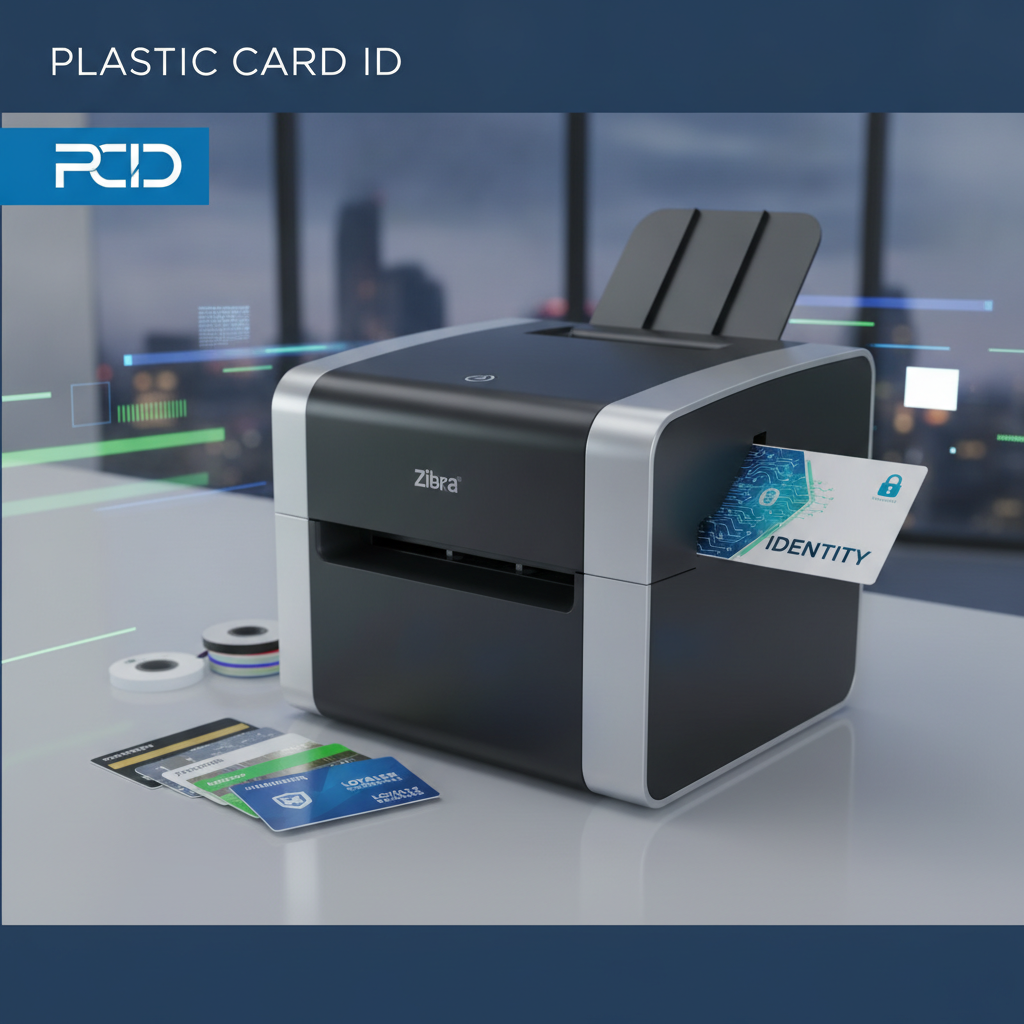
For industries where security and confidentiality are paramount - healthcare, finance, government contracting, law enforcement - that data control is not a minor convenience. It's a fundamental requirement. In-house card printing keeps personally identifiable information within your organization's own four walls from the moment a card is designed to the moment it is handed to its owner.
Print on Demand Without Minimums
One of the most immediate practical benefits of in-house printing is the ability to produce exactly as many cards as you need, exactly when you need them. Hire a new employee on a Monday? Their ID badge is ready by Monday afternoon. Add a new member to your fitness club at 7:00 pm on a Tuesday? Their membership card is printed and in their hand before they leave. No batching, no waiting, no scrambling to explain to a new hire why their access card won't be ready until next week.
This on-demand capability also eliminates card waste. Outsourced card programs frequently result in boxes of pre-printed cards for employees who left, members who never returned, or designs that changed after a rebrand. With in-house printing, every card produced has a specific purpose - waste drops dramatically and inventory management becomes almost trivially simple.
Personalization at Every Level
Every card that comes off a properly configured in-house printer can be uniquely personalized. Photo, name, title, department, employee number, expiration date, encoded magnetic stripe data - all of it unique to the individual cardholder, produced in a single pass. This level of personalization is standard with in-house printing and would be prohibitively expensive per-card with most outside vendors.
For loyalty programs and membership cards, personalization drives engagement. A card with a member's name on it feels different from a generic, anonymous plastic card - and that psychological distinction translates into members who are more likely to carry the card, use it, and feel genuinely connected to the brand it represents.
Eliminating Lead Times and Vendor Dependencies
Vendor relationships introduce risk. Minimum orders, production delays, shipping timelines, price increases, and supplier changes are all variables outside your control when card production lives outside your organization. Bring it in-house and those variables disappear. Your card program runs on your schedule, with your equipment, using supplies stocked by a proven partner like CPE who has been in the industry for over 25 years.
Contact Plastic Card ID at 800.835.7919 to speak with a specialist about transitioning from outsourced card production to a fully self-sufficient in-house printing program.
Get Started with Plastic Card ID Today
 Whether you are setting up your organization's first card printing program or upgrading an aging printer that has finally reached the end of its service life, Plastic Card ID has the expertise, the product lineup, and the supply chain to support you at every step. From the Evolis Badgy200 for modest annual volumes to the Evolis Agilia and Matica Event Printer for high-demand professional applications, the right solution for your specific requirements is in the catalog.
More than 100,000 businesses across the United States have trusted Plastic Card ID to equip their card programs - with printers, ribbons, cleaning kits, encoding upgrades, and the knowledgeable support that comes with a quarter century in this industry. That depth of experience means you get real guidance, not a generic recommendation from a drop-ship catalog.
Call Plastic Card ID now at 800.835.7919 - the team is ready to help you identify exactly the right printer, supplies, and configuration to make your card program fast, professional, and completely under your control.
Previous Page