Plastic Card Printer for Employee ID Cards: Top Picks
Table of Contents []
- Why Plastic Card ID Is the Go-To Source for a Plastic Card Printer for Employee ID Cards
- Understanding Your Options: The Card Printer Brands Carried by Plastic Card ID
- Essential Supplies That Keep Your Card Program Running
- Matching Printer to Program: A Buyer's Guide for HR and Facilities Teams
- Applications Beyond the Employee Badge: What Else Can These Printers Do?
- Frequently Asked Questions About Plastic Card Printers for Employee ID Cards
- Get Started With Plastic Card ID - Your Trusted Source for Employee ID Card Printers
Why Plastic Card ID Is the Go-To Source for a Plastic Card Printer for Employee ID Cards
 Printing employee ID cards in-house is one of those decisions that, once made, rarely gets reversed. The control, the speed, the ability to issue a card the moment someone walks through the door on their first day - it changes how organizations operate. Plastic Card ID has been equipping businesses across the United States with professional-grade card printing hardware for over 25 years, serving more than 100,000 customers along the way. That kind of track record doesn't happen by accident.
Whether you're outfitting a small nonprofit with a modest card program or managing enterprise-scale ID issuance across multiple facilities, CPE carries printers, supplies, and accessories matched to every production level. The lineup spans trusted industry names - Evolis, Fargo, Zebra, and Matica - brands that professionals in security, HR, and facilities management have relied on for decades. This isn't a catalog of fringe hardware. These are proven tools built for serious business use.
This page covers everything you need to evaluate, select, and operate a plastic card printer for employee ID cards - from understanding print volumes and feature sets to choosing the right ribbons and accessories to keep your program running without interruption.
The Real Value of In-House ID Card Printing
Outsourcing ID card production sounds convenient right up until you need a card today and your vendor's turnaround is five business days. In-house printing eliminates that entirely. Cards get produced when they're needed - for new hires, replacements, temporary access credentials, updated roles, or last-minute event staff.
Beyond speed, in-house printing puts full personalization in your hands. Every card can carry a unique photo, name, title, barcode, magnetic stripe encoding, or smart chip - customized per individual, per department, or per access tier. That level of specificity simply isn't practical when you're waiting on a third party.
There's also the matter of data security. Employee ID cards often carry sensitive information or are linked to access control systems. Keeping card production on-site means that data never leaves your facility to sit in an outside vendor's queue. For industries like healthcare, finance, government, and education, that distinction matters enormously.
Who Needs a Dedicated Card Printer?
The answer is broader than most people initially assume. If your organization issues badges to employees, contractors, visitors, students, members, or any recurring population of people who require visual identification, a dedicated card printer pays for itself quickly - often within the first year of use.
Organizations printing even 200 cards per year typically find that per-card costs from outside vendors far exceed what they'd spend operating their own printer with consumables. The math becomes even more compelling once you factor in rush fees, shipping charges, and the administrative overhead of managing an outside vendor relationship.
CPE works with businesses across virtually every sector - corporate campuses, hospitals, school districts, hotels, fitness clubs, retail chains, and event companies. The use cases are different; the underlying need is the same: reliable, professional card output produced on your schedule, not someone else's.
Contact Plastic Card ID Before You Buy
Choosing the right card printer involves more variables than most buyers anticipate. Volume, card type, encoding needs, lamination, and budget all factor into the decision - and getting the wrong printer for your workflow is a costly mistake. The team at Plastic Card ID is available to help you match hardware to your actual requirements before you commit.
Reach out directly at 800.835.7919. A quick conversation about your card program can save significant time, money, and frustration down the road. This kind of pre-purchase guidance is part of what has kept CPE the preferred supplier for over 100,000 businesses nationwide.
| Print Volume | Recommended Models | Best For |
|---|---|---|
| Under 1,000 cards/year | Evolis Badgy200 | Small businesses, nonprofits, startups |
| 1,000-6,000 cards/month | Evolis Zenius, Evolis Primacy2 | Mid-size employers, schools, hospitals |
| High-quality edge-to-edge output | Evolis Agilia | Premium ID programs, enterprise HR |
| Security-focused ID programs | Fargo, Zebra | Government, finance, access control |
| High-speed on-site events | Matica Event Printer | Conferences, trade shows, large events |
Understanding Your Options: The Card Printer Brands Carried by Plastic Card ID
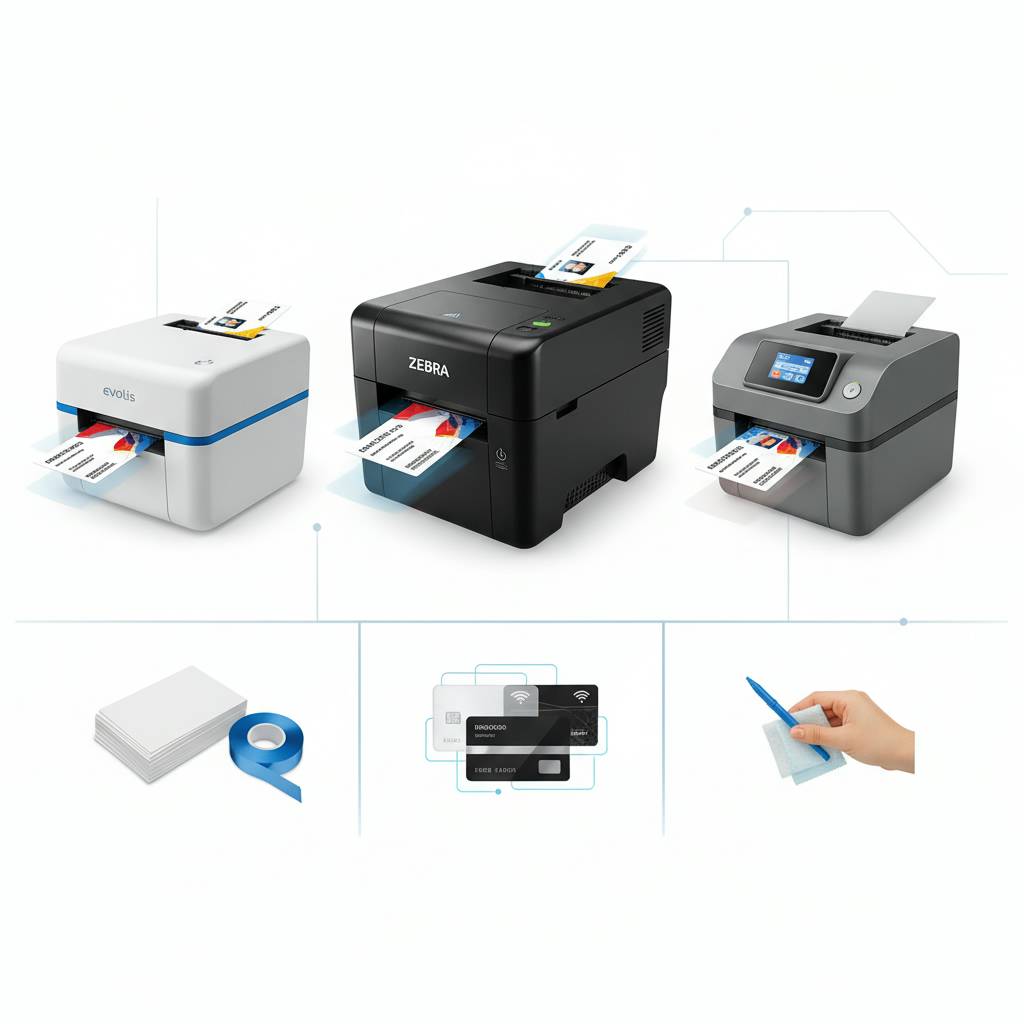 Not all card printers are built the same - and frankly, not all suppliers are equipped to explain the differences in any meaningful way. CPE carries a deliberately curated lineup of professional-grade hardware from four major brands, each with distinct strengths, price points, and ideal use cases. Knowing the landscape before you shop saves time and helps you avoid under-buying or over-specifying your setup.
The brands in this lineup - Evolis, Fargo, Zebra, and Matica - are not interchangeable. They each occupy specific niches within the ID card printing market, and choosing the right brand often comes down to your security requirements, output quality standards, and production volume. Here's what you need to know about each.
Evolis: Versatile Performance Across Every Scale
Evolis is among the most recognized names in professional card printing, and with good reason. Their product range spans from the compact, affordable Badgy200 - ideal for organizations printing fewer than 1,000 cards per year - all the way up to the Agilia, a premium printer delivering edge-to-edge, full-color output at a quality level that genuinely impresses even experienced card program managers.
The Evolis Zenius and Primacy2 occupy the productive middle ground, handling workloads between 1,000 and 6,000 cards per month without complaint. Both models support dual-sided printing and magnetic stripe encoding, making them appropriate for employee ID programs that require back-of-card data or access control integration. These are workhorses - reliable, consistent, and well-supported.
For organizations that want the cleanest possible output - full-bleed printing with no white borders, photographic-quality color, and a finished product that looks as professional as anything produced by an outside vendor - the Evolis Agilia sets the standard. It's the choice for enterprise HR departments, premium membership programs, and any application where card appearance is a direct reflection of organizational brand.
Fargo and Zebra: Purpose-Built for Security and Durability
When an ID card program is tied to physical access control, logical access, or government compliance requirements, the printer hardware needs to meet a higher bar. Fargo and Zebra card printers are built with exactly those environments in mind. Robust construction, advanced encoding support, and security-conscious design make both brands standard choices for industries where card integrity is non-negotiable.
Fargo printers are well-regarded for their lamination capabilities and the ability to add security overlaminates directly during the printing process - a feature that significantly raises the barrier to card fraud and unauthorized duplication. Zebra's lineup offers complementary strengths, particularly around encoding flexibility and high-throughput configurations suited to large-scale issuance programs.
Matica: Speed When It Counts Most
There's a specific scenario where conventional desktop card printers simply can't keep pace: high-volume on-site badge printing at conferences, trade shows, sporting events, or large-scale corporate gatherings. The Matica Event Printer was designed for exactly this environment - fast, reliable, and capable of producing hundreds of credentials in a compressed timeframe without sacrificing output quality.
For event managers and facilities teams who need to credential large groups quickly, the Matica is a purpose-built solution rather than a compromised general-purpose printer pressed into service. When speed and volume converge, Matica delivers. CPE stocks Matica hardware and the compatible consumables to keep event printing operations running from setup through final credential.
How to Choose Between Brands
The honest answer is that brand selection should follow needs analysis, not the other way around. Volume first. Then encoding requirements. Then output quality standards. Then budget. A small HR department issuing 300 cards per year doesn't need a Fargo lamination system; a government contractor issuing PIV-compliant credentials absolutely does.
CPE can walk you through this decision process in a single phone call. There's no pressure to buy up - and no benefit to undersizing your setup only to replace it six months later. The goal is the right printer for your actual program, today and for the next several years.
Essential Supplies That Keep Your Card Program Running
A card printer without the right consumables is just a machine sitting on a desk. The supplies side of a card program deserves as much attention as the hardware itself - and Plastic Card ID stocks everything needed to maintain consistent, high-quality output from day one onward. Running out of ribbon mid-batch or using the wrong cleaning kit can disrupt production, damage hardware, and compromise card quality in ways that aren't always immediately obvious.
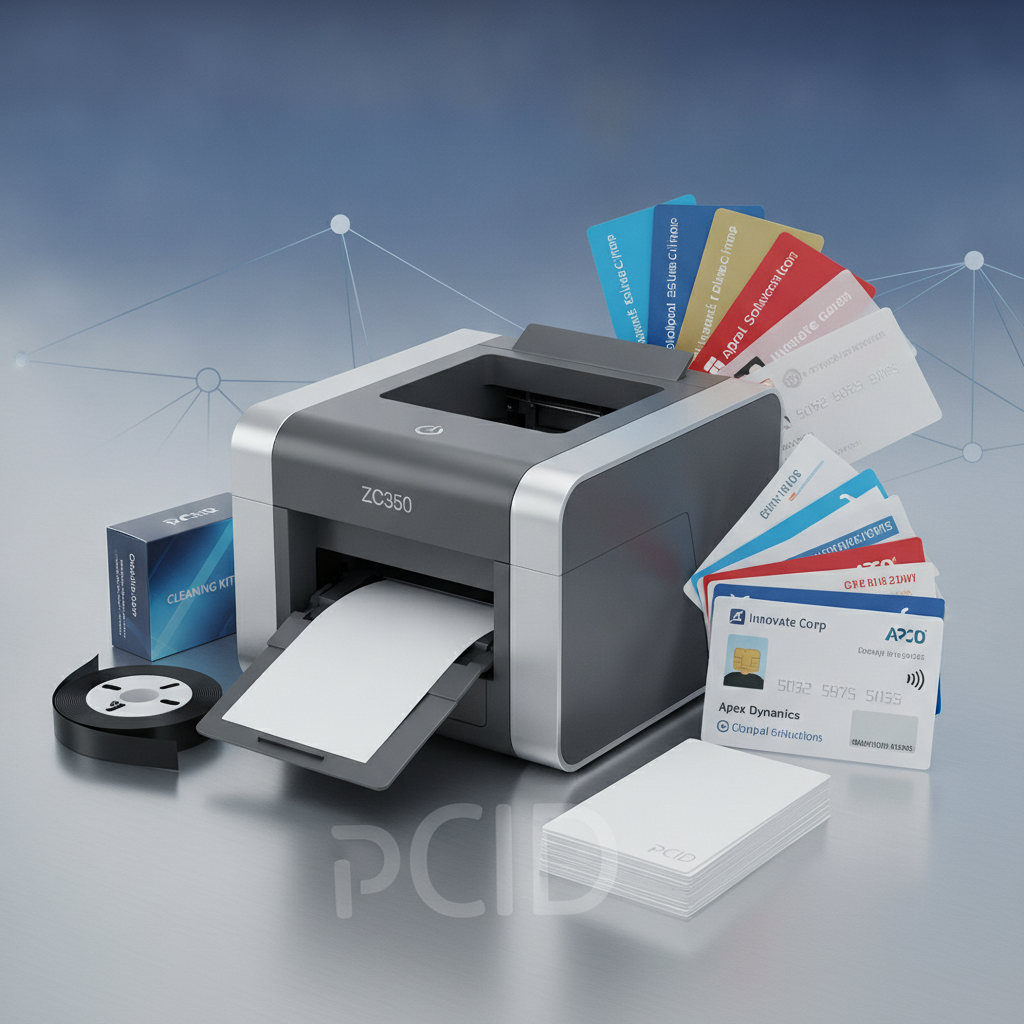
Understanding what you need, why you need it, and how to manage your supply inventory properly is part of operating a professional card program. Here's a breakdown of the core consumable categories available through CPE.
Printer Ribbons: Choosing the Right Type for Your Output
Ribbon selection directly determines the appearance and functionality of the finished card. YMCKO ribbons produce full-color output - the Y, M, and C panels handle color printing, the K panel adds sharp black text, and the O panel applies a protective overlay that extends card surface life. This is the standard choice for employee ID cards with photos, logos, and colored design elements.
Monochrome ribbons are the right call when you're printing single-color output - black text and barcodes on a white card, for example. They're faster and more economical per card than full-color YMCKO panels. Specialty ribbons cover additional use cases: fluorescent panels for UV-visible security marks, metallic finishes for premium aesthetics, and formulations designed for specific card materials or printer models.
Matching ribbon to printer model is not optional - using an incompatible ribbon can void warranties, produce poor output, and in some cases damage the printhead. CPE sells OEM-matched ribbons for every printer in the lineup, taking the guesswork out of reordering.
Cleaning Kits, Lamination, and Encoding Upgrades
Printhead longevity depends on regular cleaning. Card printers accumulate debris from card surfaces and the print path over time, and without proper maintenance, that debris degrades output quality and accelerates wear on expensive components. Cleaning kits - including cleaning cards and swabs matched to specific printer models - are a low-cost investment that pays off in extended hardware life and consistent print quality.
Lamination modules add a protective layer over the printed card surface, significantly increasing durability and enabling the application of security overlaminates for tamper-evident protection. For organizations issuing cards that will see heavy daily use - access control badges worn on lanyards, for instance - lamination is worth the additional hardware investment. A laminated card lasts considerably longer than an unlaminated one under real-world conditions.
Encoding upgrades for magnetic stripe and smart chip extend what a card can do beyond its printed surface. A magnetic stripe encoder allows the card to carry machine-readable data - loyalty point balances, access permissions, employee records - without any additional visible design change. Smart chip encoding takes this further, enabling contactless or contact-based data exchange for advanced access control and identity verification applications.
Input Hoppers, Card Carriers, and Sleeves
High-capacity input hoppers allow printers to run longer batches without manual card loading interruptions - a meaningful operational upgrade for organizations processing hundreds of cards in a single session. Hoppers are available as optional accessories for several printer models in the CPE lineup and can substantially reduce the staffing time required to manage large print runs.
Card carriers protect cards during transport and storage after printing. Sleeves - whether simple protective pouches or rigid holders with clip or lanyard attachments - extend the useful life of a printed card and keep the surface from scratching or fading. For employee ID programs where cards are worn daily, a quality sleeve is the last line of defense for a card that took resources to produce.
Matching Printer to Program: A Buyer's Guide for HR and Facilities Teams
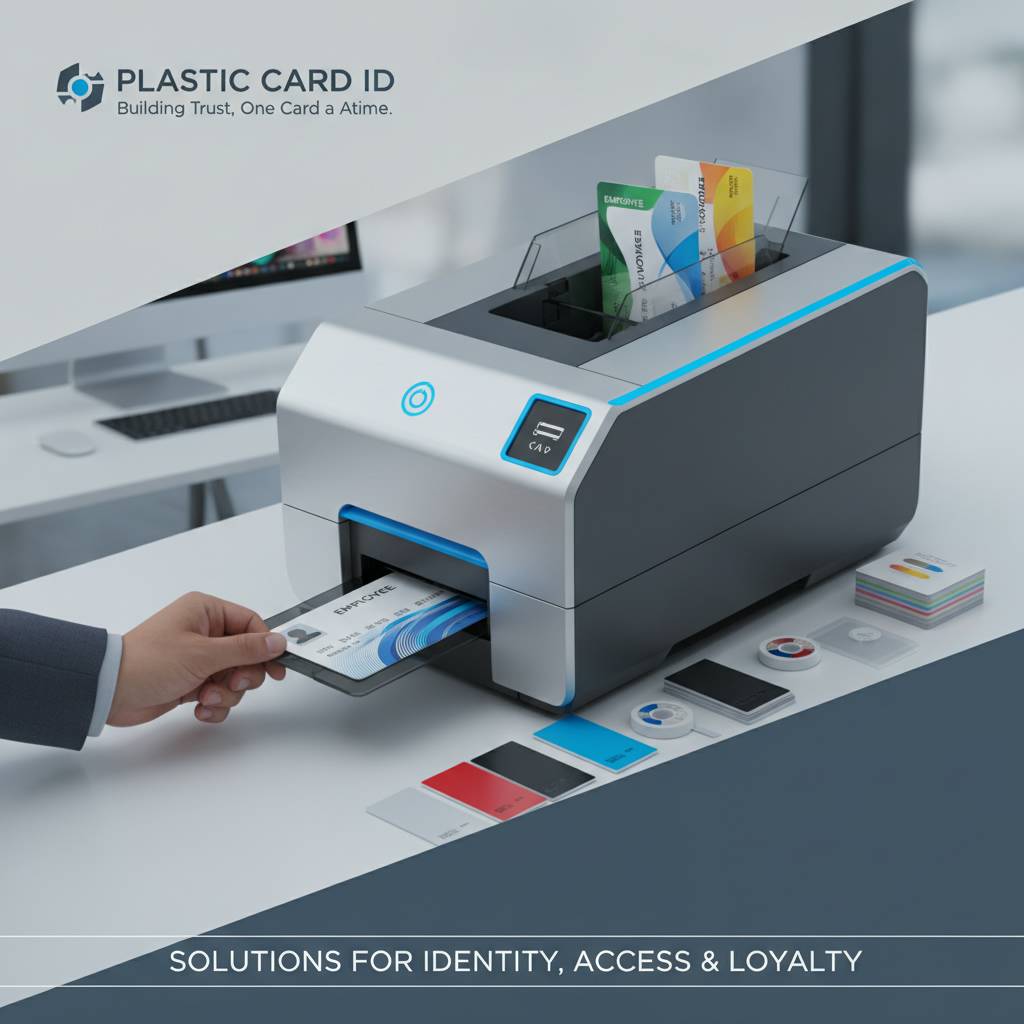 The single most common mistake organizations make when purchasing a card printer is buying based on price alone, without accounting for production volume or feature requirements. A printer that seems affordable at purchase can become expensive quickly if it's undersized for actual demand, lacks needed encoding capability, or requires frequent ribbon changes because it's running at the edge of its rated capacity.
Plastic Card ID has helped over 100,000 businesses navigate this decision. The patterns that lead to buyer satisfaction are consistent - and so are the patterns that lead to regret. Here's how to approach the selection process with confidence.
Calculating Your True Annual Card Volume
Start with a realistic projection of how many cards you'll print in a year. Include new hires, card replacements (budget for 15-20% annually due to loss and damage), temporary or contractor badges, and any seasonal volume spikes - onboarding classes, academic year starts, large events. Don't optimize for your current volume if you expect meaningful growth. A printer that meets today's demand but can't scale with your organization is a premature replacement waiting to happen.
Entry-level models like the Evolis Badgy200 are excellent for programs under 1,000 cards per year. Stepping up to the Evolis Zenius or Primacy2 handles monthly volumes up to 6,000 cards with reliability to spare. For programs at the high end of that range or above it, a conversation with CPE about higher-throughput options is worthwhile before committing to hardware.
Feature Checklist: What Does Your Card Program Actually Need?
Beyond volume, run through this checklist before finalizing a printer selection. These are the questions that determine which model class is genuinely appropriate for your program.
- Single-sided or dual-sided printing? Dual-sided adds cost but opens up significantly more card design real estate - often worth it for employee ID programs with back-of-card data requirements.
- Magnetic stripe encoding? Required for access control cards, loyalty programs, hotel key cards, and other applications where the card needs to carry machine-readable data.
- Smart chip encoding? Needed for contactless access, advanced identity verification, or compliance with specific security standards.
- Lamination? Adds durability and security overlay capability - valuable for cards that see heavy daily use or require tamper-evident features.
- Print quality requirements? Photo-quality output with edge-to-edge coverage requires a different hardware tier than basic text and barcode printing.
- Batch printing frequency? If you regularly print large batches, a high-capacity input hopper and faster print speed become operationally important factors.
Budget Considerations and Total Cost of Ownership
Hardware purchase price is only one component of total card program cost. Consumables - ribbons, cleaning kits, lamination film - represent ongoing expenditure that varies by print volume and card type. A printer with a lower upfront price but higher per-card ribbon cost can easily end up more expensive over a three-year operating horizon than a mid-range model with more efficient consumable usage.
CPE can help you model total cost of ownership based on your projected volume, which gives a much more accurate picture of program economics than hardware price alone. This kind of analysis frequently changes the optimal choice - and it's a service Plastic Card ID provides as part of helping customers make well-informed buying decisions. Smart procurement starts with the right numbers, not just the lowest sticker price.
Applications Beyond the Employee Badge: What Else Can These Printers Do?
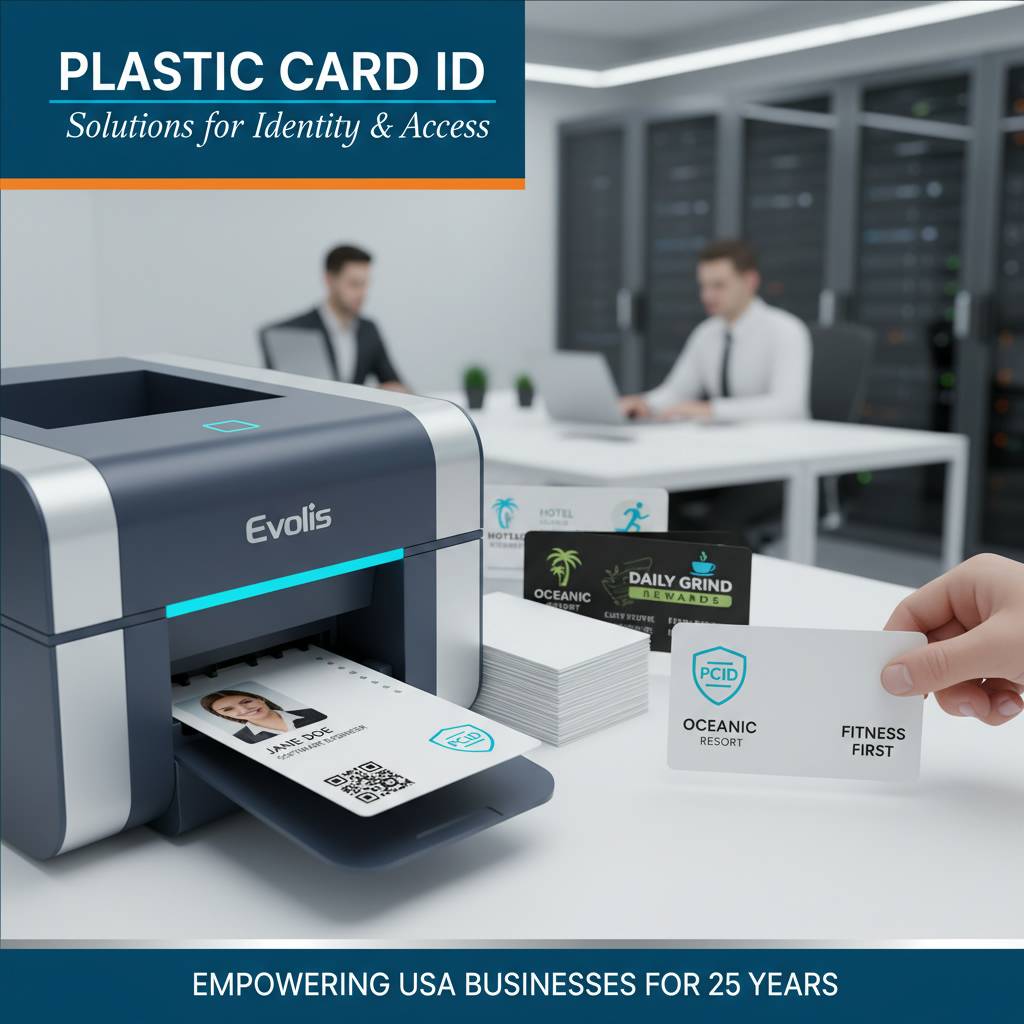 Organizations that purchase a card printer for employee ID cards frequently discover that the same hardware supports a broader range of card programs than they initially anticipated. The printer doesn't know or care what kind of card it's producing - it processes whatever design and data you send to it, which makes it a flexible platform for multiple card-based applications.
Plastic Card ID supports businesses across all of the following use cases, and many customers find that expanding their card program's scope after initial setup delivers additional value from hardware they've already purchased.
Membership Cards, Loyalty Programs, and Student IDs
Fitness clubs, professional associations, alumni organizations, and retail loyalty programs all require personalized cards issued to individual members. The same mid-range card printer handling your employee IDs on Tuesday morning can produce membership cards Tuesday afternoon - same hardware, different card design and data source. The versatility of a well-chosen card printer is genuinely underappreciated.
Student ID programs represent one of the largest and most consistent card printing use cases in the market. Schools and universities issue IDs at the start of every academic year, manage replacements throughout the year, and often tie cards to library access, meal plans, and building entry. A printer that handles all of these functions in-house keeps the school in control of issuance timing and card personalization without dependence on outside vendors.
Access Control Cards and Hotel Key Cards
Physical access control is among the most security-sensitive card applications, and it benefits enormously from in-house production. When an access card needs to be revoked, replaced, or re-encoded, doing that on-site takes minutes rather than days. Hotel key cards follow a similar logic - properties that produce their own key cards control encoding, card design, and replacement turnaround in ways that outsourced production simply cannot match.
Fargo and Zebra printers are particularly well-suited to access control applications, with encoding capabilities and security features appropriate for environments where card integrity matters. CPE can match you with the right hardware and encoding accessories for your specific access control system requirements. Reach out at 800.835.7919 to discuss your access control card program in detail.
Event Credentials and Visitor Badges
Conferences, trade shows, corporate events, and facility visitor management programs all require on-demand credential production under time pressure. The Matica Event Printer handles high-speed batch credential printing at the event level, while desktop models from Evolis, Fargo, or Zebra handle day-to-day visitor badge issuance at the reception desk. Having the right hardware for on-demand credential production changes how quickly and professionally your organization manages access.
Visitor badge programs in particular benefit from in-house printing - the ability to produce a professional-looking badge with the visitor's name, photo, host name, and visit date takes seconds with the right setup, and it creates a documented record of who was in the building and when. For facilities with security or compliance requirements around visitor tracking, this capability is increasingly standard practice.
Frequently Asked Questions About Plastic Card Printers for Employee ID Cards
After 25 years of helping businesses set up card programs, Plastic Card ID has heard every question in the book. The ones below come up consistently - and answering them upfront tends to make the buying process smoother for everyone involved.
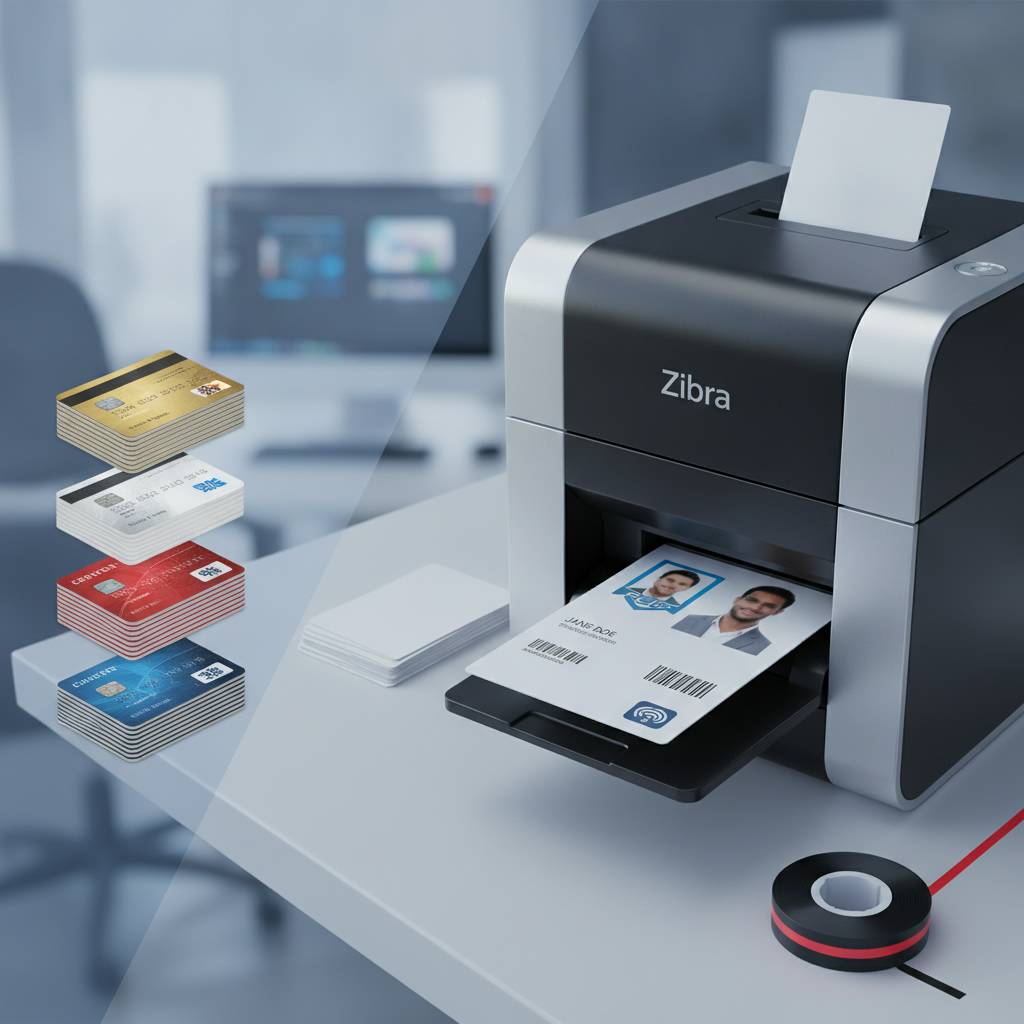
How difficult is it to set up and operate a card printer?
Modern professional card printers are designed for straightforward setup and daily operation without specialized technical expertise. Most models connect via USB or network connection, install driver software from an included disc or download, and accept print jobs directly from card design software. The learning curve for routine operation is genuinely short - most users are producing cards within an hour of setup.
Maintenance tasks like ribbon replacement and cleaning are similarly accessible. Ribbons load in a cartridge-style module that clicks in and out without tools. Cleaning cards run through the printer's feed path in seconds. You don't need a dedicated IT resource to run a card printer program successfully. Clear documentation and readily available support from CPE handle the occasional question that comes up.
What's the typical lifespan of a professional card printer?
With proper maintenance - regular cleaning, appropriate ribbon usage, and operation within rated volume limits - professional card printers typically deliver several years of reliable service. Printhead life is rated in cards printed, and staying within that rated volume per model tier is the single most important factor in maximizing hardware longevity. Overworking an entry-level printer with mid-range volume is the fastest path to premature hardware failure.
Replacement parts, including printheads, are available for all major brands in the CPE lineup. When a printer does require service, the availability of genuine parts and a knowledgeable support team makes a significant difference in how quickly normal operation resumes. Investing in the right model at the outset, and maintaining it properly, is always more economical than replacement.
Can one printer handle multiple card programs simultaneously?
Yes - a single card printer can produce employee IDs in the morning, visitor badges at midday, and membership cards in the afternoon, provided each program uses compatible card stock and ribbon type. Most organizations with modest-to-moderate volumes find that one printer handles all their card programs comfortably, with distinct design templates saved in their card design software for each program type.
Higher-volume environments or organizations with simultaneous demand from multiple departments may benefit from multiple printers or a higher-throughput model with expanded input capacity. This is exactly the kind of workflow analysis that CPE helps customers work through before purchase - the goal is always a setup that matches actual operational reality, not an idealized scenario.
Get Started With Plastic Card ID - Your Trusted Source for Employee ID Card Printers
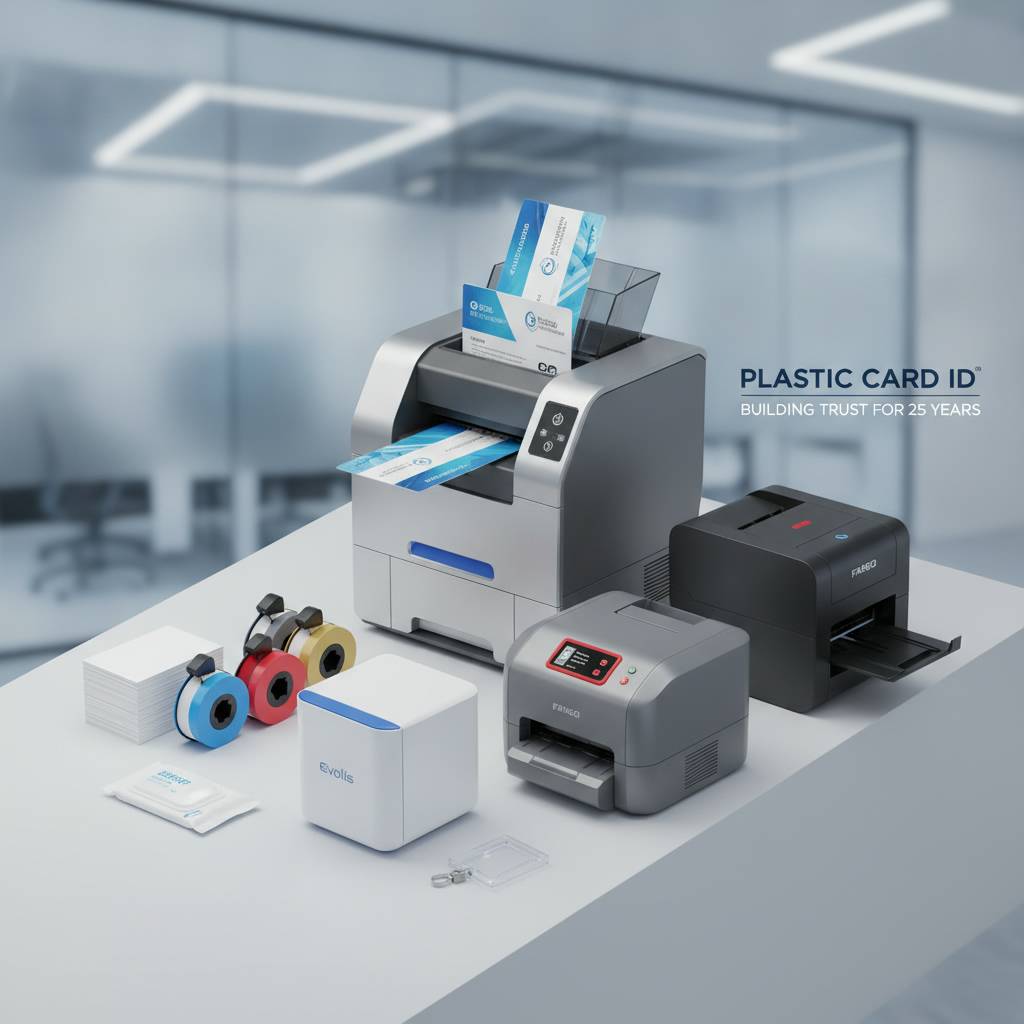 There is no shortage of places to buy hardware online. What's genuinely harder to find is a supplier with over 25 years of focused experience in card printing, a curated lineup of professional-grade equipment from the industry's best brands, and a team that will take the time to make sure you're buying the right printer for your actual program - not just the one that happens to be in stock.
That's what Plastic Card ID brings to every customer interaction. Over 100,000 businesses have trusted CPE with their card programs, from the initial hardware selection through years of ongoing consumable supply. The combination of product depth, application expertise, and genuine customer focus is what keeps those relationships going.
Ready to Print Your Employee ID Cards In-House?
Whether you're launching a brand new card program or replacing aging hardware, the process starts with a straightforward conversation about your requirements. Volume, card type, encoding needs, budget - bring whatever information you have, and CPE will help you build the right solution from there.
Don't guess on hardware that you'll be using every day for the next several years. The investment in a five-minute conversation upfront pays dividends in a setup that actually works for your organization. Professional card printers are durable, capable tools - and with the right guidance, they become a seamless part of your operational infrastructure from day one.
Call 800.835.7919 today and let Plastic Card ID match you with the perfect plastic card printer for your employee ID card program. Over 100,000 businesses have made the right call - yours should be next.
Previous Page