Smart Chip Encoding Card Printer Options: Complete Overview
Table of Contents []
- Smart Chip Encoding Card Printers: What Plastic Card ID Wants You to Know First
- Printer Models That Support Smart Chip Encoding
- Supplies and Accessories That Complete a Chip Encoding Setup
- Use Cases: Who Is Actually Buying Smart Chip Encoding Card Printers
- Frequently Asked Questions: Smart Chip Encoding Card Printers
- Buyer's Guide: Selecting the Right Smart Chip Encoding Printer for Your Organization
- Work With Plastic Card ID to Configure Your Smart Chip Encoding Card Printer
Smart Chip Encoding Card Printers: What Plastic Card ID Wants You to Know First
 There's a moment when organizations realize basic ID cards aren't enough. Swipe access keeps getting bypassed. Loyalty programs lack transactional depth. Student IDs need to do more than display a photo. That's precisely when smart chip encoding enters the conversation - and when the right card printer stops being a convenience and becomes a genuine security and operational asset.
Plastic Card ID has spent over 25 years helping businesses across the United States navigate exactly this transition. With more than 100,000 customers served and a curated lineup of professional-grade hardware from Evolis, Fargo, Zebra, and Matica, they bring serious depth to a subject that deserves serious treatment. Smart chip encoding isn't an add-on afterthought. It's a core capability that shapes which printer you buy, how you configure it, and what your card program can ultimately accomplish.
This page breaks down everything buyers need to understand about smart chip encoding card printer options - from contact chip versus contactless technology to specific hardware recommendations across production volumes. Whether you're running a corporate access control program, a university ID initiative, or a hospitality key card operation, the information here will help you make a confident, well-informed purchase decision.
Why Smart Chip Technology Changes the Card Equation
A magnetic stripe stores data linearly - a fixed track of information that gets read by swiping. A smart chip is fundamentally different. It contains an embedded microprocessor capable of storing, processing, and protecting significantly more data. The difference isn't cosmetic; it's architectural. Cards with chips can authenticate themselves, encrypt stored values, and even execute small applications on-card.
For organizations managing access control, healthcare records, campus credentials, or loyalty point balances, that added intelligence matters enormously. A chip card doesn't just identify who someone is - it can verify that identity cryptographically, log activity, and interact dynamically with reader infrastructure. This is the kind of capability that separates a professional card program from a basic badge operation.
Contact Chip vs. Contactless: Knowing the Difference Before You Buy
Contact smart cards require physical insertion into a reader - the gold-colored contact pads on the card's surface make direct electrical contact with the reader's pins. Contactless cards use embedded antennas to communicate via radio frequency (RFID or NFC) without any physical insertion. Both technologies can be encoded during the printing process using the right hardware configuration.
Some cards are dual-interface, combining both contact and contactless capabilities on a single card body. These are particularly popular in corporate environments where employees need both tap-to-enter door access and PIN-based workstation login. Choosing the wrong encoding module for your card type is one of the most common and costly mistakes buyers make - which is why consulting with CPE before purchase is strongly recommended.
The Business Case: When Smart Chip Encoding Justifies the Investment
The upfront cost of a chip-encoding-capable printer is higher than a basic print-only unit. That's just reality. But the calculation changes quickly when you factor in what you're replacing: outsourced card orders with multi-week lead times, vendor markups on personalized card batches, and the operational drag of waiting for credentials to arrive before a new employee can access secured areas.
In-house smart chip encoding gives organizations the ability to print, personalize, and encode on demand - one card at a time if necessary. A new hire's encoded access card can be ready within minutes of their onboarding paperwork being completed. That kind of operational agility has real dollar value, particularly in industries with high staff turnover or frequent credential updates.
| Printer Model | Brand | Volume Range | Chip Encoding Option | Dual-Sided Printing |
|---|---|---|---|---|
| Badgy200 | Evolis | Under 1,000/year | Limited | No |
| Zenius | Evolis | 1,000-3,000/month | Contact & Contactless | Optional |
| Primacy2 | Evolis | 1,000-6,000/month | Contact & Contactless | Yes |
| Agilia | Evolis | High Volume | Full Encoding Suite | Yes |
| HDP Series | Fargo | Mid-High Volume | Contact & Contactless | Yes |
| ZC Series | Zebra | Mid-High Volume | Contact & Contactless | Yes |
Printer Models That Support Smart Chip Encoding
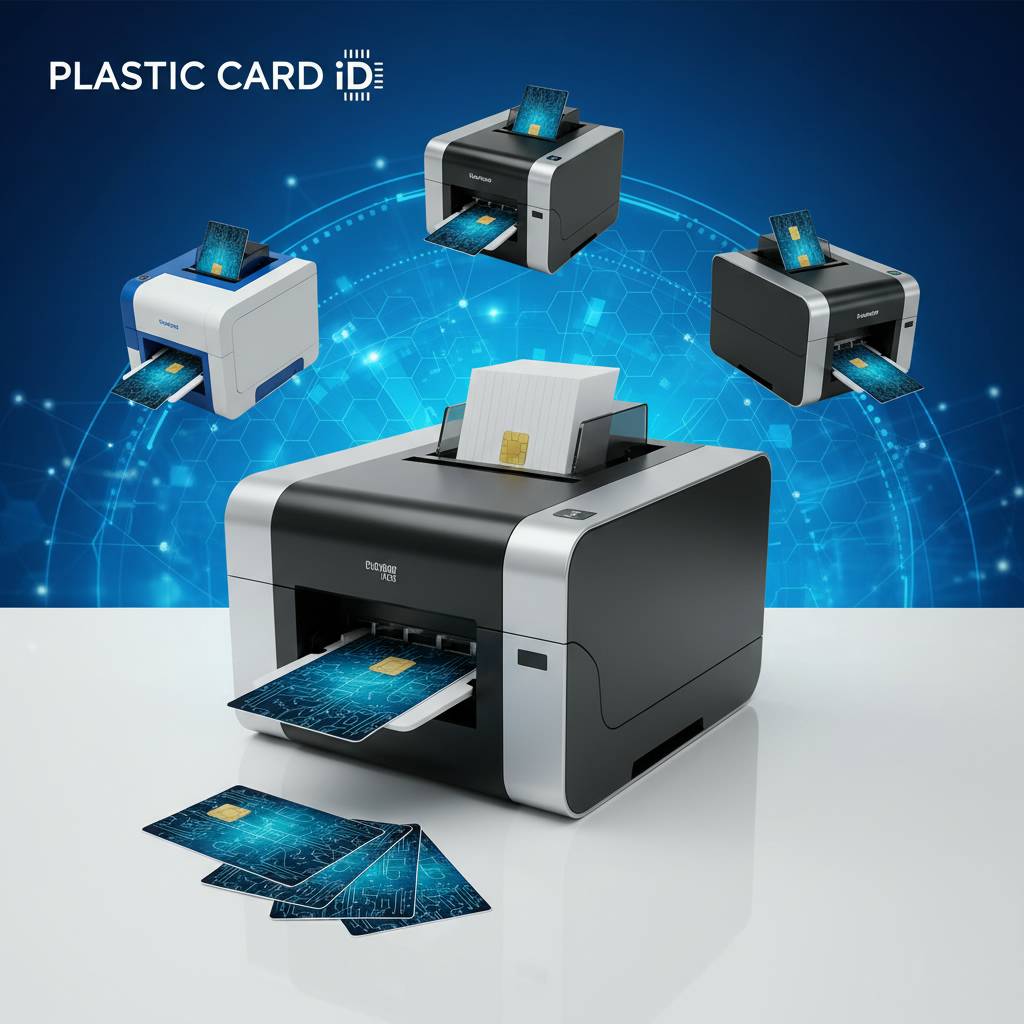 Not every card printer is chip-encoding ready. Some entry-level units are strictly print-only. Others support encoding as a factory-installed option or a field-upgradeable module. Understanding which models offer genuine smart chip encoding support - and at what production scales - is the foundation of any good purchasing decision.
CPE carries the industry's leading brands precisely because their encoding options are well-documented, reliable, and supported by genuine technical infrastructure. Evolis, Fargo, Zebra, and Matica each bring distinct strengths to chip-capable printing. The right choice depends on your volume, your security requirements, your card type, and your integration needs.
Evolis Zenius and Primacy2: Mid-Range Chip Encoding Workhorses
The Evolis Zenius is a single-sided desktop printer designed for organizations printing 1,000 to 3,000 cards per month. What makes it relevant to chip encoding discussions is its modular upgrade path - contact and contactless encoding modules can be factory-installed or added post-purchase, depending on configuration. For organizations that start with print-only needs and later want to add access control functionality, the Zenius offers a practical growth path without replacing the printer entirely.
The Evolis Primacy2 steps up to full dual-sided printing with a production ceiling of roughly 6,000 cards per month. It's arguably the most versatile chip-encoding card printer in the mid-range category - capable of printing both sides in a single pass while simultaneously encoding contact or contactless chips. Organizations issuing employee ID cards that double as building access credentials will find the Primacy2 handles both functions without compromise.
Fargo and Zebra: Security-Focused Encoding for High-Stakes Programs
Fargo printers, particularly the HDP series, are known for their high-definition printing combined with robust encoding options. HDP (High Definition Printing) uses a retransfer printing method that produces sharper images over the entire card surface, including chip contact pads - which matters for professional-looking government or corporate credentials. Contactless and contact chip encoding modules integrate cleanly into the Fargo architecture.
Zebra's ZC series offers similar capabilities with particularly strong software integration. Zebra's ecosystem plays well with identity management platforms, HR systems, and access control software that organizations may already have deployed. For security-conscious IT departments, Zebra's encoding workflow documentation and driver support are genuinely best-in-class. Both brands are available through CPE with full configuration support.
Evolis Agilia: When Only Premium Output Will Do
The Evolis Agilia occupies the upper tier of the Evolis lineup, delivering edge-to-edge printing with exceptional image quality and a comprehensive encoding suite. Organizations that need the visual impact of a premium card - think hotel loyalty cards, executive access credentials, or high-visibility student IDs - while simultaneously encoding contact or contactless chips will find the Agilia delivers on both fronts without forcing trade-offs.
The Agilia is designed for organizations where card quality is a brand statement, not just a functional requirement. First impressions travel on credentials, and the Agilia ensures those impressions are sharp, vivid, and professionally finished. Encoding is integrated rather than retrofitted, resulting in a cleaner internal workflow and more reliable chip initialization during production runs.
Matica Event Printer: Chip Encoding at Speed
The Matica Event Printer addresses a specific and often overlooked use case: high-speed on-site badge and credential printing for events, conferences, and large-scale check-in scenarios. When hundreds or thousands of attendees need encoded credentials issued at registration desks, throughput becomes the dominant variable. The Matica's architecture is built for exactly that scenario.
Depending on configuration, the Matica can handle contactless chip encoding during the print cycle, enabling event organizers to issue functional access credentials in real time. This is a game-changer for conference security and for events where session tracking or tiered access zones require encoded badges rather than simple printed passes. Call 800.835.7919 to discuss event printing configurations in detail.
Supplies and Accessories That Complete a Chip Encoding Setup
A printer is only one part of a functioning chip card program. The supplies, encoding modules, and card media you pair with that printer determine whether your program runs smoothly at production scale. Cutting corners on consumables is one of the most reliable ways to generate encoding errors, failed reads, and card rejections - problems that multiply fast when you're producing hundreds of cards per month.
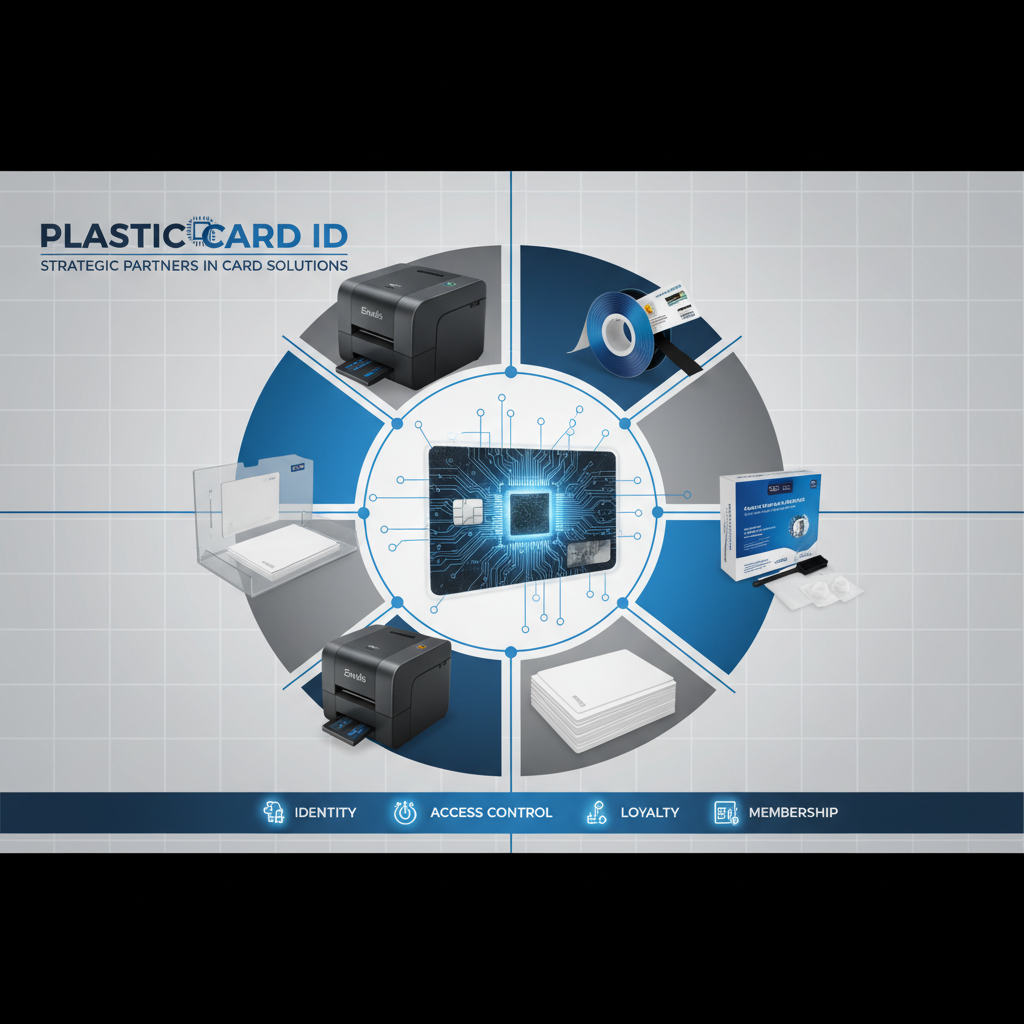
Plastic Card ID stocks the full range of supplies needed to support chip encoding programs, from the right ribbon types for credential-grade printing to cleaning kits that protect both print heads and encoding hardware. Getting the supply chain right is as important as getting the hardware right.
Ribbon Selection for Chip Encoding Printers
YMCKO ribbons (Yellow, Magenta, Cyan, Black, Overlay) are the standard choice for full-color card printing. They produce vivid, professional results and include a protective overlay panel that improves card durability and surface protection. For chip-encoded cards that also carry photographic ID content - employee badges, student IDs, access credentials - YMCKO is almost always the right choice.
Monochrome ribbons are appropriate when color printing isn't required and cost-per-card matters more than visual complexity. Some organizations produce chip-encoded access cards that carry only a small amount of variable text with no photos; monochrome ribbons drop the per-card printing cost significantly in those cases. Choosing the right ribbon is a cost optimization that compounds across thousands of cards per year.
Smart Card Media: Not All Blank Cards Are Created Equal
Blank smart card media comes in multiple configurations: contact chip only, contactless (RFID or NFC) only, and dual-interface combining both. Card media must be matched precisely to the encoding module installed in your printer. Loading contactless cards into a printer configured only for contact encoding produces nothing useful - a surprisingly common and avoidable mistake.
Card thickness (typically 30 mil for standard PVC credentials), chip type (Mifare, DESFire, HID, and others), and antenna frequency for contactless cards all affect compatibility with both the printer and the reader infrastructure the cards will be used with. CPE can help you match card media specifications to your existing access control or identity management platform before you order a single box of blanks.
Cleaning Kits and Maintenance for Encoding Hardware
Chip encoding components - particularly contactless antenna alignment mechanisms and contact encoding station pins - require regular cleaning to maintain reliable performance. Debris accumulation, ribbon residue, and card dust can cause intermittent encoding failures that are difficult to diagnose without knowing to look for maintenance gaps. A consistent cleaning schedule eliminates most of these issues before they develop.
Routine cleaning is not optional in a professional chip encoding environment. Plastic Card ID supplies manufacturer-approved cleaning kits designed specifically for each printer line they carry. Using the correct cleaning media - not generic alternatives - protects warranty coverage and ensures encoding hardware stays calibrated across thousands of card cycles.
Use Cases: Who Is Actually Buying Smart Chip Encoding Card Printers
 The range of organizations investing in chip encoding capability is broader than many buyers expect. It's not just government agencies or financial institutions. The technology has migrated into healthcare, education, hospitality, corporate facilities, and professional associations - anywhere that the combination of visual credential and encoded data delivers operational value.
Understanding where chip encoding is already working well helps organizations in adjacent verticals recognize the applicability to their own programs. The use cases below represent real categories that CPE regularly supports across its customer base.
Corporate Access Control and Employee Credentials
Large employers managing multi-building campuses, tiered security zones, or mixed contractor and employee populations have some of the most complex encoding requirements in any sector. A single card may need to carry a photo ID, grant access to specific floors or departments, log time-and-attendance data, and interact with a visitor management system at reception. Chip-encoded cards handle all of these simultaneously.
Printing these cards in-house using a Primacy2 or Fargo HDP system means HR and security teams aren't waiting on vendor lead times when a new employee joins or an existing credential needs to be updated. The ability to issue, revoke, and reissue credentials the same day is a genuine operational advantage in a corporate security environment where delays carry real risk.
Higher Education: Student IDs That Do More
University and college student IDs have evolved dramatically. A single card now routinely handles building access (dormitories, labs, athletic facilities), meal plan debits, library check-outs, printing account balances, and campus transit passes. Contactless smart chip technology makes this multi-function capability possible on a standard credit-card-sized credential.
Institutions printing on-campus using an Evolis Agilia or a Zebra ZC series printer can produce chips encoded with their specific campus system's data schema, personalized per student, with photography and variable text all handled in a single print cycle. That's a level of card program sophistication that was expensive to achieve a decade ago and is now well within reach for mid-sized institutions.
Hospitality and Hotel Key Card Programs
Hotel key cards are one of the most widely recognized forms of encoded credential. Most modern hotel room lock systems use contactless RFID technology - the tap-to-open interaction guests experience at their room doors. Larger hotel brands with in-house card printing capability can produce personalized branded key cards on demand, including encoding room assignments and check-out dates during the print cycle.
The Evolis Agilia is particularly well-suited to hospitality programs that want branded card quality alongside functional encoding. Guests notice the difference between a high-quality printed card and a cheap-looking key card, and in hospitality, presentation is part of the product. Encoding reliability on contactless hotel key systems is non-negotiable - a card that fails at the door at midnight is a guest experience failure.
Frequently Asked Questions: Smart Chip Encoding Card Printers
 Buyers new to chip encoding often arrive with a similar set of questions. The technology isn't opaque, but it does have specific vocabulary and a few decision points that can trip up an otherwise well-informed purchase. The answers below address the questions CPE hears most often.
Can I Add Chip Encoding to a Printer I Already Own?
Sometimes, yes. Several Evolis models, including the Zenius and Primacy2, support field-upgradeable encoding modules that can be added after the printer's initial purchase. Whether a specific unit supports this depends on the original factory configuration - some units are not built to accommodate encoding hardware after the fact, even if the same model number supports it when ordered with the module pre-installed.
The safest approach is to contact Plastic Card ID directly before purchasing a print-only unit with the assumption of later upgrading. Getting the configuration right at the point of purchase saves meaningful money and frustration downstream. Reach out at 800.835.7919 to confirm upgrade eligibility for any model you're considering.
Does Chip Encoding Slow Down the Printing Process?
Encoding adds a step to the card production cycle, but on modern mid-range and high-end printers, this step is integrated into the card transport pathway rather than added as a sequential delay. The Primacy2, for example, encodes during the card's movement through the print path, so the net impact on throughput is minimal compared to print-only production.
On high-volume systems like the Agilia or Zebra's enterprise configurations, encoding is fully parallelized with printing, meaning a card can be printing on one side while encoding occurs simultaneously. High-volume chip encoding does not have to mean low-speed production when the hardware is specified correctly for the volume at hand.
What Software Do I Need to Drive Chip Encoding?
Card design and encoding software varies by use case. Evolis printers ship with compatibility for tools like Evolis CardPresso, which handles both print design and encoding commands in an integrated interface. Fargo and Zebra printers interface with their respective software ecosystems, and both integrate with enterprise identity management platforms through standard APIs.
For organizations with existing access control infrastructure, the encoding workflow often needs to be validated against the specific card system in use - HID, Lenel, Software House, Genetec, and similar platforms each have their own credential data schema requirements. Selecting a printer without confirming software compatibility is a mistake that delays deployment significantly. CPE can help connect buyers with the right questions to ask their access control vendors before purchase.
Buyer's Guide: Selecting the Right Smart Chip Encoding Printer for Your Organization
Making the right printer selection requires being honest about three variables: your current volume, your likely growth trajectory, and the technical complexity of your encoding requirements. Buying too little printer means outgrowing hardware within a year. Buying too much means paying for production capacity that sits idle.
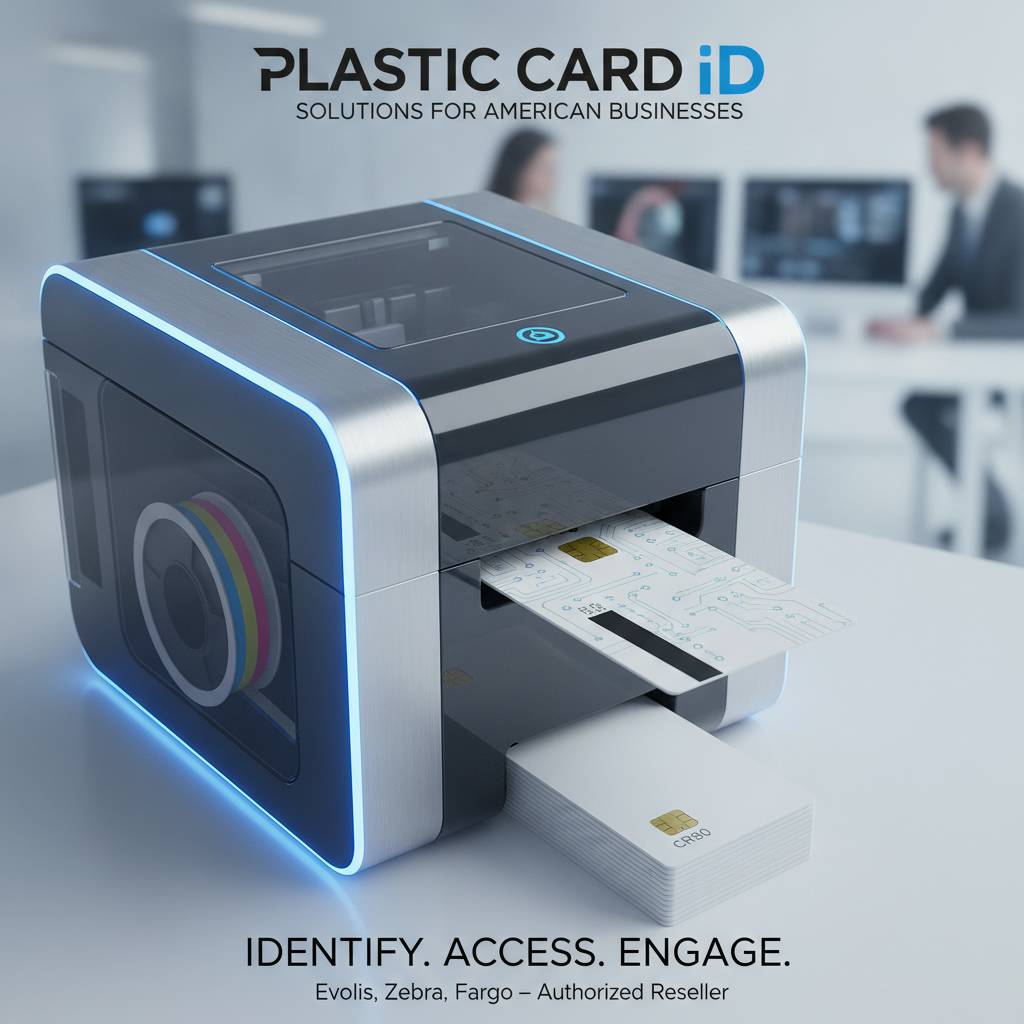
The following framework helps organizations at different scales identify the right starting point in Plastic Card ID's lineup.
Key Factors to Evaluate Before Purchasing
- Annual card volume: Fewer than 1,000 cards per year points toward entry-level models; 1,000-6,000 per month points toward the Zenius or Primacy2; higher volumes require Agilia, Fargo HDP, or Zebra enterprise configurations.
- Chip type required: Contact, contactless (RFID/NFC frequency), or dual-interface - all must match existing reader infrastructure.
- Single-sided vs. dual-sided printing: Any credential carrying both a photo and access-encoded data on a single card body typically requires dual-sided output.
- Software integration depth: Standalone printing with included software vs. API integration into an existing identity management platform are very different configuration scenarios.
- Lamination requirements: High-security credentials and government-adjacent programs often require lamination overlays that add durability and tamper-evidence - select a model with lamination module support if applicable.
- Budget range: Chip-encoding-capable desktop printers typically start in the $1,200-$2,500 range for mid-range configurations; enterprise and high-volume systems run considerably higher depending on options.
Volume-Based Recommendations at a Glance
Organizations printing fewer than 500 encoded cards per year occupy a niche where the economics of in-house chip encoding need careful evaluation. The Evolis Zenius with a contact or contactless encoding module is the practical entry point at this volume. For organizations printing 1,000 to 6,000 cards per month, the Primacy2 is the recommendation almost without exception - it combines encoding, dual-sided printing, and a production ceiling that comfortably handles most organizational-scale programs.
Beyond 6,000 cards per month, the Agilia and the Fargo and Zebra high-volume configurations become relevant. These are professional production-grade platforms, not glorified desktop printers, and they're priced and specced accordingly. Organizations making the jump to high-volume encoding should factor in input hopper capacity, output stacker options, and service contract availability when comparing total cost of ownership.
Questions to Ask Before You Call
Before reaching out to CPE to configure a chip encoding printer, having answers to the following questions ready will accelerate the recommendation process considerably:
- What access control or identity management platform are you integrating with?
- Do you need contact chips, contactless chips, or both?
- What is your card volume per month, and what is your expected volume in 18-24 months?
- Do cards require dual-sided printing or single-sided?
- Is lamination or overlay required for security or durability purposes?
- What is your budget range for both hardware and annual consumables?
Arriving prepared with these answers makes the configuration conversation faster and more precise. The right printer specified correctly the first time is always better than returning to correct a misconfigured purchase.
Work With Plastic Card ID to Configure Your Smart Chip Encoding Card Printer
 The complexity of smart chip encoding doesn't need to be a barrier. With 25 years of experience and more than 100,000 customers served, Plastic Card ID brings the kind of practical, applied knowledge that turns a confusing purchase decision into a confident one. They carry every major brand, every production volume tier, and every encoding configuration relevant to professional card programs in the United States.
Whether you're building a chip encoding program from scratch, upgrading an existing print-only setup, or scaling a mature card operation to handle higher volumes with full encoding capability, the right hardware and supplies are available and ready to be configured to your specific needs. Don't guess at a purchase this significant -- work with people who have spent decades getting these configurations right for organizations exactly like yours.
Contact Plastic Card ID today at 800.835.7919 to get expert guidance on smart chip encoding card printers, receive a configuration recommendation for your specific volume and requirements, and order the hardware and supplies that will power your card program with confidence.
Previous Page