Plastic Card Printer for Access Control Cards Reviewed
Table of Contents []
- Why Plastic Card ID Is the Go-To Source for Plastic Card Printers for Access Control Cards
- Understanding Access Control Cards and Why the Printer Matters
- Choosing the Right Printer for Your Access Control Volume
- The Full Access Card Printing Ecosystem: Supplies and Accessories
- The Strategic Case for In-House Access Card Printing
- Frequently Asked Questions About Plastic Card Printers for Access Control
- Brands That Plastic Card ID Carries for Access Control Card Printing
- Get Started with Plastic Card ID - Your Trusted Partner for Access Control Card Printing
Why Plastic Card ID Is the Go-To Source for Plastic Card Printers for Access Control Cards
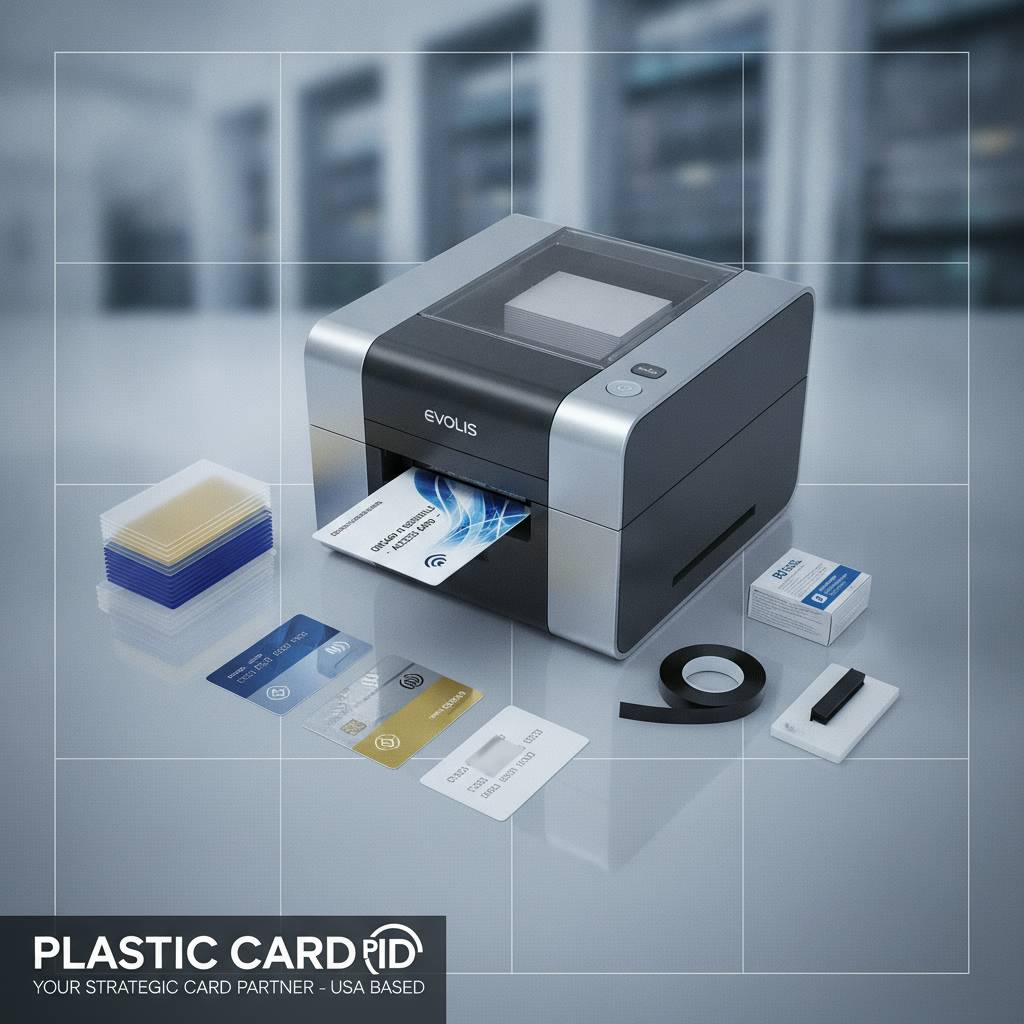 Access control is serious business. Whether you're managing a corporate campus, a healthcare facility, a university, or a multi-tenant office building, the cards your staff carries every single day are the first line of defense. And yet, so many organizations still rely on outside vendors, long lead times, and generic credentials that don't reflect the precision their security programs demand. That's where printing access control cards in-house changes everything.
Plastic Card ID has spent more than 25 years supplying plastic card printers and supporting hardware to businesses across the United States, building a customer base that now exceeds 100,000 organizations of all sizes. The expertise runs deep. Whether you need a compact desktop unit for low-volume badge issuance or a high-throughput industrial system capable of encoding smart chips at scale, CPE carries the right equipment for your exact use case.
This page breaks down what makes in-house access card printing so valuable, which printer models are best suited for security-focused programs, and how to choose the right setup for your organization's needs. If your access control program deserves a serious upgrade, read on.
| Printer Model | Brand | Volume Range | Encoding Options | Best For |
|---|---|---|---|---|
| Badgy200 | Evolis | Under 1,000/year | Magnetic stripe (optional) | Small offices, low-volume sites |
| Zenius | Evolis | 1,000-3,000/month | Magnetic stripe, smart chip | Mid-size organizations |
| Primacy2 | Evolis | Up to 6,000/month | Magnetic stripe, smart chip, dual-sided | Growing enterprise programs |
| Agilia | Evolis | High volume | Full encoding suite | Premium edge-to-edge output |
| Fargo HID Series | Fargo | Mid to high volume | Smart chip, mag stripe, HID proximity | Security-critical ID programs |
| Zebra ZC Series | Zebra | Mid volume | Magnetic stripe, smart chip | Enterprise access programs |
| Matica Event Printer | Matica | High-speed burst | Basic encoding | On-site event credentialing |
Understanding Access Control Cards and Why the Printer Matters
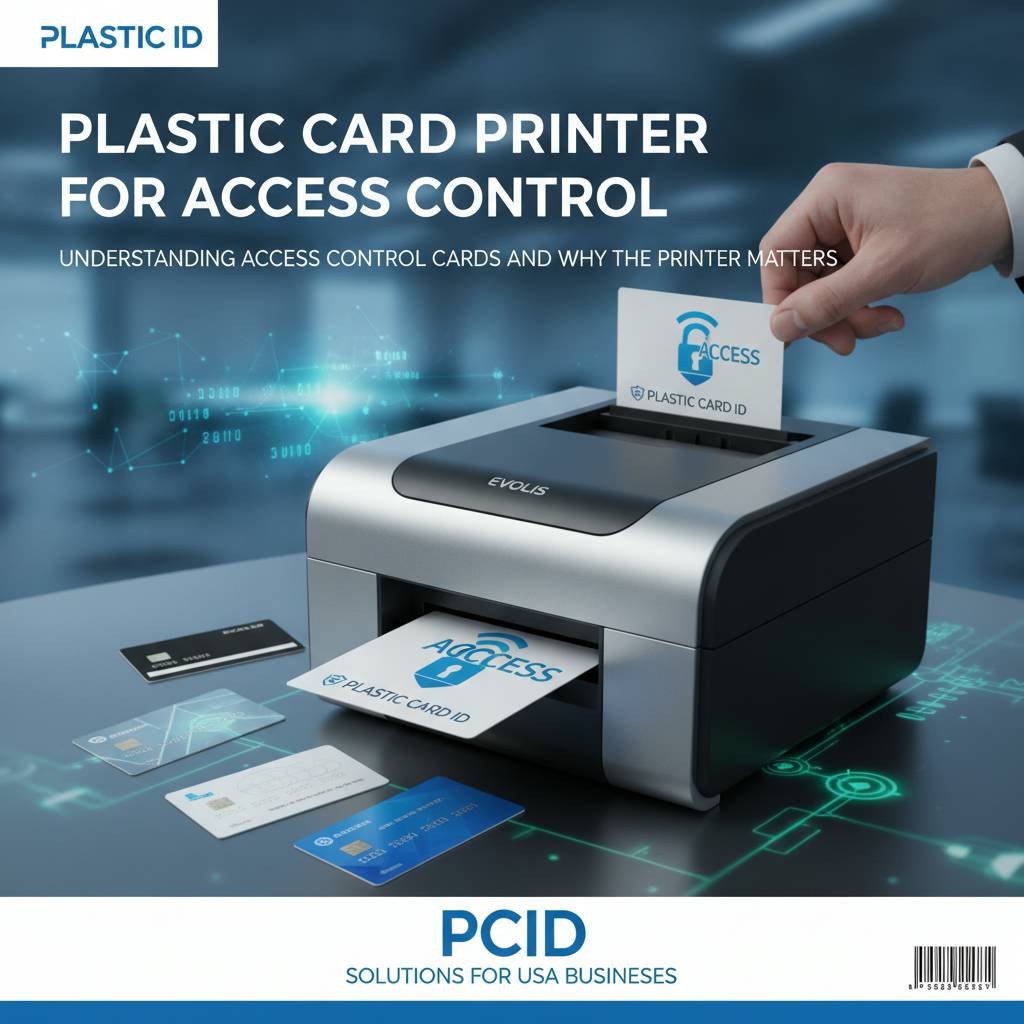 Not all plastic cards are created equal. A loyalty card handed to a retail customer and an access control card issued to a security-cleared employee occupy entirely different universes. Access cards must carry encoded data - magnetic stripe information, smart chip credentials, or proximity-readable HID encoding - that your physical access control system can authenticate in milliseconds. The printer you choose determines what encoding is possible, how reliable that encoding is, and how professional your cards look and perform.
Cheap, consumer-grade equipment simply cannot handle the tolerances required for consistent magnetic stripe encoding or reliable smart card chip writing. Industrial-grade systems from brands like Fargo, Evolis, and Zebra are engineered for exactly this purpose, with encoding modules that meet the specifications your access control infrastructure requires. The difference between a card that works 99.9% of the time and one that occasionally fails at a critical entry point is not trivial - it's a security incident waiting to happen.
What Makes an Access Control Card Different from a Standard ID
A standard photo ID badge tells a human who is looking at it exactly who someone is. An access control card does something more: it communicates with a machine. That communication happens through encoded data stored in a magnetic stripe, a smart chip, or a proximity antenna embedded in the card substrate. Without the right printer and the right encoding module, that data simply cannot be written correctly.
Magnetic stripe encoding is the most common starting point for access programs. Track 1, 2, or 3 can carry employee ID numbers, PIN codes, access tier information, and more. Smart card encoding goes further, storing encrypted credentials that are harder to clone and easier to revoke remotely. Both require precise, calibrated encoding hardware built into or added to your card printer.
Encoding Technologies Supported by PCID Printers
The printers carried by CPE span a wide range of encoding capabilities. Entry-level models can be configured with magnetic stripe modules at purchase. Mid-range and high-end systems support smart chip encoding, contact and contactless chip writing, and in some configurations, proximity card encoding compatible with major access control platforms.
Encoding upgrades are available as integrated modules rather than afterthoughts. When you order a printer configured for your access program, the encoding hardware is built into the machine's workflow, ensuring every card that exits the output tray is fully personalized, visually printed, and encoded in a single pass. That efficiency matters when you're onboarding new staff or replacing a batch of compromised cards on short notice.
Single-Sided vs. Dual-Sided Printing for Access Cards
Many organizations print access control cards with an employee photo, name, department, and access tier on the front - and supplementary information, emergency contacts, or secondary barcodes on the reverse. Dual-sided printing capability is therefore a key specification for HR departments and security teams that want to maximize card real estate without issuing two separate credentials.
Models like the Evolis Primacy2 offer dual-sided printing as a configurable option, making it straightforward to produce cards that are both professionally branded on both faces and fully encoded for your access system. Single-pass dual-sided printing also reduces handling and keeps the production workflow clean and fast.
Choosing the Right Printer for Your Access Control Volume
Volume is the first variable any buyer should nail down before selecting a printer. An organization issuing 200 replacement cards per year has entirely different hardware needs than a hospital system onboarding 400 new staff per month. Choosing under-powered equipment strains the machine and increases failure rates; over-specifying wastes capital. Getting this right from the start is what CPE helps customers do every day.
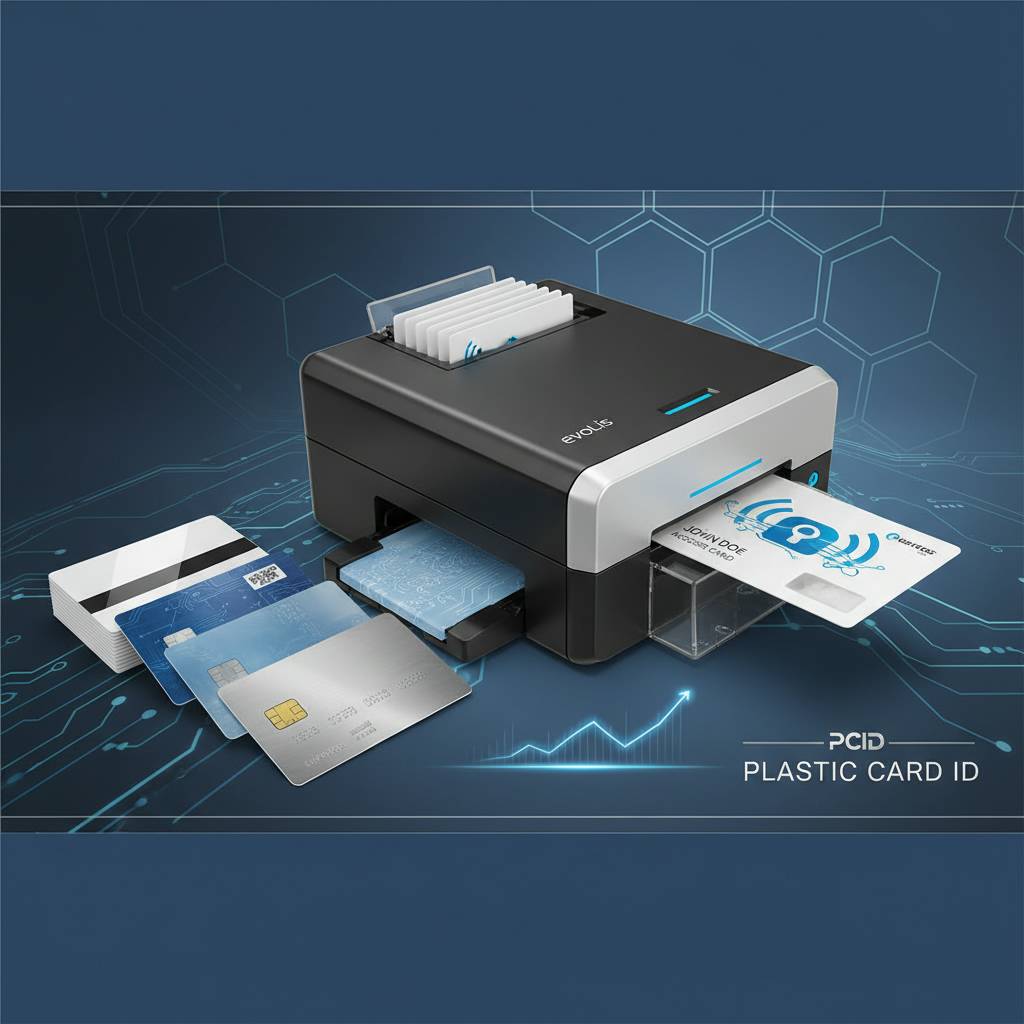
The guidance below reflects real-world usage patterns, not just spec sheet numbers. Duty cycles, ribbon yields, and cleaning intervals all factor into total cost of ownership and long-term printer reliability. A conversation with the team at Plastic Card ID can help you map your specific workflow to the right hardware tier before you spend a dollar.
Low-Volume Access Programs: Under 1,000 Cards Per Year
For small businesses, private offices, or single-location facilities with stable headcounts, the Evolis Badgy200 represents a capable, cost-effective entry point. It handles basic card printing with optional magnetic stripe encoding, making it suitable for straightforward access programs where cards are issued infrequently and the design is relatively simple.
Don't let the entry-level price tag fool you. The Badgy200 still produces professional-quality PVC cards that look sharp and last. For organizations where access cards also double as visible photo IDs, the print quality is more than sufficient. Pair it with YMCKO ribbon and a basic cleaning kit, and you have a functional access card station for a fraction of the cost of outsourcing.
Call 800.835.7919 to discuss whether a low-volume setup is right for your specific access control requirements.
Mid-Volume Access Programs: 1,000-6,000 Cards Per Month
The Evolis Zenius and Primacy2 occupy the sweet spot for growing organizations - companies expanding their workforce, universities managing student access, healthcare systems handling contractor onboarding, and multi-site businesses standardizing credentials across locations. These printers are the workhorses of professional access card programs.
The Primacy2 in particular stands out for its dual-sided capability and broad encoding compatibility. Smart chip and magnetic stripe options mean it can serve a wide variety of access control platforms without requiring separate hardware. At a production rate of up to 6,000 cards per month, it handles serious scale without flinching.
High-Volume and Industrial Access Programs
When card issuance volumes push into the tens of thousands per month, or when output quality needs to meet the highest visual standards, the Evolis Agilia delivers edge-to-edge printing with premium results that elevate the professional presentation of every credential issued. For security-critical programs where cards must look authoritative, the Agilia leaves nothing to chance.
Fargo and Zebra also serve high-volume access programs with robust, enterprise-grade systems that integrate cleanly with established security infrastructure. Fargo printers in particular have a strong reputation in government, healthcare, and education sectors where access control is tightly regulated and card integrity is non-negotiable. Zebra's ZC Series rounds out the enterprise lineup with reliable encoding and crisp print output.
The Full Access Card Printing Ecosystem: Supplies and Accessories
 A printer is only as good as the supplies running through it. Access control card programs require consistent, high-quality consumables to maintain both print quality and encoding reliability. Plastic Card ID supplies everything your program needs beyond the printer itself, ensuring you never face downtime because you've run out of ribbon or let a cleaning cycle slip too long.
Stocking the right supplies also protects your investment. Printers that run on off-brand or incompatible ribbons experience print head degradation faster, produce inconsistent encoding results, and generate more card rejects. Using manufacturer-matched consumables is not just a best practice - it's the difference between a printer that lasts five years and one that fails at three.
Ribbons for Access Card Printing Programs
YMCKO ribbons (Yellow, Magenta, Cyan, Black, Overlay) are the standard choice for full-color photo ID and access card printing. The overlay panel adds a protective coating that extends card life and resists surface wear - important for cards handled and swiped daily. For access cards that see heavy physical use, the overlay panel is not optional - it's essential.
Monochrome ribbons (black, blue, or other single colors) serve programs where color printing is unnecessary, delivering faster print speeds and lower per-card costs. Specialty ribbons with security features add visual authentication layers that complement electronic encoding. CPE carries the full ribbon spectrum to match your printer model and program needs.
Encoding Modules, Cleaning Kits, and Lamination
Encoding upgrades for magnetic stripe and smart chip can be integrated at the point of printer purchase or, for select models, added later. Magnetic stripe encoding modules support high-coercivity (HiCo) and low-coercivity (LoCo) formats - HiCo is the standard for access cards given its greater resistance to accidental erasure. Choosing HiCo encoding for access credentials is a straightforward best practice that prevents frustrating field failures.
Cleaning kits are the unsung heroes of printer maintenance. A regular cleaning schedule - typically every ribbon change - removes debris from the print head and transport rollers, preventing misprints and extending machine life. Lamination modules add another layer of physical durability to cards, protecting printed surfaces and encoded chips from wear in demanding environments.
Input Hoppers, Card Carriers, and Sleeves
- High-capacity input hoppers allow batch printing without manual card feeding, critical for high-volume access card issuance events like new employee onboarding days.
- Card carriers protect cards during transport through the printer mechanism, reducing jam rates and surface damage during production.
- Card sleeves and holders protect finished access cards from wear during daily use, extending the readable life of magnetic stripes and protecting printed surfaces.
- Lanyards and badge reels complete the credential presentation, keeping cards visible and accessible at entry points.
- Cleaning cards and cleaning rollers maintain printer performance and prevent encoding errors caused by debris buildup.
The Strategic Case for In-House Access Card Printing
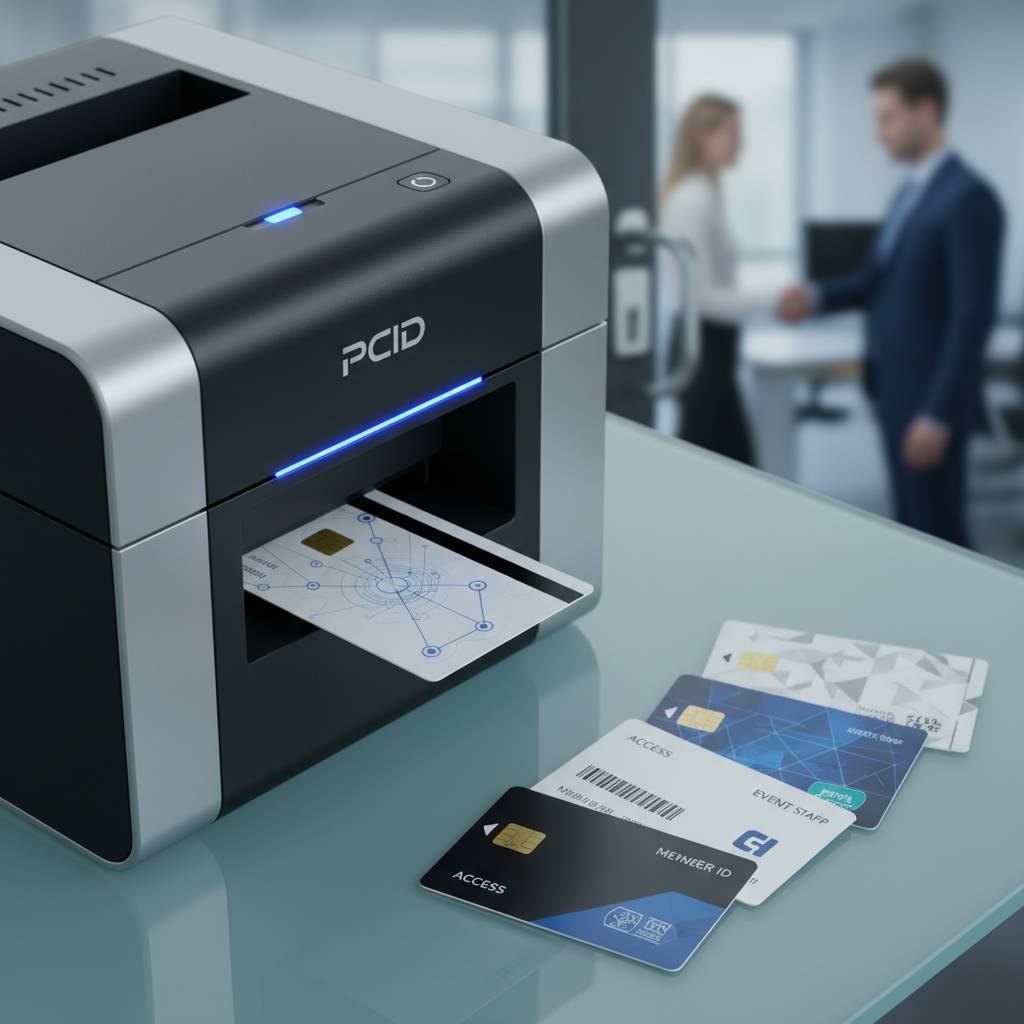 Organizations that outsource card printing live with an unavoidable vulnerability: dependency. When a new employee starts Monday and the cards arrive Wednesday, that's two days of access exceptions, temporary badges, and administrative friction. When a card is lost or compromised on a Friday afternoon, the replacement won't arrive until next week. In-house printing eliminates that exposure entirely.
Print-on-demand capability means every card is issued exactly when it's needed, personalized with current information, and encoded to your live access control configuration. There are no minimum order quantities, no shipping delays, and no third-party vendor with access to your cardholder data. For organizations where security is a genuine operational priority, the case for in-house printing is nearly self-evident.
Cost Control and Total Ownership Economics
The upfront cost of a professional card printer - ranging from a few hundred dollars for entry-level systems to several thousand for industrial configurations - is often recovered within months compared to per-card outsourcing costs. A mid-range printer paired with YMCKO ribbon can produce full-color access cards for $0.50-$1.50 per card fully loaded, depending on volume and supplies pricing.
Outsourced card vendors charge $3.00-$8.00 or more per card for full-color photo ID production with encoding, not counting rush fees or shipping. For an organization issuing 200 cards per month, the savings over a single year can easily exceed the cost of the printer itself. The economics of in-house printing are compelling at almost every volume level above casual hobby use.
Security and Data Control Advantages
When access cards carry encoded credentials tied to your employees' identities and access privileges, the data pipeline matters. Sending employee photos, names, and ID numbers to an outside card vendor introduces a data handling relationship that requires its own security assessment. In-house printing keeps that data exactly where it belongs: inside your organization's systems.
Access control administrators also gain the ability to issue and revoke credentials in real time. A terminated employee's card can be printed and invalidated within the same workflow. A new contractor arriving for a short engagement can receive a properly encoded, time-limited access credential within minutes of check-in. That level of operational agility is simply not possible when card production lives outside your walls.
Frequently Asked Questions About Plastic Card Printers for Access Control
Buyers new to in-house card printing often arrive with similar questions. The following addresses the most common ones CPE encounters from organizations setting up or upgrading access card programs.
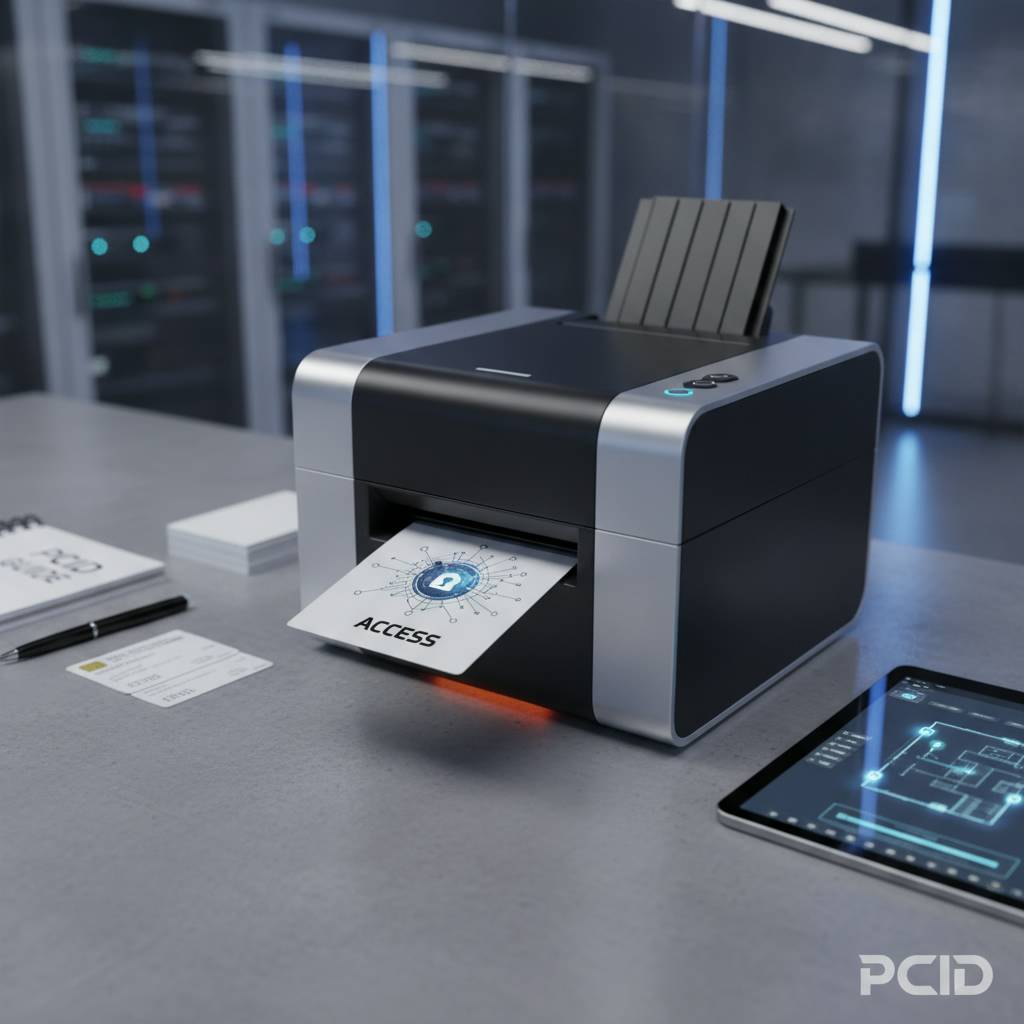
What Encoding Does My Access Control System Need?
The answer depends entirely on your access control platform. Most common systems use one of three credential types: magnetic stripe (common in legacy installations), smart chip (contact or contactless), or HID proximity format. Before selecting a printer, confirm with your access control vendor or IT team which credential format your readers accept. The good news is that the printers available through Plastic Card ID support all three major encoding types through integrated or optional modules.
If you're upgrading an existing system, your current cards will indicate the encoding type - look for a visible magnetic stripe on the back, a visible gold contact chip on the front, or a smooth card with no visible features (indicating proximity or contactless chip). Providing that information to CPE allows the team to recommend the exact printer and encoding configuration for your program.
How Long Does a Card Printer Last?
Professional-grade card printers from Evolis, Fargo, Zebra, and Matica are engineered for long service lives when properly maintained. With regular cleaning and manufacturer-matched consumables, these machines routinely serve 5-10 years in active production environments. Printer longevity is directly tied to cleaning discipline and ribbon quality - two variables entirely within your control.
Print head warranty terms vary by manufacturer, but most entry and mid-range models include print head coverage as part of the standard warranty. Extended service agreements are also available. The key maintenance action is simple: run a cleaning card every time you install a new ribbon. It takes 90 seconds and meaningfully extends print head life.
Can I Print Access Cards That Also Function as Employee Photo IDs?
Absolutely, and in fact combining the photo ID and access control credential into a single card is a best practice that reduces wallet clutter, simplifies badge audits, and ensures employees always have their access credential visible on their person. Full-color YMCKO printing produces sharp, professional photo badges, while the same card is simultaneously encoded with your access credentials during the print pass.
Dual-sided models allow the front face to carry the full visual identity - photo, name, title, department, company logo - while the reverse side can display supplementary information, emergency contacts, or a secondary barcode. This configuration is particularly popular in healthcare and corporate campus environments. Call 800.835.7919 to discuss dual-sided configuration options for your access program.
Brands That Plastic Card ID Carries for Access Control Card Printing
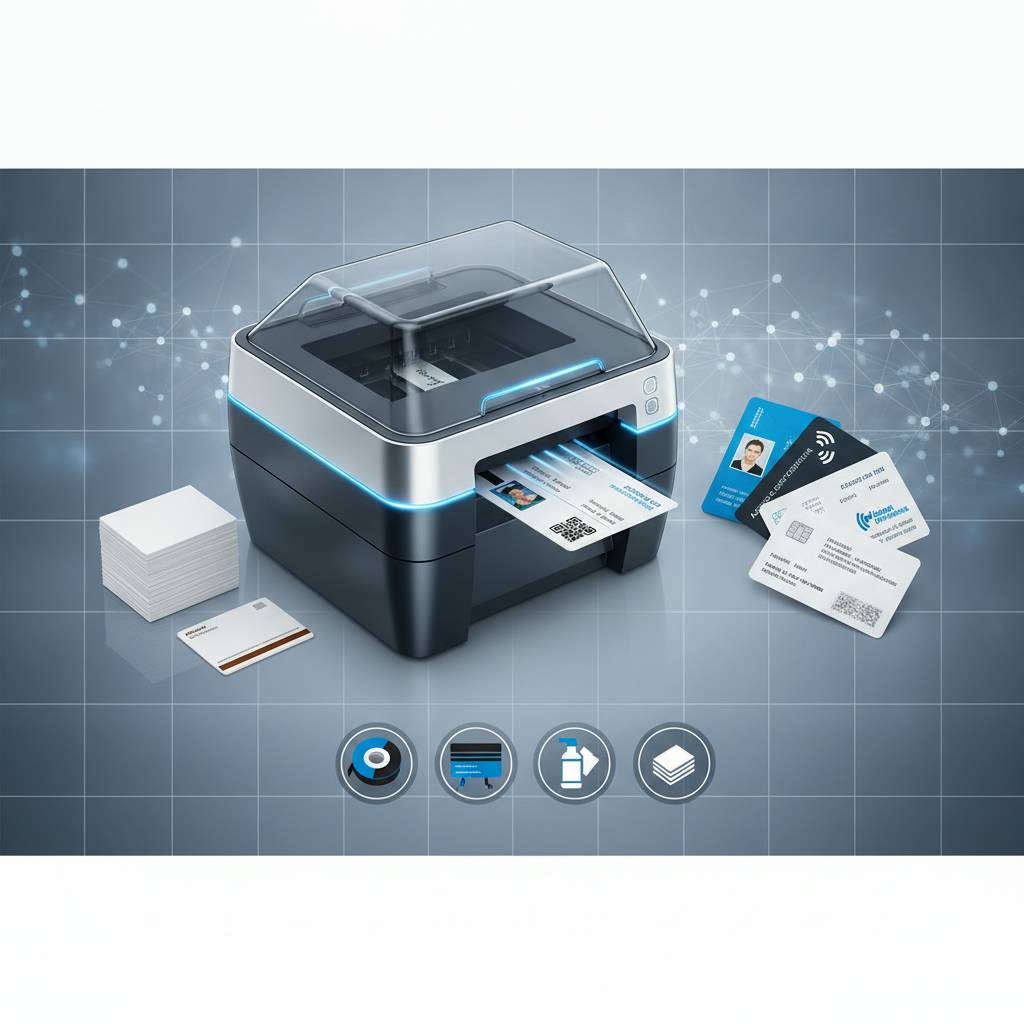 The selection at Plastic Card ID is intentionally curated, not exhaustive. Every brand on the lineup earned its place through real-world performance in professional card programs. These are not consumer products with professional price tags - they are purpose-built production tools with the engineering quality that security-focused programs demand.
Understanding the character and strengths of each brand helps buyers make confident decisions rather than defaulting to whichever model appears first in a search result. Here's a brief profile of each manufacturer in the CPE lineup relevant to access control applications.
Evolis: Versatility and Print Quality at Every Scale
Evolis printers are known for exceptional print quality across their entire range, from the entry-level Badgy200 to the premium Agilia. Their encoding options are broad and well-integrated, making them a natural fit for access programs that require magnetic stripe or smart card credentials alongside professional photo printing. The Primacy2 in particular has become a favorite among mid-size enterprise access programs for its combination of dual-sided output, encoding flexibility, and competitive total cost of ownership.
The Evolis Agilia represents the top of the brand's consumer offering, delivering edge-to-edge printing with the kind of output quality that makes access credentials look genuinely authoritative. For organizations where the card is also a brand statement - executive ID programs, government credentials, premium facility passes - the Agilia delivers results that are hard to match.
Fargo and Zebra: Enterprise Security Stalwarts
Fargo printers have long been the choice of government agencies, healthcare systems, and higher education institutions where access control is tightly regulated. Their integration with HID's broader identity and access management platform gives Fargo a unique advantage in environments where the printer is one component of a larger, managed security infrastructure. When compliance, auditability, and credential security are paramount, Fargo consistently earns its position on the shortlist.
Zebra brings enterprise reliability and deep integration with corporate IT environments. The ZC Series handles mid-to-high volume access card production with consistent encoding performance and the brand durability that Zebra has built across its full product portfolio. For organizations already running Zebra hardware in other parts of their operations, extending that relationship to card printing is a natural and often cost-effective choice.
Matica: Speed When It Counts
The Matica Event Printer occupies a specific but important niche: high-speed credential printing at events, temporary facilities, or onboarding drives where large numbers of access badges need to be issued quickly, on-site, and in real time. Think large corporate training events, facility grand openings, or emergency contractor mobilizations. When speed of issuance is the primary constraint, Matica delivers.
For organizations that run periodic high-volume issuance events in addition to routine day-to-day printing, combining a Matica unit with a mid-range workhorse like the Evolis Primacy2 gives the access program both steady-state efficiency and burst capacity. CPE can help you think through that kind of multi-printer configuration for organizations with variable issuance demands.
Get Started with Plastic Card ID - Your Trusted Partner for Access Control Card Printing
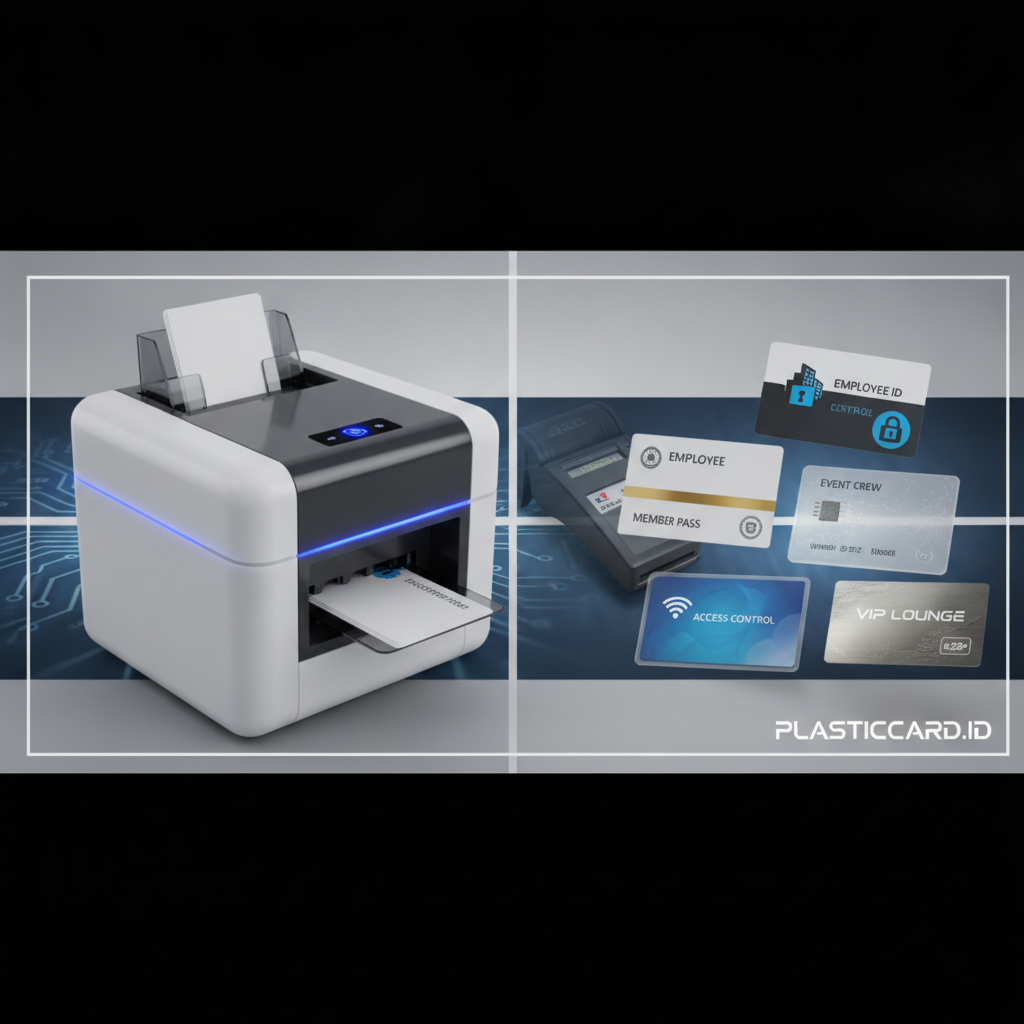 The right plastic card printer for your access control program is not a generic purchase decision. It depends on your volume, your encoding requirements, your access control platform, your design goals, and your budget for both hardware and ongoing supplies. These variables interact in ways that a spec sheet alone can't resolve - and that's exactly where CPE's 25 years of experience becomes genuinely valuable to the buyer.
With over 100,000 customers served across the United States, Plastic Card ID has encountered virtually every access card printing scenario imaginable. The team can help you specify the right printer, the right encoding module, the right ribbon type, and the right supply cadence to keep your program running smoothly from day one. There's no guesswork, no overselling, and no recommending hardware that doesn't fit your actual use case.
Ready to take control of your access card program? Call Plastic Card ID today at 800.835.7919 and speak with a specialist who understands exactly what professional access card printing requires. From your first card to your fifty-thousandth, Plastic Card ID has the hardware, the supplies, and the expertise to keep your program running at its best.
Previous Page