Plastic Card Printer: Find the Right Model for Your Needs
Table of Contents []
- Your Trusted Source for Plastic Card Printers - Plastic Card ID
- What Makes a Plastic Card Printer the Right Fit for Your Organization?
- The Industry's Leading Brands, Curated in One Place
- Supplies That Keep Your Card Program Running Strong
- The Real Value of In-House Card Printing
- Frequently Asked Questions About Plastic Card Printers
- Buyer Tips: Making the Right Plastic Card Printer Decision
- Start Your Card Program with Confidence - Contact Plastic Card ID Today
Your Trusted Source for Plastic Card Printers - Plastic Card ID
 There's a moment in every growing organization when handing out generic, outsourced ID cards just stops making sense. Whether you're running a 200-person company, managing a university campus, or coordinating a live event with thousands of attendees, the ability to print professional plastic cards in-house transforms how you operate. That's exactly where Plastic Card ID comes in.
With more than 25 years of hands-on experience supplying plastic card printers and supporting hardware to businesses across the United States, Plastic Card ID has grown into one of the country's most trusted names in card printing solutions. The numbers speak for themselves: over 100,000 customers served, a curated lineup of elite-brand printers, and a depth of product knowledge that simply can't be faked.
This page walks you through everything you need to know - choosing the right plastic card printer, understanding the supplies that keep programs running, and recognizing the real-world value of bringing card production under your own roof.
| Production Volume | Recommended Tier | Example Models |
|---|---|---|
| Under 1,000 cards/year | Entry-Level Desktop | Evolis Badgy200 |
| 1,000-6,000 cards/month | Mid-Range Workhorse | Evolis Zenius, Primacy2 |
| High-volume or continuous | Industrial / Premium | Evolis Agilia, Matica Event Printer |
| Security-focused ID programs | Security-Grade | Fargo, Zebra Series |
What Makes a Plastic Card Printer the Right Fit for Your Organization?
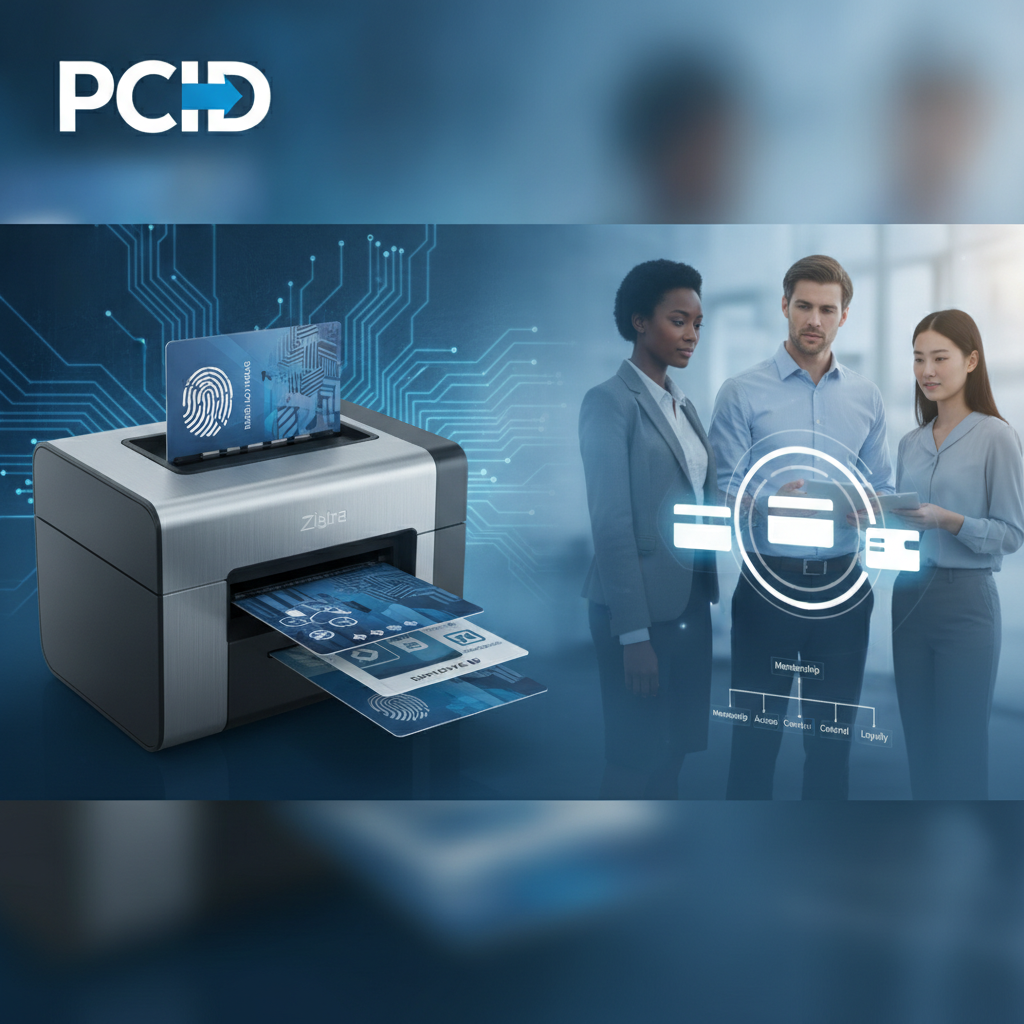 Not every plastic card printer is built for the same job. Buying without clarity on your volume, encoding needs, and card finish requirements is one of the most common and costly mistakes buyers make. Understanding the landscape before you purchase saves time, money, and frustration.
The right printer matches your workflow - not just today's workflow, but where your organization is heading. A hospital adding new staff monthly has very different demands than a hotel encoding key cards for thousands of guests per season. Both need a plastic card printer; the specs that matter most are entirely different.
Entry-Level Desktop Printers: Smart Starts for Low-Volume Needs
For organizations printing fewer than 1,000 cards per year, an entry-level desktop unit delivers everything necessary without overcomplicating the process. The Evolis Badgy200 is a standout in this category - compact, intuitive, and genuinely capable of producing crisp, professional-quality cards that represent your brand well.
Small businesses, nonprofits, and local clubs often start here. The setup is straightforward, the footprint is minimal, and the per-card output quality is far better than most people expect from an entry-level machine. Don't underestimate what a well-designed entry-level plastic card printer can do.
Mid-Range Printers: The Workhorses Your Team Will Rely On
Step into the mid-range tier and the conversation shifts toward durability, throughput, and expanded encoding options. The Evolis Zenius and Primacy2 are built for organizations processing 1,000 to 6,000 cards per month - think corporate HR departments issuing employee IDs, universities managing student credentials, or membership-based organizations onboarding hundreds of new members regularly.
These models offer dual-sided printing and magnetic stripe encoding, two features that unlock a much broader range of card types. A loyalty card with a mag stripe. A student ID that prints on both sides. An access control card with visual and encoded data working together. Mid-range printers handle it all without breaking a sweat.
Premium and Industrial Printers: When Only the Best Will Do
Some applications demand edge-to-edge, photographic-quality output at scale. Government agencies, large enterprises, and high-security facilities don't have margin for compromise. The Evolis Agilia was designed for exactly these environments - delivering premium results card after card with the kind of consistency that mission-critical programs require.
On the event side, the Matica Event Printer addresses a very specific but high-stakes use case: live badge printing at conferences, trade shows, and major events. Speed and reliability on-site aren't optional - they're everything. CPE carries these high-performance machines precisely because not every customer's need fits a standard mold.
The Industry's Leading Brands, Curated in One Place
Carrying every printer on the market would be easy. Carrying the right ones - the printers that actually perform, that have proven track records in real business environments, and that are supported by robust supply chains - takes discipline. Plastic Card ID stocks a deliberately curated lineup from four of the most respected names in the industry.
Each brand in the lineup brings distinct strengths. Understanding those differences helps buyers choose with confidence rather than guesswork.
Evolis: Precision Engineering Across Every Tier
Evolis has earned its reputation through consistent engineering, clean design, and a product range that covers virtually every production scenario. From the accessible Badgy200 to the powerhouse Agilia, Evolis printers are known for reliable color reproduction, intuitive operation, and smart ribbon management that reduces waste and simplifies maintenance.
The Primacy2 deserves particular mention as a mid-range machine that punches above its weight. Dual-sided printing, lamination module compatibility, and multiple encoding options make it one of the most versatile plastic card printers in its class. For organizations that need flexibility without a massive capital investment, the Primacy2 consistently delivers.
Fargo and Zebra: Purpose-Built for Security-Driven ID Programs
When the card being printed is also an access credential, a government-issued ID, or a security badge, the printer producing it needs to meet a higher standard. Fargo and Zebra printers are engineered with security-focused workflows in mind - supporting encoding technologies, overlay panels, and verification features that protect the integrity of every card produced.
These are not printers for casual use. They're industrial-grade tools built to serve law enforcement, corporate security teams, healthcare networks, and government programs that take credential integrity seriously. CPE maintains stock of these systems because the clients who need them can't afford substitutes.
Matica: Speed Where It Counts Most
Live events present a card printing challenge that most printers aren't designed to meet. High volumes, tight time windows, and no room for downtime - the Matica Event Printer thrives in these conditions. Whether it's badging 500 conference attendees at registration or printing credentials for a sporting event, Matica's engineering focuses on speed without sacrificing output quality.
Event managers and trade show organizers who've run on-site badge printing operations understand the stress of a slow printer during peak check-in. The Matica Event Printer eliminates that bottleneck entirely, making it a genuinely essential tool for high-traffic event environments.
| Brand | Primary Strength | Best For |
|---|---|---|
| Evolis | Range and versatility | Most business types and volumes |
| Fargo | Security features | Government and enterprise security |
| Zebra | Durability and encoding | High-security ID programs |
| Matica | On-site speed | Live events and high-speed badging |
Supplies That Keep Your Card Program Running Strong
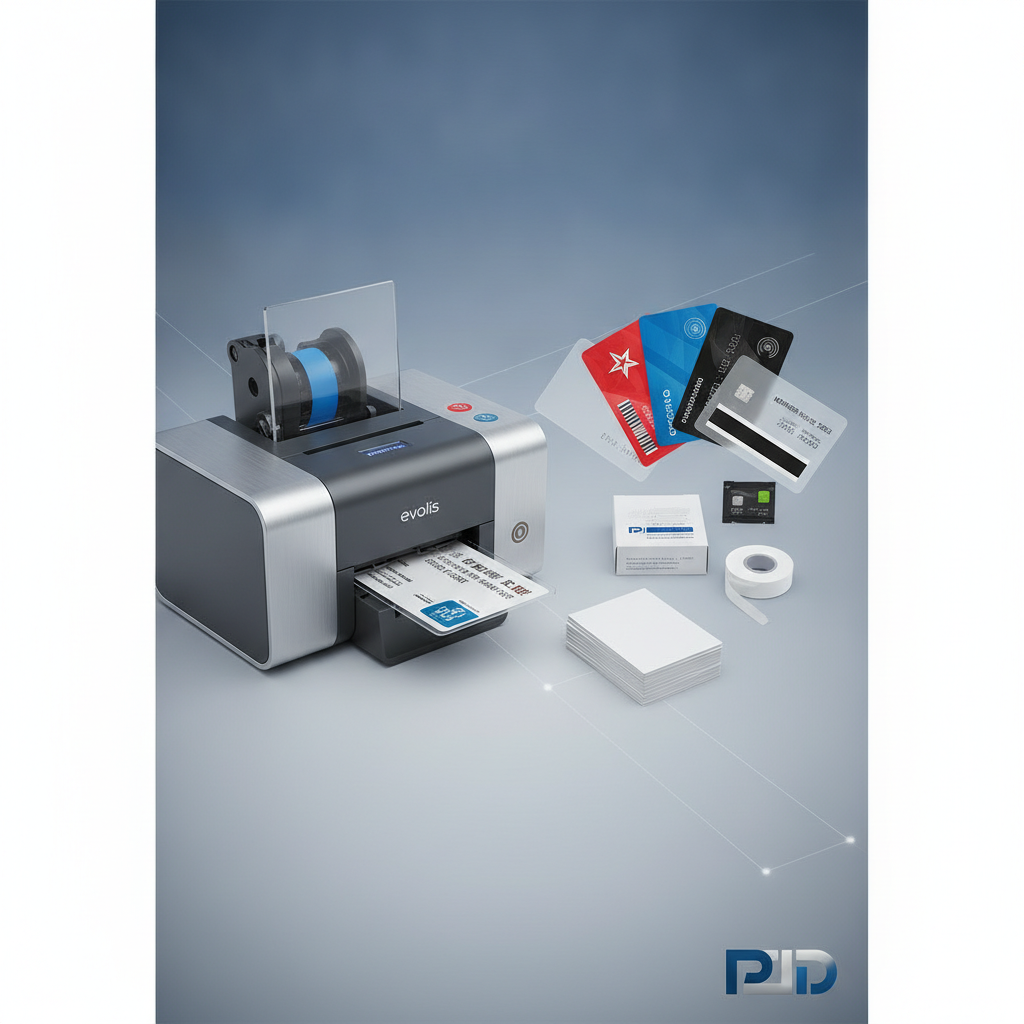 A plastic card printer is only as good as the supplies feeding it. Organizations that invest in a quality printer and then cut corners on ribbons or cleaning kits end up with inconsistent output, premature printhead wear, and avoidable downtime. The complete supply chain matters just as much as the hardware itself.
Plastic Card ID supplies everything needed to maintain a fully operational card printing program - from the ribbons that lay color to the cleaning kits that protect your printhead investment over the long term.
Printer Ribbons: Choosing the Right Formula for Your Cards
Ribbon selection is one of the most consequential decisions in a card printing operation. The wrong ribbon for the application leads to washed-out colors, poor adhesion, or unnecessary cost per card. Plastic Card ID carries YMCKO ribbons for full-color photo-quality output, monochrome ribbons for high-speed single-color text and barcode printing, and specialty ribbons for applications requiring additional security or durability layers.
YMCKO ribbons - Yellow, Magenta, Cyan, Black, and Overlay - are the industry standard for full-color ID cards. The overlay panel adds a protective coating that extends card life and resists scratching. For organizations printing text-only cards like basic access badges or temporary visitor passes, monochrome ribbons offer a dramatic reduction in cost per card while maintaining sharp, readable output.
Cleaning Kits and Maintenance Supplies
Printhead replacement is expensive. Regular cleaning is not. It's that simple. Dust, card debris, and ribbon residue accumulate over time inside any plastic card printer, and without routine cleaning, output quality degrades and hardware lifespan shortens. Professional-grade cleaning kits from CPE include everything needed to maintain peak performance across regular maintenance cycles.
Most manufacturers specify cleaning intervals by card count - typically every 1,000 cards printed. Following those schedules isn't optional maintenance; it's the difference between a printer that performs reliably for years and one that requires costly service calls. Consistent cleaning is the single most impactful thing users can do to protect their printer investment.
Encoding Upgrades, Lamination, and Card Accessories
Many plastic card printers support optional encoding modules that add magnetic stripe writing, smart chip programming, or both. These upgrades transform a visual-only card into a functional credential that can open doors, log attendance, store loyalty points, or authenticate identity. Plastic Card ID supplies encoding upgrades compatible with the major printer platforms in its lineup, making it straightforward to expand a printer's capabilities as program needs evolve.
Lamination modules add a durable overlay film to finished cards, extending usable life significantly - particularly valuable for cards subject to heavy daily handling like employee badges or transit passes. Input hoppers, card carriers, and card sleeves round out the accessory catalog, addressing everything from bulk printing logistics to protecting finished cards during distribution. Call 800.835.7919 to discuss which accessories make sense for your specific card program.
The Real Value of In-House Card Printing
 Organizations that shift from outsourced card production to in-house printing frequently describe it as one of the most impactful operational decisions they've made. The control, the speed, the flexibility - none of these benefits are fully appreciated until you've experienced the alternative.
Waiting two weeks for a batch order from an outside vendor, then discovering a data error on 50 cards, then reordering and waiting again - that cycle is a real cost. In-house printing eliminates it entirely. Print on demand. Correct errors in seconds. Personalize every card individually. Encode data at the time of print. The advantages compound quickly.
Print on Demand: No Minimum Orders, No Lead Times
One of the most immediate benefits of owning a plastic card printer is the ability to print exactly what you need, exactly when you need it. New employee starts Monday? Print the badge Friday afternoon. Guest speaker arriving for an event? Print a custom credential an hour before they walk through the door. This kind of responsiveness simply isn't possible with outsourced card production.
The financial case is equally compelling. Ordering in bulk from outside vendors means paying for cards you haven't used yet and storing them until needed - which creates inventory management overhead and waste when designs change. Print-on-demand keeps inventory lean and card designs current without the carrying costs of pre-ordered stock.
Personalization and Encoding at the Point of Print
Every card your printer produces can be completely unique. Photo, name, title, department, unique ID number, access level - all of it can be embedded at print time through your card design software. Combine that with magnetic stripe or smart chip encoding, and you have a credential that's visually personalized and functionally unique from the moment it's printed.
This matters enormously in applications like hospital staff credentials, university student IDs, and corporate access control programs. The alternative - bulk-printed generic cards with handwritten names or separate encoding steps - introduces errors, delays, and security gaps that in-house printing avoids entirely. CPE helps organizations understand exactly which printer and encoding configuration achieves their specific personalization goals.
Applications Across Industries
The range of organizations using plastic card printers in-house is remarkably broad. What unites them is the need for professional, durable, personalized cards produced on their own timeline. Consider how differently each of the following applies the same core technology:
- Employee ID cards for corporate offices, manufacturing facilities, and healthcare networks
- Student IDs for K-12 schools, colleges, and universities
- Membership cards for gyms, clubs, associations, and subscription services
- Loyalty cards for retail businesses, restaurants, and hospitality brands
- Access control cards for buildings, parking facilities, and secure zones
- Hotel key cards encoded for room access and guest services
- Event credentials and conference badges for trade shows and live events
- Visitor passes and temporary credentials for schools and corporate campuses
Each of these applications is well within reach of the plastic card printers Plastic Card ID supplies. The specifics of which machine fits which use case are exactly the kind of guidance the team is prepared to provide.
Frequently Asked Questions About Plastic Card Printers
First-time buyers often arrive with similar questions. Answering them clearly is part of what Plastic Card ID does best - and it's part of why customers return when their programs grow and their needs evolve.
How long does a plastic card printer last?
With proper maintenance, a professional-grade plastic card printer can serve reliably for many years. The key variables are print volume relative to rated capacity, adherence to cleaning schedules, and using manufacturer-approved ribbons and supplies. Overloading an entry-level printer with mid-range volumes will shorten its life; matching the machine to the workload extends it significantly.
Most professional machines are rated by printhead life in card counts. Following manufacturer cleaning intervals - typically every 1,000 cards - and replacing cleaning rollers as scheduled are the two most important habits for maximizing printer longevity. Proper care turns a printer purchase into a long-term asset rather than a short-term expense.
What is the cost per card for in-house printing?
Cost per card varies based on printer model, ribbon type, and whether lamination is used. For a full-color YMCKO card without lamination, typical cost per card runs in a range that's highly competitive against outsourced printing - especially once volume reaches even a few hundred cards annually. Monochrome cards cost significantly less per card and are ideal for applications where color isn't required.
The true cost-per-card comparison with outside vendors must also factor in shipping, minimum order requirements, design change fees, and lead time costs. When those elements are included, in-house printing almost always demonstrates clear financial advantage at even modest volumes. Contact 800.835.7919 for help running a comparison based on your actual program needs.
Can I upgrade my printer later to add encoding?
Many plastic card printers in Plastic Card ID's lineup support field-installable encoding upgrades, meaning you can start with a base model and add magnetic stripe or smart chip encoding capability as your program requires. This modularity makes it possible to enter at a lower price point without permanently limiting your program's future capabilities.
Not every model supports every upgrade, so it's worth discussing your anticipated future needs at the time of purchase to ensure the base machine you select supports the upgrade path you're likely to need. The team at CPE is well-versed in the upgrade compatibility matrix across all supported brands and models.
Buyer Tips: Making the Right Plastic Card Printer Decision
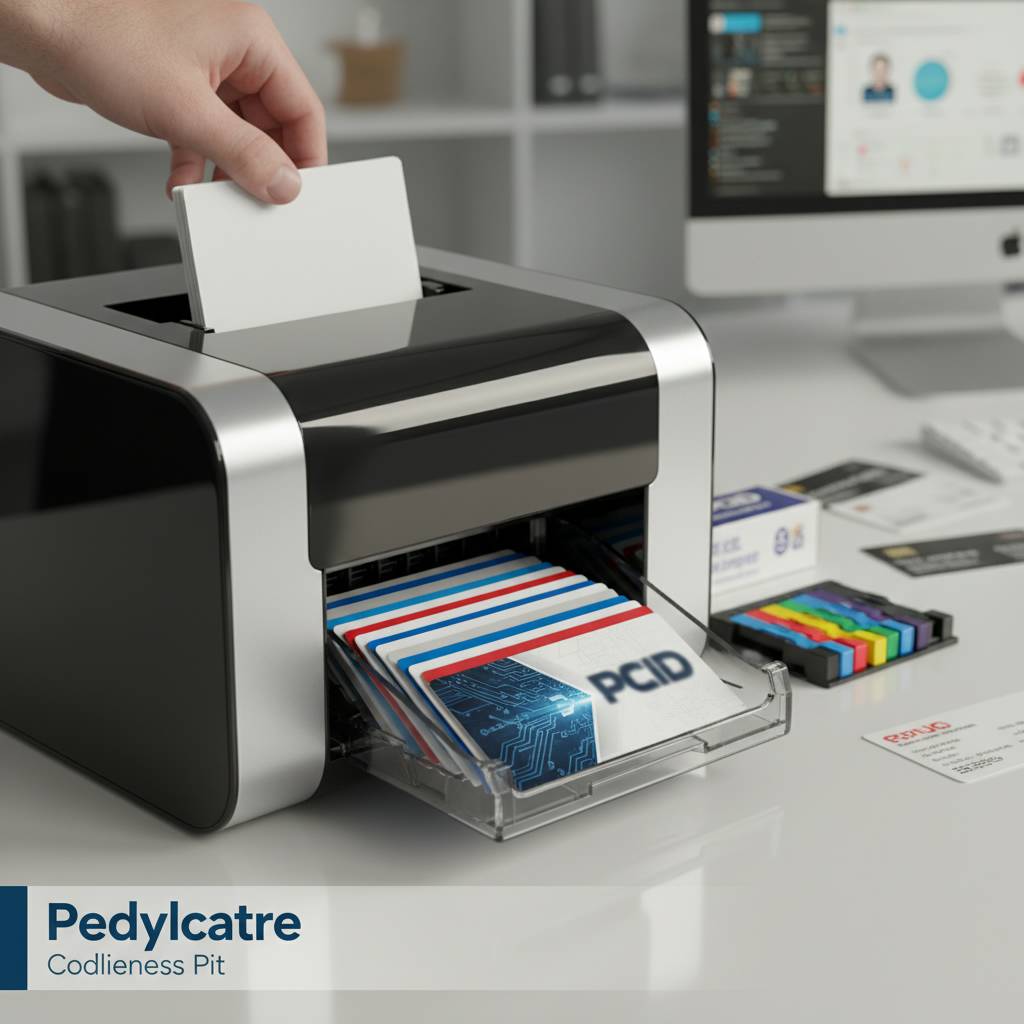 After 25 years and more than 100,000 customers, Plastic Card ID has seen every type of buying decision - good and bad. The most successful purchases share a few common characteristics, and the most regrettable ones share a few common mistakes. Here's what the experience of a quarter-century in this industry teaches.
Match the Machine to Your Real Volume
Overestimating volume and buying an industrial printer you don't need wastes capital. Underestimating and buying a desktop unit that can't keep pace creates operational headaches. Be honest about your actual projected volume - not your theoretical maximum, but your realistic monthly and annual card count - and let that number guide your tier selection.
If volume is genuinely uncertain, erring slightly toward a machine with more capacity than you currently need is wiser than the reverse. Upgrading prematurely because the entry-level machine can't keep up is a disruptive and avoidable expense. A thoughtful volume assessment at the start saves real money over the printer's life.
Think About Total Program Cost, Not Just Purchase Price
The printer's sticker price is only part of the financial picture. Ribbon yield, cleaning supply costs, lamination film if used, and the occasional printhead replacement are all real program expenses. A printer that appears cheaper at purchase may carry higher per-card ribbon costs that make it more expensive over time than a slightly higher-priced unit with better ribbon efficiency.
Asking about ribbon yield - how many cards per ribbon panel - and factoring that into your cost-per-card estimate gives you a much clearer picture of actual program economics. CPE can provide this analysis for any model in the lineup, making it straightforward to compare total cost of ownership across options.
Don't Overlook Supplies and Support Availability
A plastic card printer is only as valuable as the supply chain supporting it. Ribbons run out. Cleaning kits get used. Occasionally, a part needs replacement. Choosing a printer from a brand with reliable, available supplies - and buying from a supplier with a proven track record of having those supplies in stock - protects your program from unnecessary downtime.
- Verify ribbon availability and lead times before committing to a printer model
- Confirm cleaning kit specifications for your chosen machine
- Ask about warranty terms and service options
- Understand whether encoding upgrades are field-installable or require factory service
- Check software compatibility with your existing systems before purchase
These questions aren't obstacles to a purchase - they're the foundation of a purchase you won't regret. The team at Plastic Card ID welcomes them all.
Start Your Card Program with Confidence - Contact Plastic Card ID Today
 Whether you're launching a brand-new card program or upgrading aging hardware that's no longer meeting your demands, Plastic Card ID has the expertise, the inventory, and the support infrastructure to help you get it right. More than 25 years of focused experience in plastic card printers - not a sideline, not a secondary category, but a genuine specialization - means the guidance you receive is grounded in real knowledge of real products in real-world applications.
The lineup spans entry-level desktop units all the way to high-throughput industrial systems. Supplies, accessories, and encoding upgrades are stocked and available. And the team knows this equipment deeply enough to ask the right questions and match you to the right solution rather than simply moving product.
Ready to find the right plastic card printer for your organization? Contact Plastic Card ID today at 800.835.7919 - and let a team with over 100,000 satisfied customers help you get it exactly right.
Previous Page