Plastic Card Printer Price Range Guide for Buyers
Table of Contents []
- Your Complete Plastic Card Printer Price Range Guide from Plastic Card ID
- Entry-Level Card Printers: The $300-$500 Price Range
- Mid-Range Card Printers: The $700-$2,500 Price Band
- Professional and Premium Card Printers: $2,500-$5,000
- High-Volume and Event Printing: The $5,000 Category
- Supplies, Accessories, and Total Cost of Ownership
- Buyer's Guide: Choosing the Right Price Tier for Your Program
Your Complete Plastic Card Printer Price Range Guide from Plastic Card ID
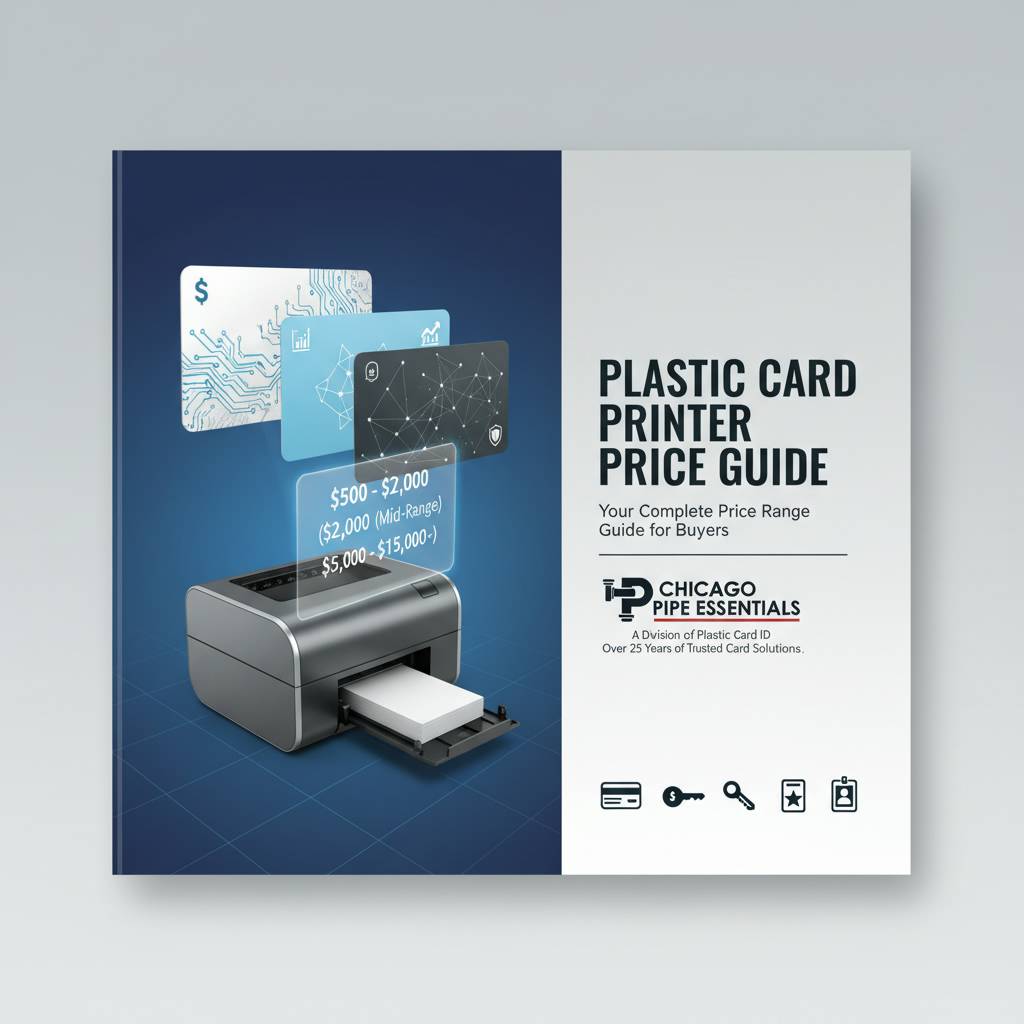 Choosing a card printer without understanding the pricing landscape is a bit like shopping for a vehicle without knowing the difference between a compact car and a heavy-duty truck. The numbers matter - but only when you know what drives them. This guide breaks down exactly what you can expect to spend, and more importantly, why different printers command different price points across every level of production volume and feature set.
Plastic Card ID has spent over 25 years supplying professional card printing hardware to businesses across the United States, serving more than 100,000 customers along the way. That experience translates directly into practical guidance - not just a list of specs, but real-world context for making smart purchasing decisions. Whether you're issuing employee badges for a 10-person office or running a high-volume credential program for a university, the right printer at the right price exists for you.
Why Price Range Matters More Than You'd Think
It's tempting to anchor on the lowest price and work upward. But underbuying is a real and costly mistake. A printer rated for 500 cards per year will wear out quickly under a 3,000-card-per-month workload - and then you're replacing equipment, not just maintaining it. Matching your production volume to the correct price tier is the single most important purchasing decision you'll make.
Conversely, overspending on industrial-grade equipment when you print 200 cards annually means you're carrying overhead that never pays off. This guide is designed to help you find the precise intersection of capability and cost - the sweet spot where performance meets budget without waste.
What's Actually Included in the Price
Card printer pricing is rarely just about the printing mechanism itself. The sticker price typically reflects included software, encoder options, ribbon capacity, hopper size, connectivity, and warranty terms. Entry-level models often come with basic software licenses and limited encoding; higher-tier units may bundle lamination, dual-sided printing, and multi-card hoppers into the base price.
Consumables - ribbons, cleaning kits, and card stock - are separate recurring costs that need to factor into your total cost of ownership calculation. A printer that costs $300 upfront but requires expensive specialty ribbons may cost more over three years than a $700 unit running standard YMCKO ribbon. CPE helps customers understand both the hardware and the ongoing supply chain.
How This Guide Is Organized
The sections below move from entry-level to enterprise-grade, covering specific models, price bands, and the features that justify each jump in investment. You'll find comparison tables, buyer tips, and honest assessments of where each tier shines - and where it doesn't. Read straight through or jump to the section that matches your estimated annual card volume.
Every price reference in this guide reflects typical retail ranges. Actual pricing may vary based on configuration, optional add-ons, and current availability. Reach out to Plastic Card ID directly for precise quotes tailored to your specific program requirements.
| Tier | Annual Volume | Typical Price Range | Example Models |
|---|---|---|---|
| Entry-Level | Under 1,000 cards/year | $300-$500 | Evolis Badgy200 |
| Mid-Range | 1,000-6,000 cards/month | $700-$2,500 | Evolis Zenius, Primacy2 |
| Professional | High-quality output focus | $2,500-$5,000 | Evolis Agilia, Fargo, Zebra |
| Industrial/Event | High-throughput, on-site | $5,000 | Matica Event Printer |
Entry-Level Card Printers: The $300-$500 Price Range
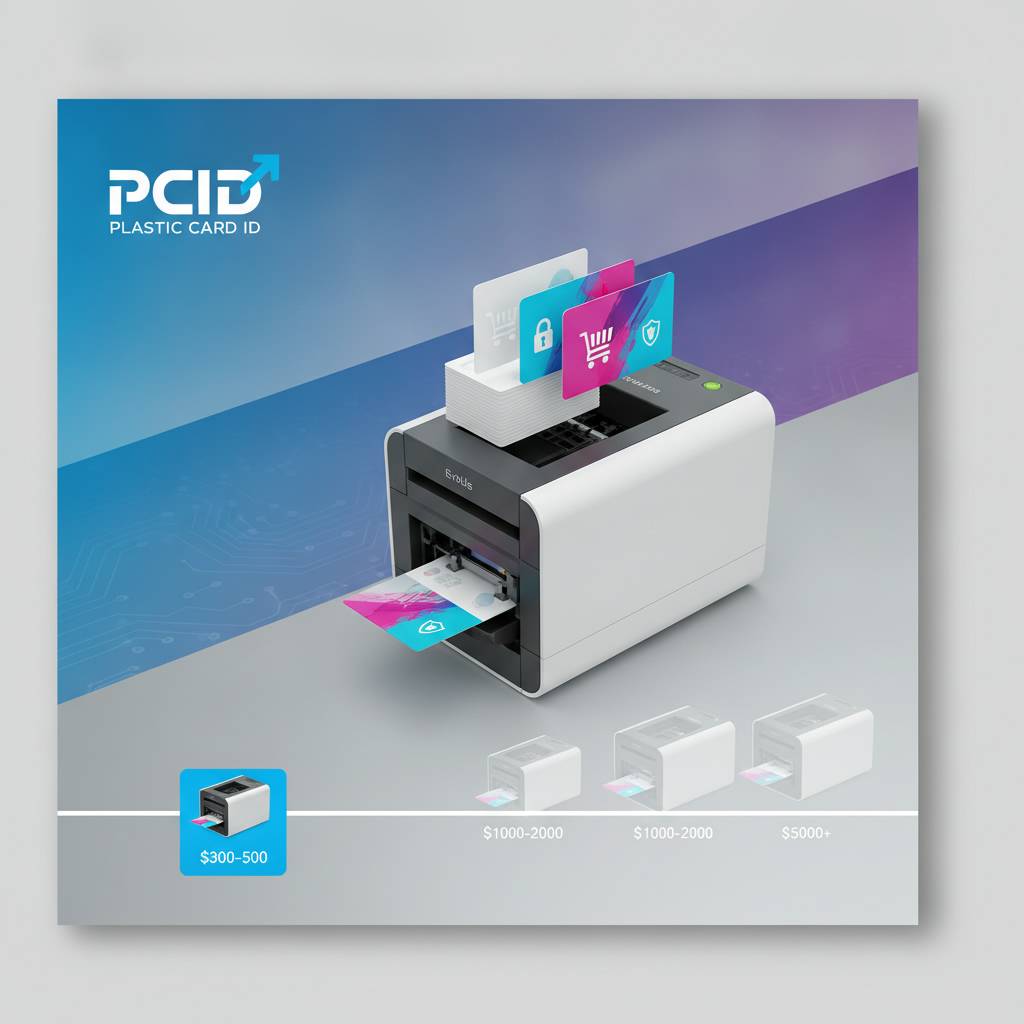 For small organizations with modest badge programs - think a boutique fitness studio issuing membership cards or a small nonprofit printing volunteer credentials - the entry-level price range covers everything necessary to get a professional card program off the ground. These machines are compact, straightforward, and purpose-built for low-frequency printing without complexity or steep learning curves.
The flagship of this category is the Evolis Badgy200, a desktop printer engineered for organizations printing fewer than 1,000 cards per year. Its retail price typically lands in the $300-$500 range, and it includes bundled card design software that eliminates the need for additional investment in desktop publishing tools. It's a genuinely complete out-of-the-box solution for programs that don't require encoding or lamination.
Who Should Buy at This Price Point
Small businesses, community organizations, schools with limited ID requirements, and event organizers running one-off badge programs are ideal candidates for entry-level hardware. If your card printing needs are infrequent and your cards don't require magnetic stripe encoding or chip functionality, spending more is simply unnecessary.
That said, this tier has real ceilings. Print speed is slower, ribbon cartridges hold fewer prints per roll, and the duty cycles are calibrated for light use. Pushing an entry-level machine into mid-volume territory accelerates wear and leads to premature failure - a scenario that ends up costing more than buying the right tool upfront.
Consumables Cost at the Entry Level
YMCKO ribbons for entry-level printers typically yield 100 prints per roll in the Badgy200 ecosystem. Ribbon costs per card are slightly higher at this tier compared to mid-range or professional printers, simply because the economy of scale improves as ribbon capacity increases in higher-end models. Budget roughly $0.25-$0.60 per card in consumables at this level.
Cleaning kits are inexpensive and should be used regularly - typically every 500 cards or at ribbon change. CPE stocks all compatible consumables for the Badgy200 line, so sourcing isn't an issue. Establishing a regular cleaning routine at this level significantly extends print head life and card output quality over time.
Realistic Expectations for Entry-Level Output
Print quality at this tier is solid for standard ID applications - full-color photo IDs, membership cards, staff badges. Don't expect edge-to-edge borderless printing or laminate overlays at this price point; those features live in higher tiers. For clean, professional-looking cards on a tight budget, however, entry-level hardware absolutely delivers.
Contact 800.835.7919 to confirm current pricing and availability on the Evolis Badgy200 and compatible consumables before making your purchase decision.
Mid-Range Card Printers: The $700-$2,500 Price Band
This is where the market gets genuinely interesting. The mid-range tier encompasses a wide spectrum of capability - from single-sided workhorses handling steady monthly volumes to dual-sided printers with built-in magnetic stripe encoding. Most businesses with active, ongoing card programs belong somewhere in this range. It's the workhorse zone of professional card printing.
Two Evolis models anchor this category effectively: the Zenius and the Primacy2. The Zenius operates as a clean, reliable single-sided printer ideal for programs running 1,000-3,000 cards per month, with pricing typically in the $700-$1,200 range depending on configuration. The Primacy2 steps up to handle higher throughput with improved print speed and optional dual-sided capability, landing in the $1,200-$2,500 range.
Single-Sided vs. Dual-Sided at This Price
Single-sided models print only the front of a card - appropriate when card backs are pre-printed or left blank. Dual-sided (duplex) configurations add a flipper mechanism that automatically flips the card for back-side printing in a single pass. This feature typically adds $300-$600 to the base unit price, depending on the model and brand.
For employee ID cards that carry a photo on the front and emergency contact or policy information on the back, dual-sided printing is a genuine operational advantage - not just a premium feature. The per-card time savings and workflow simplification more than justify the price difference across any program printing 500 cards per month.
Magnetic Stripe Encoding Options
Magnetic stripe encoding is one of the most commonly requested add-on features at this price tier. An integrated magnetic stripe encoder reads and writes data to the mag stripe on ISO-standard CR80 cards - the same form factor used in hotel key cards, loyalty programs, gym memberships, and employee access control systems.
Encoding modules are either integrated into the printer at purchase or added as field-installable upgrades. Expect to add $150-$350 to a mid-range printer's base price for magnetic stripe capability. For programs issuing access control or loyalty cards, this is a non-negotiable feature - and mid-range printers handle it efficiently without requiring enterprise-grade hardware.
Fargo and Zebra Mid-Range Options
Fargo and Zebra also offer competitive mid-range hardware through Plastic Card ID. Fargo's HDP (High Definition Printing) technology prints onto a transfer film rather than directly onto the card, producing sharper edge resolution and a protective overlay in a single pass - a particularly valued feature for security-focused ID programs where card durability and tamper-resistance matter.
Zebra's mid-range printers bring enterprise connectivity and management features down to accessible price points - useful for IT-managed environments where printer fleet integration matters. Both brands occupy the mid-to-upper range of the $700-$2,500 window and deliver robust, reliable performance for demanding professional ID programs. Call 800.835.7919 for a side-by-side comparison tailored to your specific application.
Professional and Premium Card Printers: $2,500-$5,000
 At this price level, you're buying a fundamentally different category of output quality and production capability. The machines in this tier produce cards that are genuinely difficult to distinguish from commercially printed stock - edge-to-edge color, precise dye-sublimation gradients, and lamination overlays that harden the card surface against daily wear. This is serious equipment for serious card programs.
The Evolis Agilia leads this tier with its retransfer printing technology, delivering premium print resolution and true borderless output. Organizations requiring the highest visual fidelity - branded corporate ID cards, premium loyalty cards, or high-security credentials - find the Agilia's output quality justifies every dollar of its price premium. For programs issuing cards that represent the brand externally, appearance is a business asset.
Lamination Modules and Security Features
Lamination modules - available as integrated or add-on units - apply a clear or holographic overlay to the printed card surface after printing. This adds physical durability, UV resistance, and a security element that makes card duplication significantly more difficult. Laminate overlays can extend card lifespan by two to three times compared to non-laminated output, reducing replacement frequency and long-term cost.
Holographic laminate films add a visual anti-counterfeiting layer particularly valued in government ID, university credential, and corporate access control programs. These overlay films are priced separately from the base printer and vary by design and quantity, but they represent a meaningful security upgrade for any organization concerned about credential integrity.
Smart Chip Encoding at This Tier
Contact smart chip (ISO 7816) and contactless smart card (ISO 14443) encoding modules are available at this price tier, enabling the printer to write data directly to embedded chips during the print cycle. This capability supports sophisticated access control systems, multi-function ID cards combining visual ID with electronic authentication, and campus card programs that integrate with dormitory access, dining, and library systems.
Smart card encoding adds $400-$900 to a base unit price depending on contact versus contactless configuration and manufacturer. For organizations building or upgrading access control infrastructure, buying encoding capability integrated into the printer rather than as a separate desktop reader/writer simplifies the card issuance workflow considerably.
Fargo and Zebra at the Professional Level
Fargo's HDP6600 and Zebra's ZC Series occupy competitive positions in this price range, offering high-definition retransfer printing, dual-sided lamination, and advanced encoding options in purpose-built professional configurations. These brands have deep roots in security and government ID markets, and their hardware reflects that heritage with robust construction and extensive software integration ecosystems.
CPE carries the full professional lineup from both brands. If your card program intersects with physical security systems, visitor management platforms, or enterprise identity management software, Fargo and Zebra hardware often provides the tightest integration pathways. Speak with the team at Plastic Card ID to assess compatibility with your existing systems before purchase.
High-Volume and Event Printing: The $5,000 Category
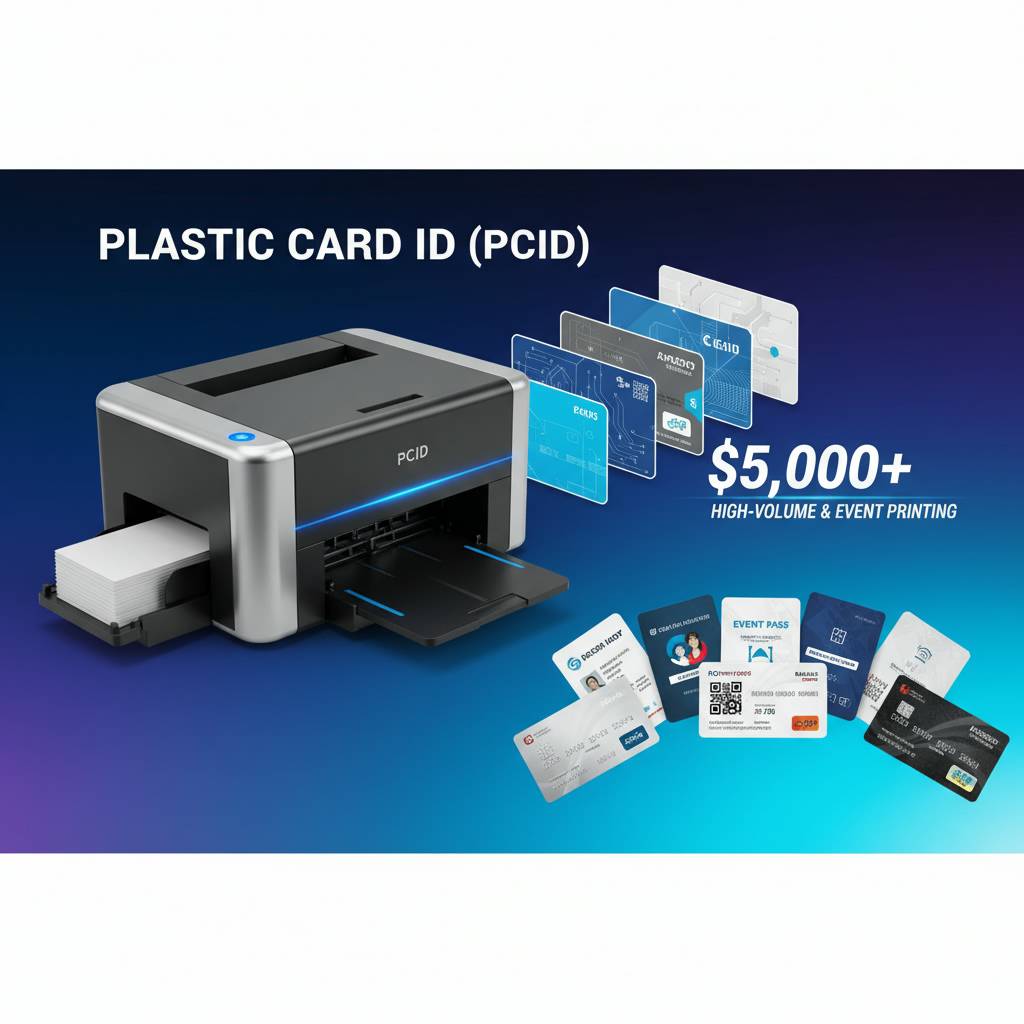 Some organizations don't just need a printer - they need a printing operation. Conference organizers issuing badges to thousands of attendees at check-in. Large employers onboarding hundreds of employees per month. Government agencies running continuous credential issuance programs. For these use cases, industrial and event-grade hardware is the only appropriate answer, and the price reflects it.
The Matica Event Printer is purpose-designed for high-speed, on-site badge production - the kind of scenario where 500 delegates need printed, encoded credentials in a 90-minute registration window. These machines operate at speeds and duty cycles that desktop and mid-range hardware simply cannot sustain, and their construction reflects sustained high-throughput demands rather than occasional use.
What Drives Costs Above $5,000
Industrial printers at this price level incorporate larger input hoppers (often 200 card capacity), faster print engines, more robust motor and roller assemblies, and in many cases network-connected management interfaces for fleet monitoring. Duty cycles are rated in the tens of thousands of cards per month - not hundreds. The engineering investment to achieve that durability and throughput is what justifies the price premium.
Support contracts and extended warranties also become more significant at this investment level. A $500 entry-level printer going down for a day is an inconvenience. A $6,000 industrial printer in a mission-critical credential program going offline is an operational crisis. Factor service agreements and on-site support options into your total cost of ownership analysis at this tier.
Event Credential Programs: A Practical Look
Consider a professional association running its annual conference - 2,000 attendees, 30 sponsors, 150 speakers, all requiring personalized photo badges with embedded access credentials for different session levels. Pre-printing days in advance creates logistical nightmares when registrations change, names need corrections, or late registrants arrive. On-site printing with event-grade hardware solves every one of those problems.
The Matica Event Printer paired with appropriate card design software allows organizers to print, encode, and issue personalized credentials in real time at check-in - reducing queue times, eliminating pre-print waste, and maintaining accurate access control throughout the event. The per-event ROI calculation for organizations running multiple conferences annually often justifies owning the hardware outright rather than renting or outsourcing.
Bulk Hopper and Automation Options
High-volume printers often support expanded input hoppers and output stackers that extend unattended print runs significantly. Standard hoppers hold 100 cards; industrial configurations may hold 300-500. Output stackers collect finished cards without operator intervention. These features reduce labor costs in continuous issuance operations where staff time is a measurable expense.
Contact 800.835.7919 to discuss high-volume configurations, throughput requirements, and whether the Matica Event Printer or an alternative industrial solution best fits your program's specific demands.
Supplies, Accessories, and Total Cost of Ownership
Hardware price is only one dimension of card program cost. The consumables - ribbons, cleaning kits, card stock, and optional laminate films - represent an ongoing investment that compounds over the life of your program. Understanding total cost of ownership, not just sticker price, is what separates smart buyers from those who face budget surprises six months in.
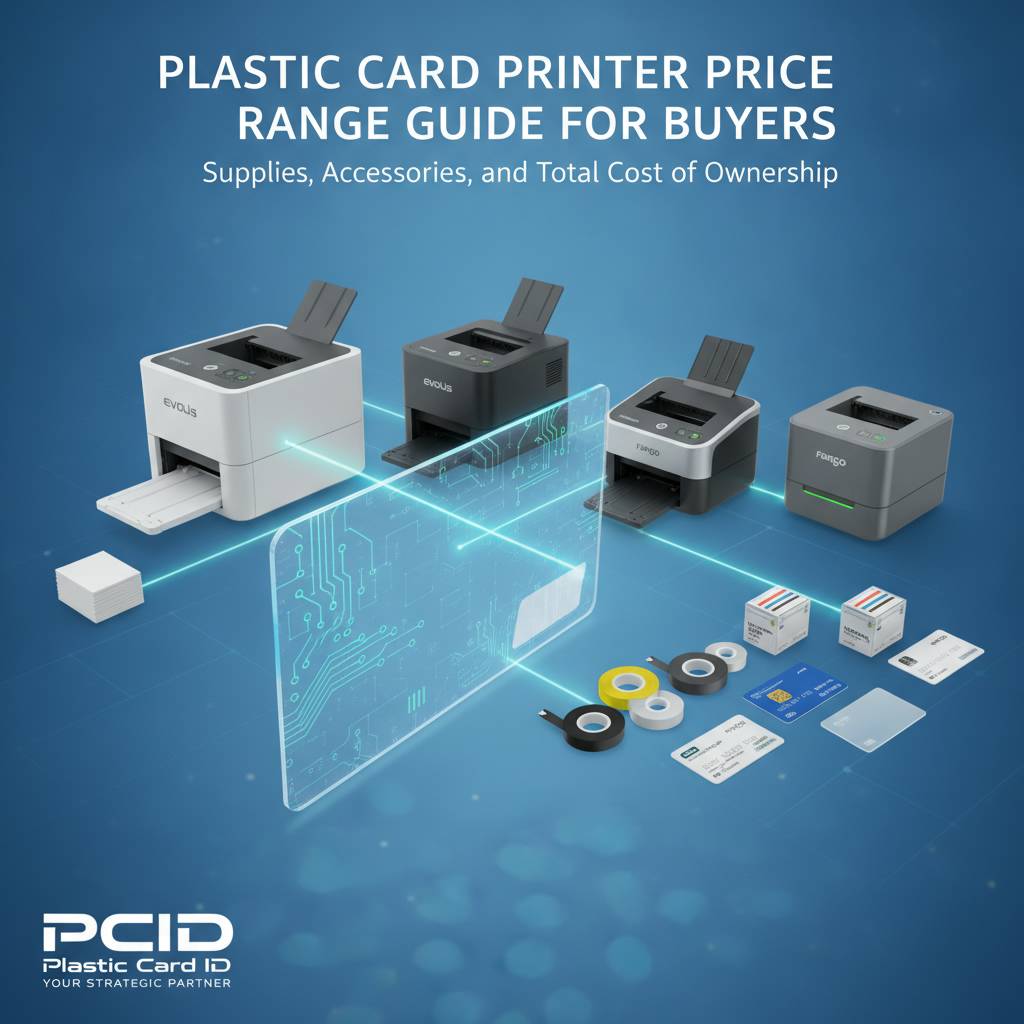
Plastic Card ID supplies the full range of compatible consumables for every printer in its lineup. YMCKO color ribbons for full-color photo ID printing, monochrome ribbons for single-color text and barcode output, specialty ribbon configurations for security overlays - all stocked and available alongside the hardware they support. Buying consumables from the same source as your hardware simplifies procurement and ensures compatibility.
Ribbon Types and Per-Card Cost Estimates
Ribbon selection directly impacts both output quality and per-card cost. Here's a practical breakdown of common options:
- YMCKO (full color overlay): $0.25-$0.65 per card depending on printer tier and ribbon yield. Standard for photo ID and color credential printing.
- Monochrome black (K-only): $0.03-$0.10 per card. Ideal for text-heavy cards, barcodes, or applications where color isn't required.
- YMCKOK (dual K-panel): Adds a second black panel for sharper text on the back of dual-sided cards. Priced between YMCKO and monochrome per card.
- Specialty security ribbons: Include UV-fluorescent panels, holographic overlays, or custom security elements. Priced on a per-program basis.
- Cleaning kits: Required maintenance consumable, typically $10-$30 per kit covering multiple cleaning cycles.
Card Stock, Carriers, and Sleeves
Standard CR80 PVC card stock is priced in the $15-$40 range per 500-card box depending on quality and any pre-applied features (magnetic stripe, chip, proximity antenna). Cards with pre-encoded magnetic stripes cost more than blank PVC but less than having the printer encode individual cards on demand - making pre-striped stock a cost-effective option for high-volume loyalty programs with standardized encoding.
Card carriers and badge sleeves extend the useful life of printed credentials by protecting them during daily use. Retractable badge reels, hard-shell card holders, and vinyl card sleeves are practical accessories that CPE stocks alongside hardware and consumables. Protecting a well-printed card is an investment in the longevity of the credential issuance program as a whole.
Planning Your Annual Supply Budget
A mid-range program printing 2,000 cards per month should budget approximately $500-$1,300 per month in consumables - ribbons, cleaning kits, and card stock combined - depending on ribbon type, card complexity, and whether lamination is part of the workflow. Over 12 months, that's a $6,000-$15,600 operating budget on top of the hardware investment. Factoring this in before purchase prevents the frustrating discovery that the "affordable" printer comes with expensive ongoing supply costs.
Reach out to the team at 800.835.7919 for a comprehensive cost-per-card estimate based on your specific program volume and output requirements.
Buyer's Guide: Choosing the Right Price Tier for Your Program
 With a clear picture of what each price band delivers, the next step is matching your organization's actual needs to the appropriate tier. This doesn't require guesswork - it requires honest answers to a small set of practical questions that any card program manager can answer in five minutes. Getting this right upfront saves money, time, and frustration across the full lifecycle of your card program.
Plastic Card ID has helped over 100,000 businesses navigate exactly this decision. The questions below are the same ones their team asks on every consultation call - and working through them before you reach out will make the conversation shorter and the outcome sharper.
Key Questions Before You Buy
- How many cards do you print per month or per year? Volume is the primary driver of tier selection.
- Do your cards need magnetic stripe encoding, smart chip encoding, or proximity antenna functionality?
- Is dual-sided printing required, or are your cards single-sided only?
- What level of print quality does your application demand - functional identification or polished branded presentation?
- Will this printer be used continuously in an enterprise environment, or intermittently in a smaller office setting?
- What is your total budget for hardware AND consumables over a 12-36 month period?
- Do you need on-site event printing capability, or is your program location-fixed?
Common Buying Mistakes to Avoid
Underbuying for volume is the most common mistake - followed closely by overlooking consumables cost. A third frequent error is purchasing a printer without confirming software compatibility with existing HR, access control, or membership management systems. Most professional card printers work with Windows-based card design software, but specific integrations with enterprise platforms require verification before purchase.
Don't assume the cheapest option is the most economical. A $400 printer that fails in 18 months under inappropriate workload, requiring replacement, costs more than a $900 unit that runs reliably for five years. Total cost of ownership - hardware, consumables, maintenance, and replacement frequency - is the only accurate measure of value in card printing equipment.
When to Call Before You Buy
If your program involves encoding (magnetic stripe, smart chip, or contactless), dual-sided printing, lamination, or integration with security or HR software - call before you buy. These variables interact in ways that affect both hardware selection and configuration choices, and getting expert guidance from CPE before placing an order prevents costly mismatches between equipment and application.
Even experienced buyers in new organizational contexts benefit from a 10-minute consultation. Card program requirements vary widely by industry - healthcare, education, hospitality, corporate, government - and each brings nuances that affect the right hardware recommendation. The team at Plastic Card ID has seen virtually every scenario across 25 years of service to the market.
Ready to find the right card printer at the right price for your program? Contact Plastic Card ID today at 800.835.7919 - your complete plastic card printer price range guide starts with a conversation.
Plastic Card ID - over 25 years of expertise, 100,000 customers served, and the industry's leading brands in one place. Call 800.835.7919 now and put that experience to work for your card program.
Previous Page