ID Card Printer Plastic Cards: Print Professional IDs Fast
Table of Contents []
- Why Plastic Card ID Is the Go-To Source for ID Card Printer Plastic Cards
- Understanding the ID Card Printer Landscape: Brands, Models, and What They Actually Do
- Plastic Cards and Print Supplies: Everything That Keeps the Cards Coming
- Common Use Cases for In-House Plastic Card Printing
- Buyer's Guide: How to Select the Right ID Card Printer
- Frequently Asked Questions About ID Card Printers and Plastic Cards
- Ready to Build Your Card Program? Plastic Card ID Has Everything You Need
Why Plastic Card ID Is the Go-To Source for ID Card Printer Plastic Cards
 There's a moment every organization eventually faces - the realization that outsourcing card production is costing more time, money, and control than it's worth. That's precisely where Plastic Card ID steps in. With more than 25 years of hands-on experience supplying professional-grade ID card printers and plastic cards to businesses across the United States, PCID has built a reputation that over 100,000 customers have come to rely on. Whether you're printing employee badges for a corporate campus or producing loyalty cards for a regional retail chain, the right printer changes everything.
What separates a smart card program from a chaotic one? Control. When you print in-house, you decide the schedule, the quantity, and the design - every single time. No waiting on a vendor. No minimum order. No lead time that stretches into next week when you need 50 new hire badges by Monday morning. Plastic Card ID supplies the hardware, the supplies, and the expertise to make that level of operational independence completely achievable.
This page walks through everything worth knowing about choosing an ID card printer, understanding plastic card printing supplies, and identifying the right solution for your organization's specific scale and use case. Buyer tips, product comparisons, and real-world context are all included - because a purchase this significant deserves more than a spec sheet.
The Real Cost of Outsourcing Your Card Printing
Organizations that rely on outside vendors for plastic card production often underestimate the hidden costs. Rush fees, per-card minimums, shipping charges, and reorder delays add up fast. A mid-sized company ordering employee ID cards quarterly might spend $800-$1,200 per year externally - costs that a quality desktop printer would eliminate within the first 12 months.
Beyond dollars, there's the issue of data. Sending employee names, access levels, and photo data to a third-party print vendor introduces unnecessary exposure. Printing in-house keeps sensitive information exactly where it belongs - on your own network, under your own policies. That's not a minor consideration for HR departments, security teams, or compliance officers.
Who Needs an ID Card Printer? (More Organizations Than You'd Think)
The answer is broader than most people expect. Corporate offices, school districts, hospitals, hotels, fitness centers, event organizers, government agencies, and retailers all have active card programs. Some print 200 cards per year; others print 5,000 per month. The use cases range from employee ID cards and access control badges to membership cards, student IDs, hotel key cards, and event credentials.
Plastic Card ID supports all of these programs with printers calibrated to each production scale. There's no single "best" printer - there's only the best printer for your specific volume, card type, and encoding requirements. That distinction matters, and it's one CPE takes seriously when helping customers select hardware.
Contact Plastic Card ID Before You Buy
Choosing the wrong printer is a costly mistake that's entirely avoidable. Before committing to a model, it pays to speak with someone who understands the full product lineup and can match hardware to your real-world requirements. Call 800.835.7919 to speak directly with a knowledgeable product specialist who can walk you through volume estimates, encoding options, and supply costs.
The consultation costs nothing, and the clarity it provides is invaluable. Many customers arrive thinking they need a high-end unit and discover a mid-range model does the job beautifully - at a fraction of the price. Others assume a basic printer will suffice and learn their encoding needs require a more capable machine. Either way, that conversation saves money.
| Printer Model | Brand | Best For | Monthly Volume | Key Features |
|---|---|---|---|---|
| Badgy200 | Evolis | Small organizations | Under 1,000/year | Compact, easy setup, color printing |
| Zenius | Evolis | Growing businesses | 1,000-3,000/month | Single-sided, magnetic stripe option |
| Primacy2 | Evolis | Mid-to-large operations | Up to 6,000/month | Dual-sided, encoding upgrades available |
| Agilia | Evolis | Premium output needs | High volume | Edge-to-edge printing, highest quality |
| Fargo / Zebra | HID / Zebra | Security ID programs | Varies | Robust security features, durable output |
| Matica Event Printer | Matica | On-site event badging | High-speed bursts | Fast throughput, portable-friendly setup |
Understanding the ID Card Printer Landscape: Brands, Models, and What They Actually Do
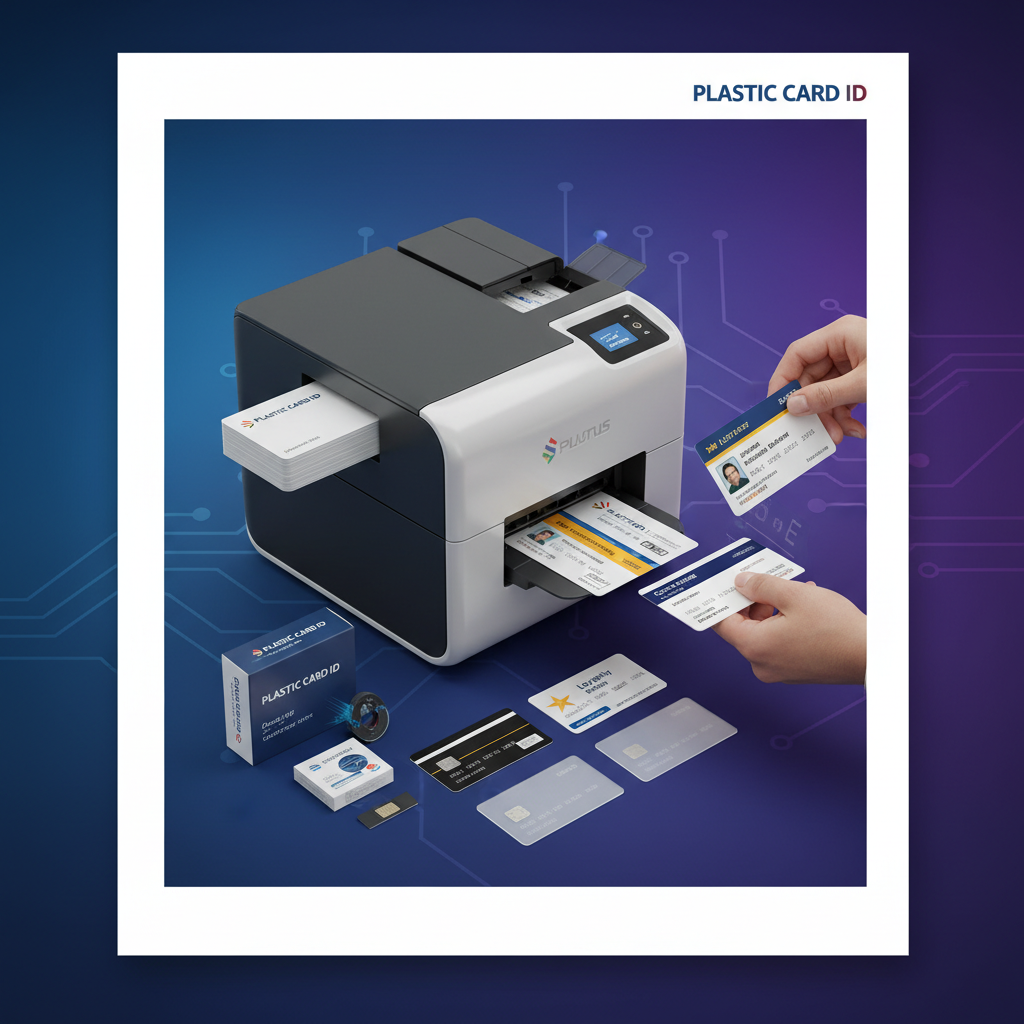 Not all card printers are created equal, and the gap between entry-level and professional-grade hardware is significant. The brands Plastic Card ID carries - Evolis, Fargo, Zebra, and Matica - represent the upper tier of the industry, and each has earned its place in the lineup through consistent performance, strong support ecosystems, and a track record across demanding business environments.
Understanding the differences between these brands, and between models within each brand, is the foundation of a smart purchasing decision. Volume is the most immediate factor, but encoding requirements, card design complexity, lamination needs, and physical workspace all play roles. Getting the specs right on the front end prevents expensive regrets later.
Evolis Printers: The Full Spectrum from Entry to Elite
Evolis occupies a unique position in the card printer market - it's one of the few brands with credible offerings at every production level. The Badgy200 is designed for low-volume users printing fewer than 1,000 cards per year, making it an ideal starting point for small nonprofits, boutique gyms, or offices with minimal ID needs. Setup is straightforward, and the print quality easily satisfies professional requirements.
Moving up the range, the Zenius handles single-sided printing for organizations producing 1,000 to 3,000 cards monthly, while the Primacy2 steps into dual-sided territory with optional magnetic stripe encoding - a significant capability for access control cards or loyalty programs requiring data tracks. At the top, the Agilia delivers edge-to-edge output with the kind of color fidelity and precision that high-stakes credentials demand. CPE stocks the full Evolis lineup along with compatible ribbons and cleaning supplies for each model.
Fargo and Zebra: When Security Comes First
Some card programs aren't just about appearance - they're about security. Government-issued credentials, campus access cards, and healthcare facility IDs require hardware that incorporates security printing features and maintains a verifiable chain of custody over card stock. Fargo and Zebra printers are the established standards in those environments, with robust construction and advanced encoding capabilities for high-security applications.
Fargo's lineup in particular is widely used in enterprise ID programs, offering holographic laminate options and smart card encoding that integrates with existing access control infrastructure. Zebra complements this with industrial durability and a reputation for reliability in high-throughput settings. Together, they round out PCID's lineup with options that no serious security-focused ID program should overlook.
Matica Event Printer: Built for the Clock
Event badging is a completely different beast. When 500 attendees are arriving over a two-hour window and every one of them needs a printed, personalized credential, the equipment needs to perform without hesitation. The Matica Event Printer is engineered for exactly this scenario - high-speed badge printing in on-site conditions where there's no room for technical delays or ribbon errors mid-queue.
Event organizers, conference planners, and corporate meeting coordinators who have invested in the Matica consistently report that it removes one of the most logistically stressful elements of large-scale gatherings. Print speed, reliability under sustained use, and the ability to personalize each badge on demand make it a purpose-built tool that generic alternatives simply can't match. Call 800.835.7919 to discuss whether the Matica is right for your next event.
Choosing Between Models: A Practical Framework
Before selecting a model, answer three questions honestly: How many cards will you print per month? Do your cards need data encoding (magnetic stripe, smart chip, or both)? And will you need to print on both sides of the card? Volume determines your machine class; encoding requirements narrow your options within that class; dual-sided needs eliminate single-pass printers from consideration.
A medium-sized HR department printing 800 employee ID cards monthly with magnetic stripe encoding and dual-sided printing would be well served by the Primacy2. A convention center managing seasonal events might prioritize the Matica. A startup with minimal card volume and a tight budget would find the Badgy200 entirely sufficient. Matching hardware to real-world workflow is the most important step in this process.
Plastic Cards and Print Supplies: Everything That Keeps the Cards Coming
The printer is only half the equation. A card printer without the right ribbons, cleaning kits, and card stock is like a high-performance engine without fuel. Plastic Card ID supplies a comprehensive range of consumables and accessories specifically matched to the printers in its lineup, ensuring that customers have everything required for consistent, professional-grade output from day one.
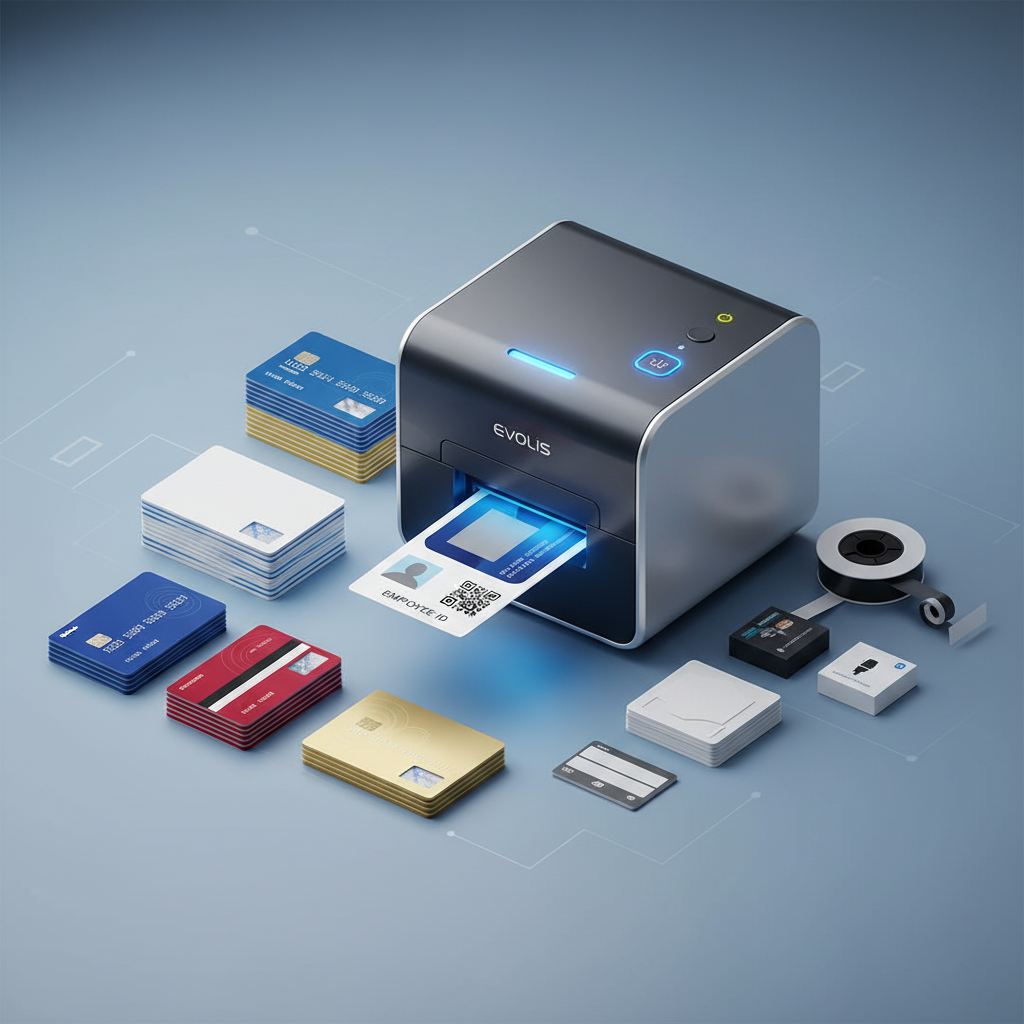
Supply chain reliability matters here. A ribbon outage in the middle of a new employee onboarding week, or a depleted card stock order that arrives late, creates operational headaches that proper inventory management prevents. CPE makes it simple to keep all critical supplies on hand by stocking ribbons, cards, and cleaning materials alongside the printers they support.
Printer Ribbons: YMCKO, Monochrome, and Specialty Options
Ribbon selection directly impacts both print quality and cost per card. YMCKO ribbons - yellow, magenta, cyan, black, and overlay - are the standard choice for full-color ID cards, delivering vibrant results and a protective topcoat in a single pass. They typically yield 200-250 prints per roll and cost $30-$75 depending on the model and ribbon specification.
Monochrome ribbons print in a single color (black, blue, red, white, gold, or silver) and are ideal for applications where full color isn't necessary - back panels of dual-sided cards, simple text-only credentials, or high-volume scenarios where cost per card matters more than color richness. Choosing the right ribbon for the right application can cut consumable costs by 40-60% compared to defaulting to full-color on every card.
Cleaning Kits and Maintenance Supplies
Print head longevity depends almost entirely on consistent cleaning. Dust, debris, and residue from card stock accumulate inside the printer and degrade output quality - and eventually hardware performance - if not addressed on schedule. Most professional card printers include a recommended cleaning cycle, typically every 1,000 prints or at ribbon change, and cleaning kits are specifically engineered for those intervals.
A standard cleaning kit includes cleaning cards and swabs calibrated to the internal dimensions of specific printer models. Using off-brand or improper cleaning materials can void warranties and damage sensitive components. PCID stocks manufacturer-recommended cleaning kits for every printer brand it carries, making it easy to maintain equipment correctly and protect the investment.
Encoding Upgrades, Hoppers, and Lamination Modules
Many printers in the PCID lineup support field-installable or factory-configured upgrades that dramatically expand capability. Magnetic stripe encoding modules allow cards to carry data readable by standard card readers - critical for access control, loyalty programs, and time-tracking systems. Smart chip encoding supports contactless and contact-based smart card technologies used in modern security infrastructure.
Input hoppers increase card capacity, reducing the frequency of manual reloading in high-volume environments. Lamination modules add a durable protective layer over printed cards, extending card life and adding a layer of tamper resistance. For organizations issuing credentials that need to withstand daily physical use over months or years, lamination is a worthwhile investment. These upgrades transform a good printer into a fully integrated card issuance system.
Common Use Cases for In-House Plastic Card Printing
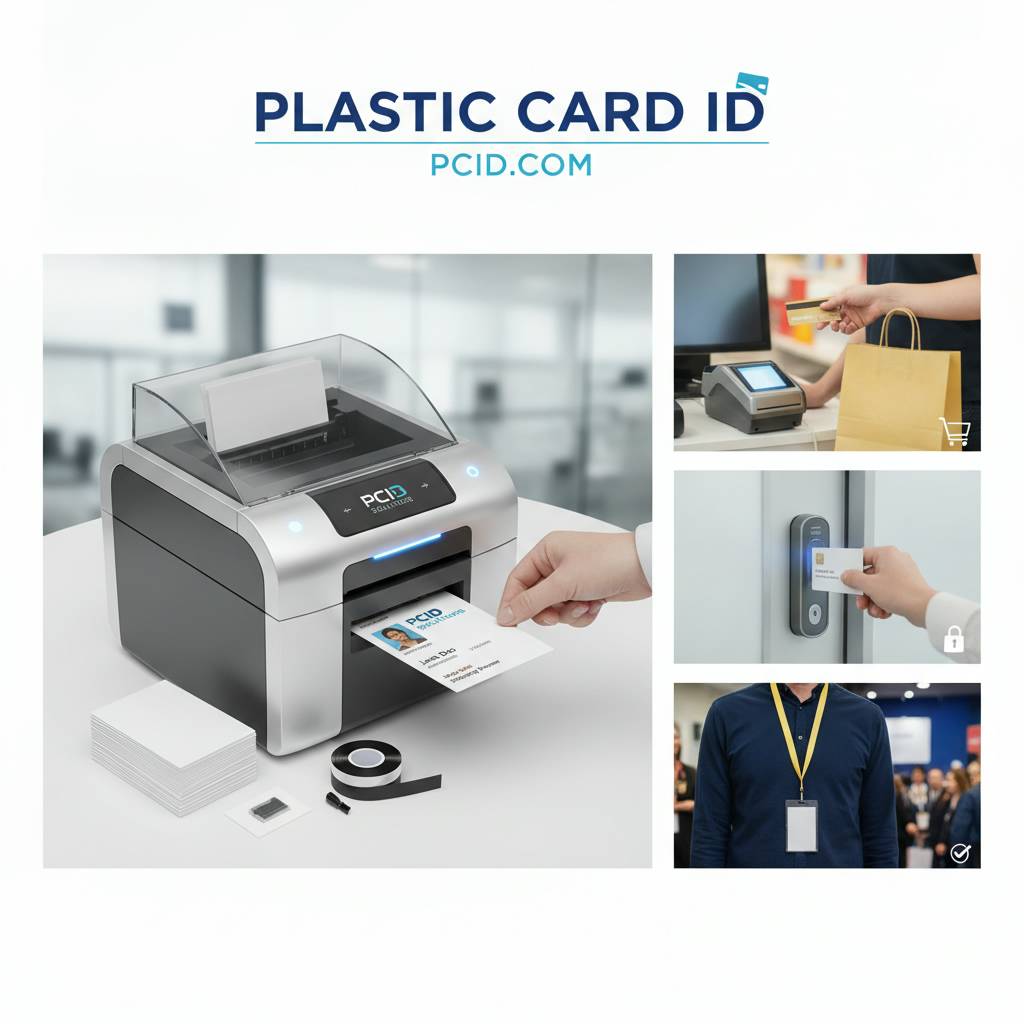 The breadth of industries that benefit from in-house card printing is genuinely surprising until you start listing them. What these organizations share is a recurring need for personalized, professional plastic cards - and a preference for producing them on demand rather than waiting on third-party vendors. The applications are diverse, but the core value proposition is consistent: control, speed, and cost efficiency.
Employee ID Cards and Access Control
Corporate and institutional ID programs are among the most common use cases for card printers. Every new hire needs a photo ID; many need access control credentials encoded with specific clearance levels. Doing this in-house means cards are ready on the employee's first day, not their second week. For organizations with high turnover or frequent contractor access, the ability to print and encode cards immediately is operationally significant.
Access control cards often require magnetic stripe or smart chip encoding, making mid-range to professional printers the appropriate hardware choice. The Primacy2 and Fargo models are particularly well-suited for this application. Security teams appreciate that card data never leaves the building during production.
Membership Cards and Loyalty Programs
Gyms, clubs, libraries, retail loyalty programs, and professional associations all issue membership cards. These cards are physical representations of a membership relationship - they reinforce brand identity, enable access privileges, and create tangible value for the cardholder. Printing them in-house allows for personalization (member name, number, photo) without minimum order quantities or turnaround delays from outside vendors.
Loyalty cards with magnetic stripes can integrate directly with point-of-sale systems, enabling seamless tracking of purchase history and reward accumulation. A membership card that works reliably every time is a brand touchpoint that earns trust - and that starts with quality hardware and proper card stock.
Student IDs, Hotel Key Cards, and Event Credentials
Schools and universities issue student IDs that double as library cards, meal plan cards, and campus access credentials - often encoded with multiple data tracks. Hotel key cards require magnetic stripe encoding matched to specific lock systems. Event credentials must be printed rapidly, on-site, with accurate attendee information. All three of these applications have distinct technical requirements, and PCID's lineup covers each of them.
The Matica Event Printer specifically addresses the speed requirements of large-scale badging. For student ID programs, the Primacy2 or Agilia offers the throughput and encoding flexibility needed. Hotel operations typically source from Fargo or Zebra systems that integrate with property management infrastructure. The right match between use case and hardware is where CPE's product expertise becomes genuinely valuable.
Buyer's Guide: How to Select the Right ID Card Printer
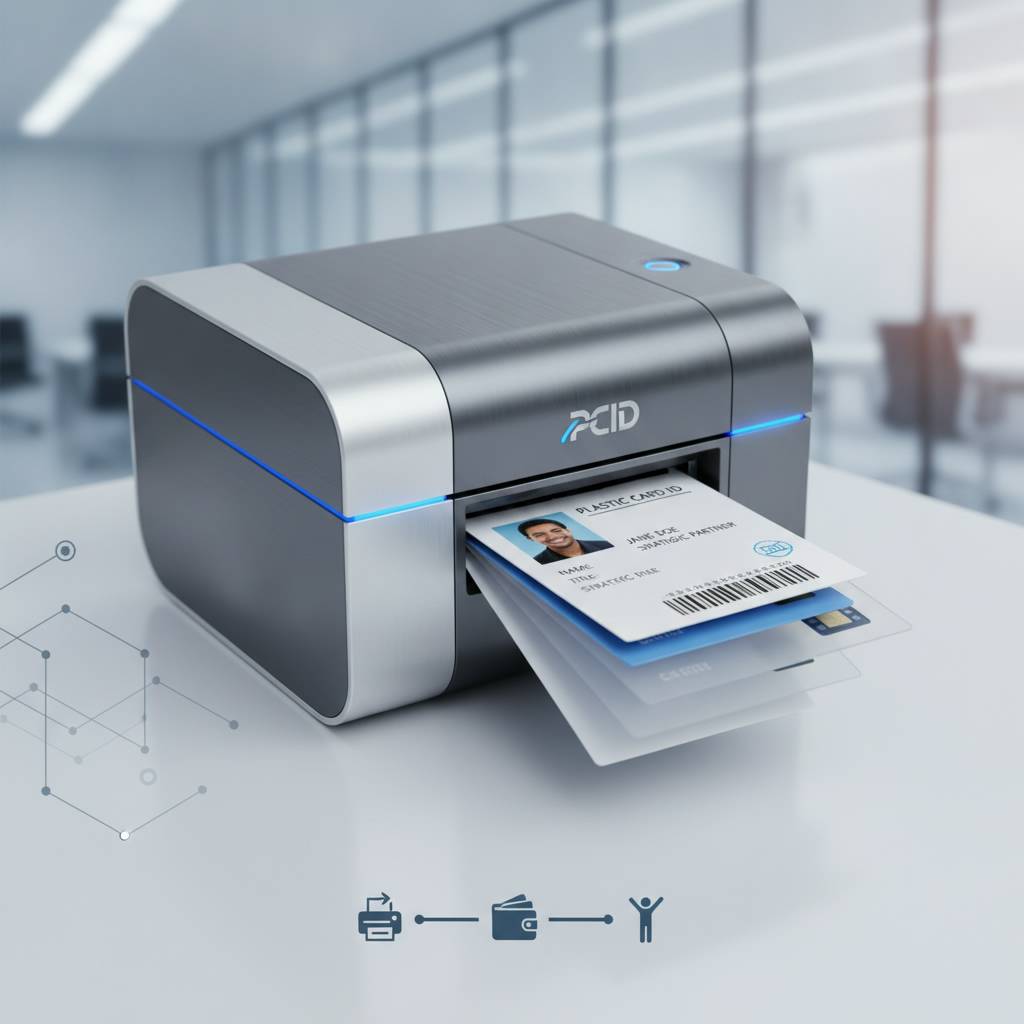 Choosing an ID card printer involves several decision layers, and skipping any of them creates risk. The following framework is designed to help organizations make a confident, well-reasoned purchasing decision without relying on guesswork or marketing copy alone.
Step One: Establish Your Volume Baseline
The most important variable in printer selection is annual card volume. Underestimating this leads to overworking entry-level hardware; overestimating it leads to overpaying for capacity you won't use. Be realistic - factor in new hires, replacements, seasonal programs, and any anticipated growth over the next two to three years.
- Under 1,000 cards per year: Entry-level printers like the Evolis Badgy200
- 1,000-3,000 cards per month: Mid-range models like the Evolis Zenius
- 3,000-6,000 cards per month: Full-featured workhorses like the Evolis Primacy2
- High-volume or continuous production: Industrial and professional systems including the Agilia, Fargo, or Zebra options
- Event-based high-speed printing: Matica Event Printer
Step Two: Identify Encoding Requirements
Not every card program requires encoding, but those that do need hardware specifically equipped for it. Magnetic stripe encoding is the most common requirement - three-track encoding supports access control, loyalty data, and time-tracking systems. Smart chip encoding (contact or contactless) supports advanced security and identity applications. These are not capabilities that can be added after the fact to a non-encoding printer.
If you're unsure whether your current or planned infrastructure requires encoding, consult with your IT or facilities management team before purchasing. Buying an encoder-capable printer when you need one saves the cost of replacing a non-encoder model later - a mistake that's surprisingly common.
Step Three: Factor in Supplies and Total Cost of Ownership
The printer's purchase price is just the beginning. Consumable costs - ribbons, cleaning kits, card stock - add up over the life of the machine. A printer priced at $400-$600 with expensive proprietary ribbons may cost more over three years than a $700-$900 unit with lower per-print consumable costs. Calculate cost per card, not just hardware price, when comparing options.
PCID provides transparent supply pricing across its full lineup, making total cost of ownership calculations straightforward. Factoring in annual ribbon usage, cleaning kit intervals, and any lamination requirements gives a realistic picture of what a card program costs to operate. Smart buyers look at the full three-year cost, not just the sticker price.
Frequently Asked Questions About ID Card Printers and Plastic Cards
Customers approaching their first printer purchase - or upgrading from an older system - often arrive with similar questions. The answers below address the most common points of confusion and help set realistic expectations about what in-house card printing involves.
What Type of Cards Do These Printers Use?
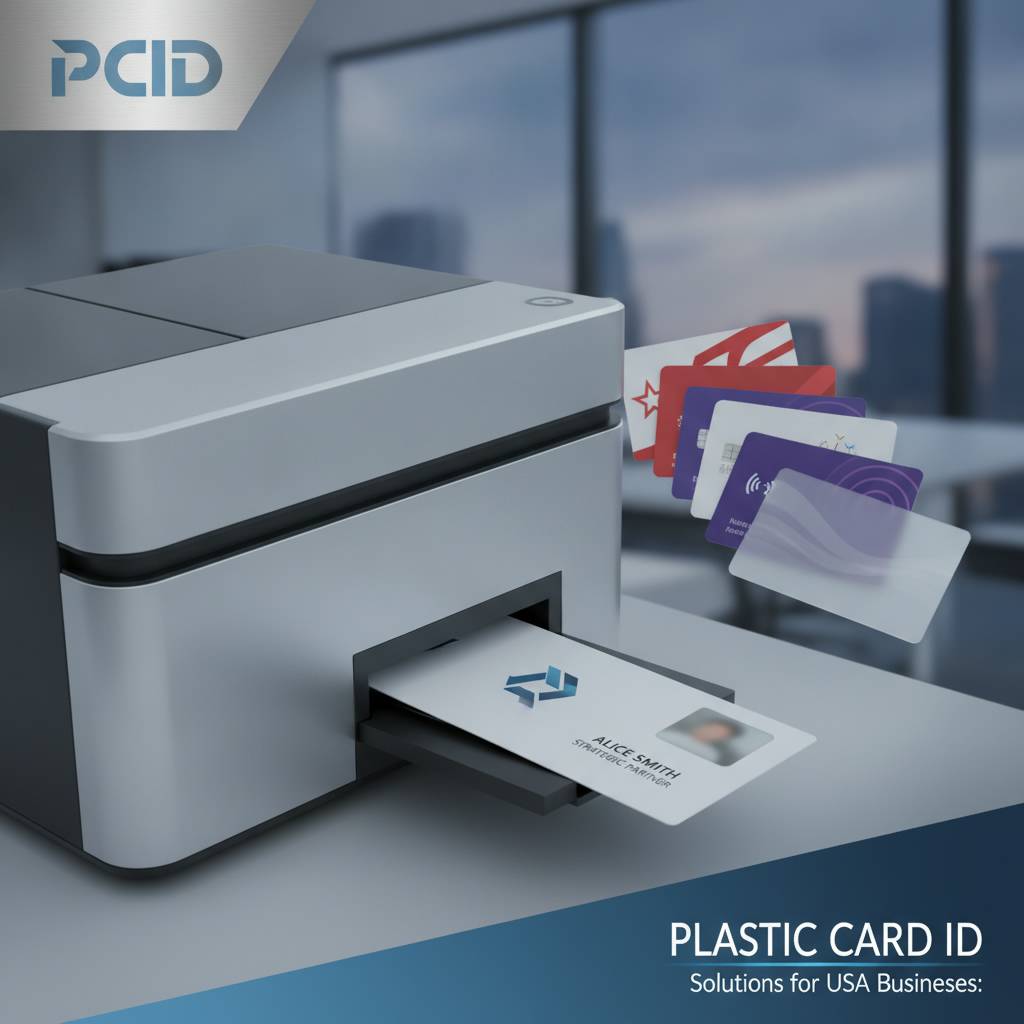
Professional ID card printers use CR80 PVC plastic cards - the same standard dimensions as a credit card (3.375 x 2.125 inches, 0.030 inches thick). These cards are durable, accept dye-sublimation and resin printing beautifully, and are available in blank white or pre-printed stock. PCID supplies compatible card stock for all printer models it carries.
Specialty cards - including pre-punched for lanyards, adhesive-backed, or pre-encoded with specific magnetic stripe formats - are also available for specific applications. Card thickness can vary slightly for laminated or composite configurations, and certain printers handle thicker stock more reliably than others. When in doubt, confirm card stock specifications with CPE before ordering in bulk.
How Long Do Plastic Cards Last?
A properly printed and handled PVC plastic card typically lasts 2-5 years under normal conditions. Cards exposed to direct sunlight, extreme heat, or heavy physical wear will degrade faster. Laminated cards extend usable life significantly, particularly for access control credentials or student IDs that are handled daily. The lamination modules available for compatible printers add a protective overlay that resists scratching, fading, and UV exposure.
Magnetic stripe cards have an additional durability consideration: the magnetic stripe itself can be demagnetized by proximity to strong magnetic fields. Proper card carriers and sleeves - available from PCID - protect both the printed surface and the encoded stripe from everyday damage, extending the card's functional lifespan considerably.
Can I Upgrade My Printer Later?
Some printers in the Evolis lineup support field-installable upgrades for magnetic stripe encoding, lamination, and input hopper capacity. This modularity is a meaningful advantage for organizations that anticipate growing card program requirements. Other models are configured at the factory with specific capabilities and cannot be upgraded post-purchase. Understanding which models support field upgrades is an important part of the selection process. Call 800.835.7919 for specifics on upgrade paths for any model you're considering.
Ready to Build Your Card Program? Plastic Card ID Has Everything You Need
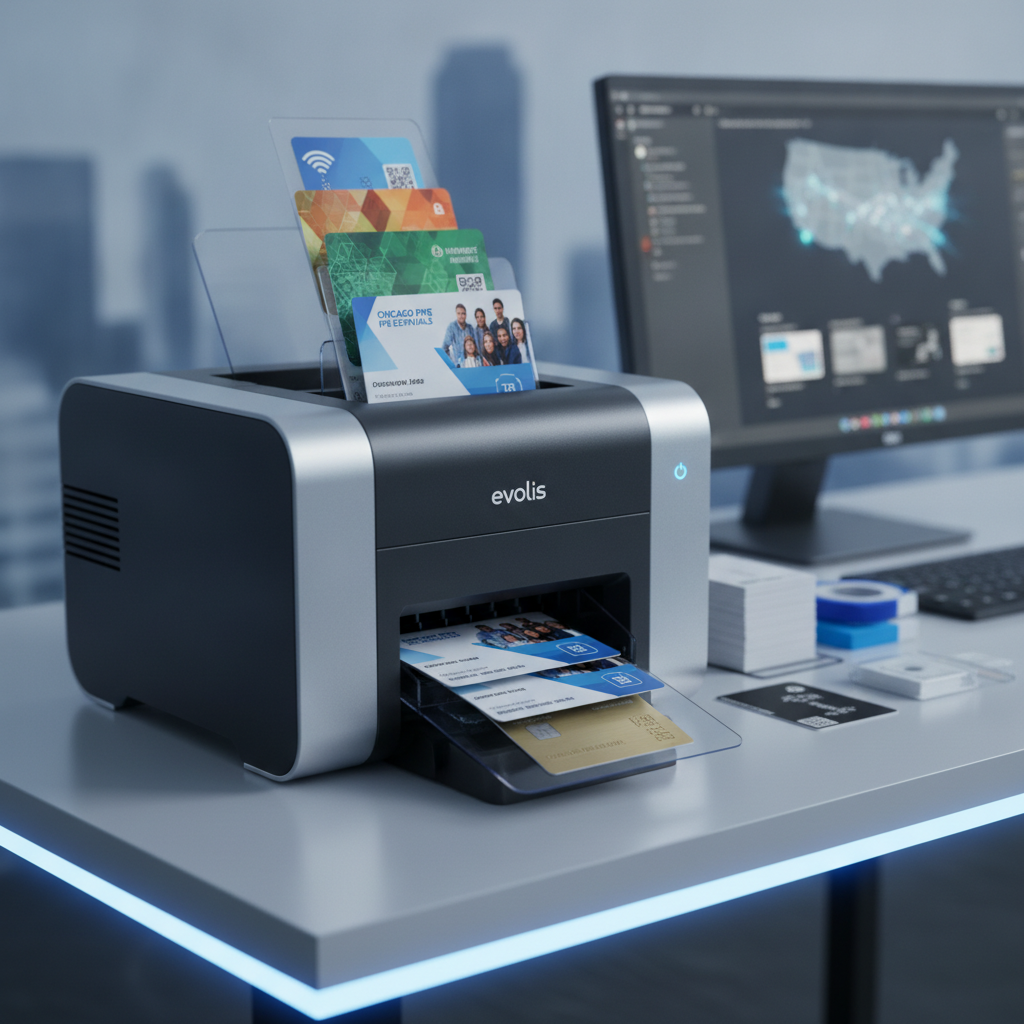 From the first printer to the last ribbon roll, Plastic Card ID is the single-source solution for professional ID card printer plastic card programs across the United States. With more than 25 years of supply experience and a customer base exceeding 100,000 businesses, the depth of knowledge and inventory CPE brings to every transaction is genuinely difficult to match elsewhere.
The lineup covers every scale - from the compact Badgy200 suited to a small office to the Agilia delivering edge-to-edge output for premium credential programs. Fargo and Zebra bring security-grade robustness to high-stakes ID applications. The Matica handles on-site event badging at speed. And behind every printer, PCID stocks the full suite of supplies needed to keep production running without interruption.
What Sets PCID Apart After 25 Years
Longevity in this industry isn't accidental. It reflects a consistent track record of matching customers with the right hardware, supporting them through setup and supply replenishment, and standing behind the products carried. Over 100,000 customers have trusted Plastic Card ID with their card programs - that's a number built through reliable service, not marketing alone.
The product curation matters, too. PCID doesn't carry every printer on the market - it carries the right printers, from brands with proven quality standards and support infrastructure. That focused approach means customers benefit from genuine product expertise rather than a sprawling catalog that includes marginal options alongside strong ones.
Get Started Today
Contact Plastic Card ID now and speak with a card printing specialist who can match the right printer, supplies, and accessories to your exact program requirements. Call 800.835.7919 today - your card program deserves hardware as serious as the work it supports.
Don't leave your card program to chance or to vendors who don't prioritize your timeline. Plastic Card ID is ready to help you print smarter, faster, and with total in-house control. Reach out at 800.835.7919 and let's build something that works.
Previous Page