Card Printer for Plastic Cards: Choose the Perfect Model
Table of Contents []
- Why Plastic Card ID Is the Smart Choice for Your Card Printer for Plastic Cards
- Understanding the Card Printer for Plastic Cards Landscape
- Brands That Define the Industry - And Why Plastic Card ID Carries Them
- The Full Ecosystem: Supplies That Keep Your Program Running
- Use Cases Across Industries: Who Needs a Card Printer for Plastic Cards
- Buyer's Guide: Choosing the Right Card Printer for Your Needs
- Frequently Asked Questions About Card Printers for Plastic Cards
- Connect With Plastic Card ID - Your Trusted Card Printer Partner
Why Plastic Card ID Is the Smart Choice for Your Card Printer for Plastic Cards
 Walk into almost any workplace, school, hotel, or event venue, and you'll encounter them - plastic ID cards clipped to lanyards, swiped at access points, scanned at registration desks. These small, durable credentials carry a lot of weight. And behind every well-run card program is a reliable card printer for plastic cards - one chosen thoughtfully, matched carefully to real production needs.
Plastic Card ID has been matching organizations with the right card printing hardware for over 25 years, serving more than 100,000 customers across the United States. That kind of track record doesn't come from guesswork. It comes from knowing the products deeply, understanding how businesses actually use them, and stocking everything - printers, ribbons, cleaning kits, encoding upgrades - so programs run without interruption.
Whether you're printing 200 employee badges a year or processing thousands of event credentials in a single afternoon, the right printer changes everything. Speed, image quality, encoding capability, long-term reliability - these aren't abstract specs. They're operational realities. And CPE exists to make sure you get them right the first time.
| Printer Model | Brand | Volume Range | Key Features |
|---|---|---|---|
| Badgy200 | Evolis | Under 1,000/year | Entry-level, compact, full-color |
| Zenius | Evolis | 1,000-6,000/month | Single-sided, mid-range workhorse |
| Primacy2 | Evolis | 1,000-6,000/month | Dual-sided, magnetic stripe option |
| Agilia | Evolis | High-volume premium | Edge-to-edge, highest-quality output |
| Fargo Series | Fargo | Varies | Security-focused ID programs |
| Zebra Series | Zebra | Varies | Robust, enterprise-grade reliability |
| Matica Event Printer | Matica | High-speed on-site | Event badge printing, fast throughput |
Understanding the Card Printer for Plastic Cards Landscape
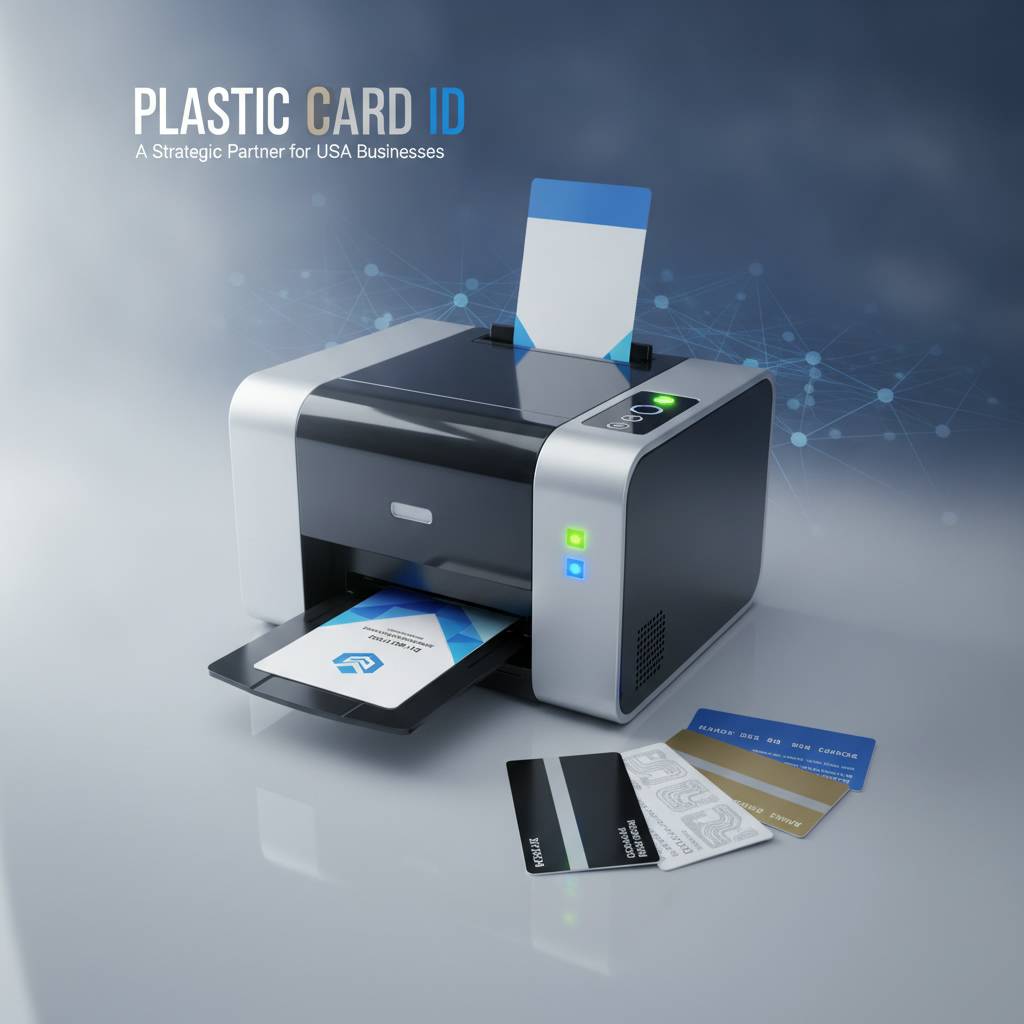 Not all card printers are created equal - not even close. The market spans a surprisingly wide range of capabilities, price points, and intended use cases. Choosing incorrectly can mean paying too much for features you'll never use, or underpowering a program that demands more than your hardware can deliver. Understanding the landscape before purchasing isn't optional; it's the difference between a card program that runs like clockwork and one that constantly frustrates your team.
At the most fundamental level, card printers for plastic cards use dye-sublimation or thermal transfer technology to print vibrant, full-color or monochrome images directly onto PVC card stock. The print quality is sharp, professional, and durable - far beyond what any inkjet or laser printer could produce on paper or even specialty stock. These are purpose-built machines, and their output reflects that precision.
Entry-Level Printers: Starting Smart Without Overspending
For organizations printing fewer than 1,000 cards per year - small nonprofits, boutique fitness clubs, local schools - an entry-level model like the Evolis Badgy200 delivers professional results at a genuinely accessible price point. It's compact, straightforward to operate, and produces full-color cards that look polished and credible. You're not sacrificing quality; you're simply not paying for throughput capacity you don't need.
Entry-level doesn't mean flimsy. These printers are built to handle regular use within their intended volume range. The key is honest self-assessment: if your program genuinely operates at low volume and isn't expected to grow significantly, starting here makes financial and operational sense. Scale up when the data tells you to, not before.
Mid-Range Workhorses: Where Most Organizations Live
The Evolis Zenius and Primacy2 occupy a sweet spot that suits a wide swath of American businesses. Handling 1,000 to 6,000 cards per month, these models bring serious capability to HR departments, universities, healthcare facilities, and access control programs without requiring enterprise-level investment. The Primacy2 adds dual-sided printing and magnetic stripe encoding options - significant capabilities for many use cases.
Mid-range printers in this category are the kind of hardware that earns a permanent place in your operations room. They're reliable enough to be background infrastructure - running daily without drama, producing consistent output shift after shift. When a printer disappears into your workflow as a dependable tool rather than a daily hassle, that's when you know you've made the right call.
High-Volume and Premium Output: When Quality is Non-Negotiable
Some organizations simply cannot accept anything less than edge-to-edge, highest-quality card output. Marketing agencies creating high-end membership cards, enterprise companies issuing security credentials at scale, healthcare networks managing thousands of patient IDs - these use cases call for the Evolis Agilia. It delivers premium results across every dimension: color accuracy, print consistency, throughput speed, and finish quality.
Fargo and Zebra printers round out the premium tier with models built specifically for security-sensitive ID programs. These brands bring deep expertise in credential security features, encoding sophistication, and enterprise integration. When identity verification is mission-critical, these platforms give IT and security teams the confidence they need.
Brands That Define the Industry - And Why Plastic Card ID Carries Them
Stocking just any card printer is easy. Stocking the right ones - the brands that have proven themselves across hundreds of thousands of real-world installations - takes deliberate curation. Plastic Card ID carries Evolis, Fargo, Zebra, and Matica because these manufacturers have collectively set the standard for what professional card printing hardware should be. Each brand brings distinct strengths, and understanding those strengths helps buyers make confident decisions.
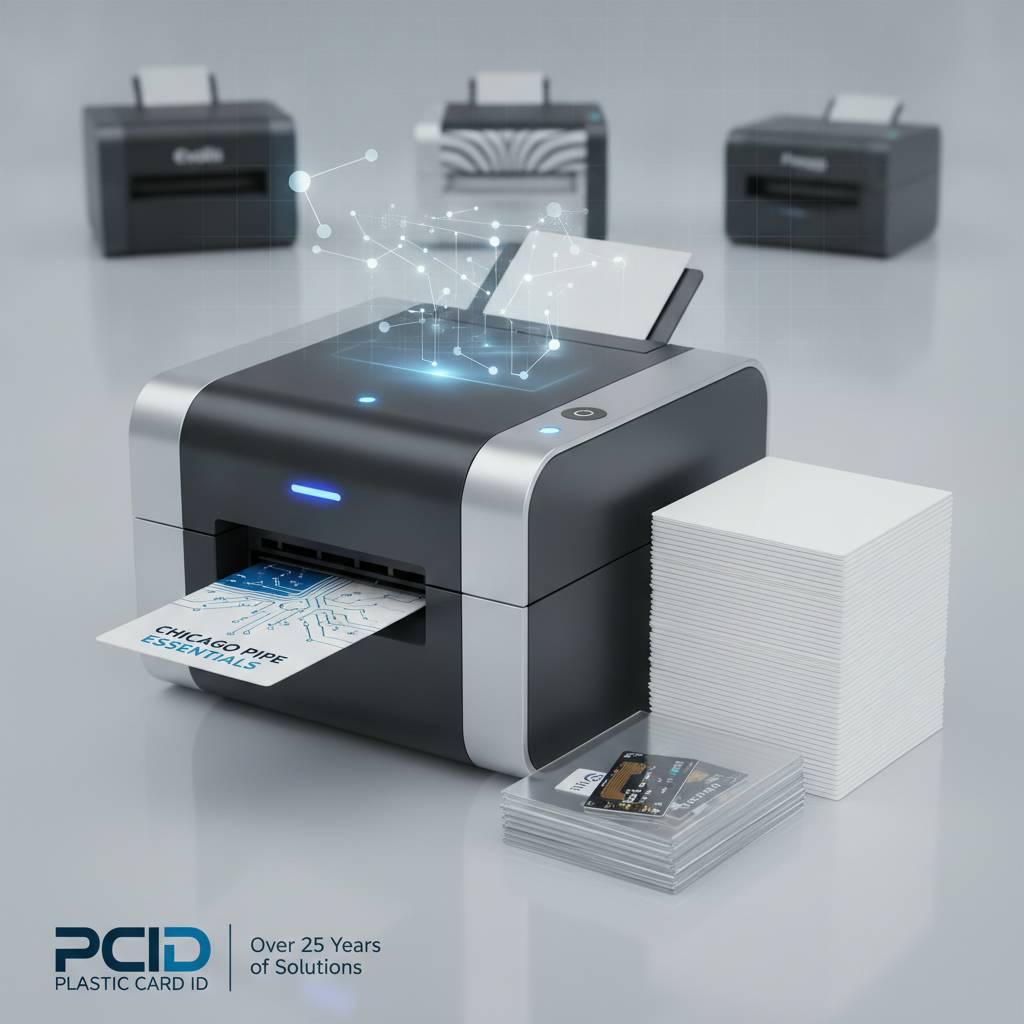
This isn't a catalog built around margins or convenience. It's a lineup built around what customers actually need - hardware that performs consistently, ribbons and supplies that are always in stock, and technical support that doesn't leave you stranded mid-print-run. That philosophy has driven CPE's supplier relationships for over two decades.
Evolis: Versatility Across Every Volume
Evolis has established itself as one of the most versatile card printer manufacturers on the market, with a product range that genuinely covers every production scale. From the Badgy200's accessible entry point all the way through the premium Agilia, the brand maintains consistent print quality and a user experience that feels intuitive regardless of model. Their printers are widely used in education, healthcare, government, and corporate sectors.
The Primacy2's dual-sided capability and optional magnetic stripe encoding make it a particularly valuable option for organizations managing complex card programs. Encoding a magnetic stripe in the same pass that prints the card saves time and eliminates workflow steps - the kind of efficiency that compounds meaningfully over thousands of card cycles.
Fargo and Zebra: Security-Grade Credentials
Fargo has a long-standing reputation in high-security ID environments - government agencies, financial institutions, enterprise campuses where credential fraud carries real consequences. Their printers integrate tightly with identity management software and support advanced security features that go well beyond basic printing. Zebra brings similar enterprise-grade durability with a particularly strong foothold in corporate and healthcare ID programs.
For organizations where the card itself is a security asset - not just a name badge - choosing Fargo or Zebra means choosing platforms designed with that responsibility in mind. These are not printers for casual use; they are purpose-engineered tools for serious identity programs. Call 800.835.7919 to discuss which security-grade platform fits your specific credential requirements.
Matica: Built for the Pace of Live Events
The Matica Event Printer occupies a unique and genuinely useful niche: high-speed, on-site badge printing for conferences, trade shows, concerts, and sporting events. When hundreds of attendees need credentials issued quickly at a check-in desk, throughput speed becomes the primary concern. Matica's engineering addresses exactly that challenge, delivering fast output without sacrificing print quality.
Event organizers who have experienced the chaos of slow badge printing - long lines, frustrated attendees, overwhelmed staff - immediately understand why a purpose-built solution like this matters. The right hardware at a registration desk doesn't just improve efficiency; it sets the tone for the entire event experience from the first interaction forward.
The Full Ecosystem: Supplies That Keep Your Program Running
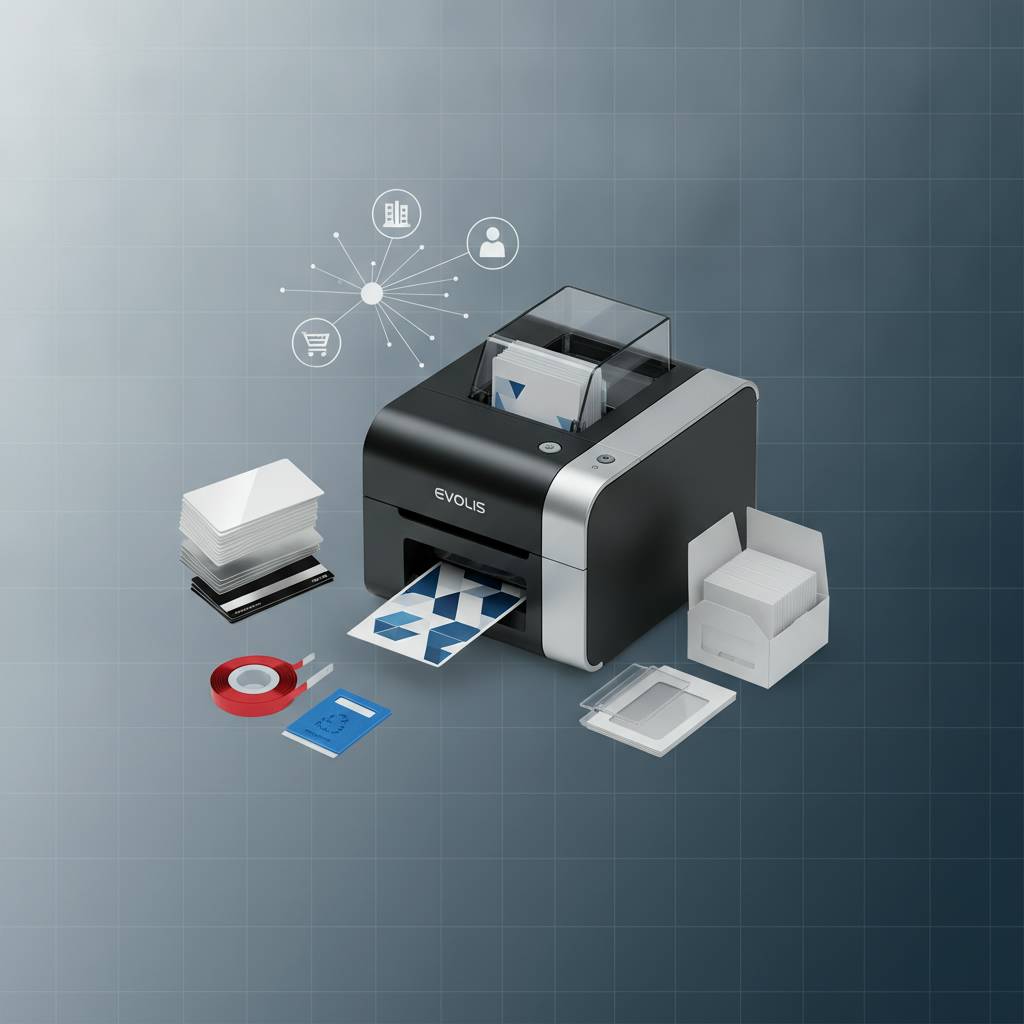 A card printer without consistent supply support is a liability, not an asset. Ribbons run out. Cleaning cycles are required. Lamination modules wear. Organizations that plan for these realities - and source their supplies from a reliable partner - run card programs that simply don't stop. Those that don't, learn that lesson the hard way, usually at the worst possible moment.
Plastic Card ID supplies the complete ecosystem required to keep any card printing operation running without interruption. From YMCKO full-color ribbons to monochrome and specialty options, from cleaning kits to encoding upgrades, the supply chain that supports your printer is as important as the printer itself.
Ribbon Types and When to Use Each
Ribbon selection is more nuanced than it might initially appear. YMCKO ribbons (Yellow, Magenta, Cyan, Black, and Overlay) are the standard choice for full-color card printing - they produce vibrant photo-quality output with a protective overlay that extends card life. Monochrome ribbons, available in black and other colors, are used when full-color isn't required, offering faster print speeds and significantly lower cost per card.
Specialty ribbons serve specific needs: scratch-resistant overlaminates for high-wear applications, fluorescent ribbons for security marking, and others. Choosing the right ribbon for your application isn't just about aesthetics - it affects durability, security, and cost per card over time. Getting that selection right from the start is part of what CPE helps customers do.
Encoding Upgrades: Magnetic Stripe and Smart Chip
Many card programs require more than a printed surface. Access control systems, loyalty programs, hotel key cards, and healthcare facilities often need cards encoded with data - either on a magnetic stripe or a smart chip embedded in the card. These capabilities can be built into compatible printers as factory options or added as field upgrades, depending on the model.
- Magnetic stripe encoding writes data to the stripe on the card's back during the print cycle, enabling use in door access systems, time-and-attendance readers, and loyalty program terminals.
- Smart chip encoding (contact and contactless options available) supports more sophisticated applications including multi-factor authentication, stored value, and high-security access control.
- Encoding in-house eliminates the need to send cards to an outside vendor, giving organizations complete control over their data and significantly reducing turnaround time.
- Dual-sided printing combined with encoding in a single pass maximizes workflow efficiency for high-volume programs.
Cleaning Kits, Hoppers, and Card Carriers
Printer maintenance is not glamorous, but it is critical. Dye-sublimation printers accumulate dust, card debris, and residue over time - all of which degrade print quality and shorten hardware lifespan. Regular cleaning with manufacturer-specified kits is the simplest, most cost-effective form of printer care available. Skipping it is a false economy that leads to expensive service calls or premature replacement.
Input hoppers expand card capacity for high-volume printing sessions, while card carriers and sleeves protect finished cards during handling and distribution. These are the details that separate a professional card program from an ad hoc one - and Plastic Card ID stocks all of it, because the difference between a well-supported program and an under-supplied one shows up in card quality and operational reliability every single day.
Use Cases Across Industries: Who Needs a Card Printer for Plastic Cards
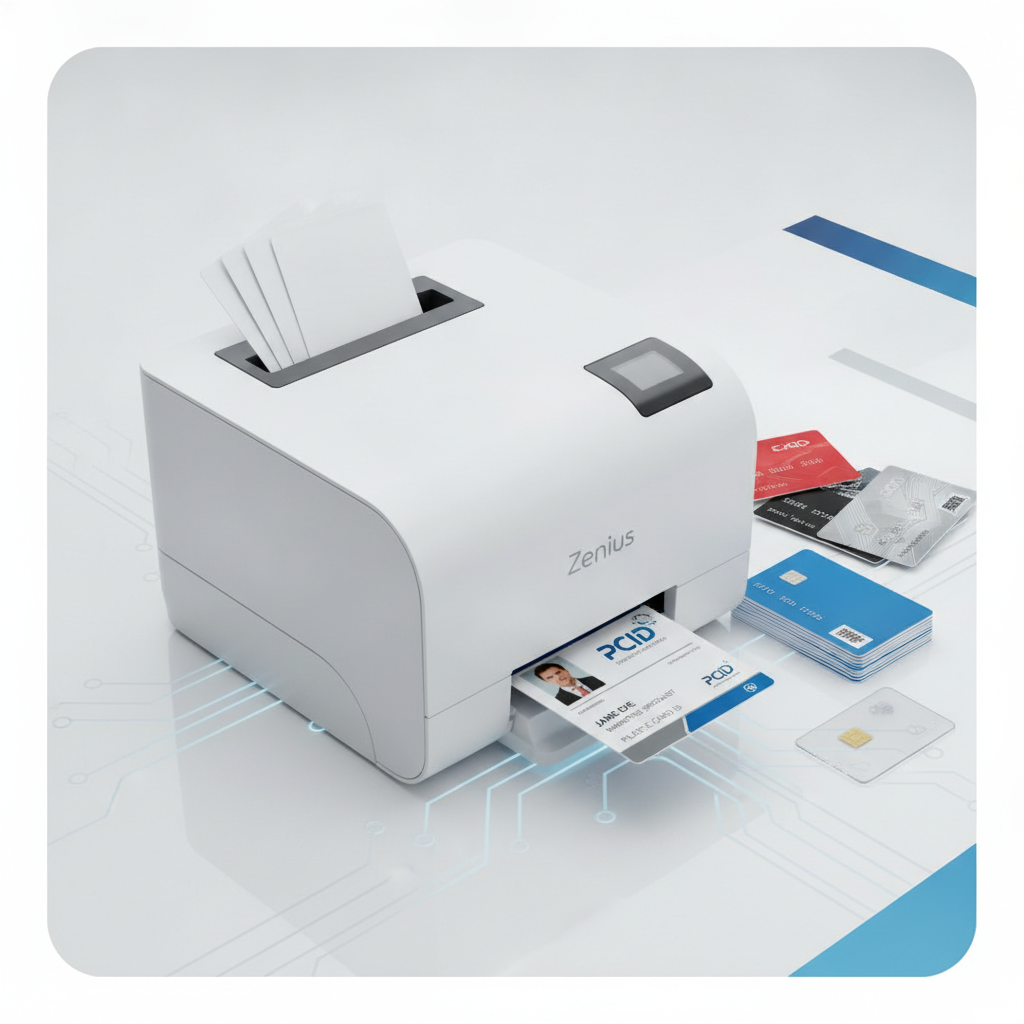 The range of organizations running in-house card programs is broader than most people initially imagine. It spans industries, organization sizes, and card functions. What they share is a common need: reliable, professional card output produced on demand, without dependence on outside vendors. That control - over timing, personalization, encoding, and quality - is the core value proposition of in-house printing.
Consider the variety of application types CPE supports daily across its customer base. From a regional hospital system issuing staff ID badges with photo and access control encoding to a boutique hotel printing key cards at the front desk to a university managing student ID programs across multiple campuses - the use cases are diverse, but the underlying need is consistent.
Employee ID and Access Control Programs
Corporate and institutional employee ID programs represent one of the largest segments of card printer usage. HR departments need to issue new badges quickly - often on day one of employment - and maintain the ability to replace lost or damaged cards without waiting for an outside vendor. Security teams need cards that carry encoded access permissions matched to the cardholder's role and clearance level.
In-house printing gives these organizations complete control. A new employee can have a fully printed, encoded, photo ID badge within minutes of arriving for their first day. That's an operational capability that outsourced card programs simply cannot match, and it matters in organizations where access control isn't just convenient - it's a legal and security requirement.
Education, Healthcare, and Membership Programs
Universities printing student IDs, healthcare networks issuing patient and staff credentials, gyms and clubs managing membership cards - these programs share a common rhythm of ongoing enrollment, card replacement, and seasonal volume spikes. The ability to print exactly when needed, personalize each card with a photo and individual data, and encode relevant information in a single workflow step is transformative for these organizations.
Schools in particular benefit from the immediacy of in-house printing. When a student loses an ID, a replacement can be issued in minutes rather than days. When enrollment spikes at the start of a semester, a mid-range printer like the Evolis Primacy2 handles the volume without strain. The investment in a capable card printer pays back quickly when you measure it against the per-card cost and lead time of outsourced programs.
Event Credentials and Hotel Key Cards
Live events present unique card printing demands. Speed is paramount - attendees don't wait patiently in long check-in lines. The Matica Event Printer is specifically engineered for exactly this scenario, producing badges at a pace that keeps registration desks moving efficiently even at peak arrival times. Trade shows, conferences, sporting events, and concert venues all benefit from on-site credential printing capability.
Hotel key card programs represent a different but equally consistent need. Properties printing their own key cards maintain full control over card design, encoding standards, and replacement inventory. When a guest needs a replacement key at 2 AM, an in-house printer makes that a two-minute solution rather than a logistical problem. Call 800.835.7919 to discuss which printer model suits your hotel or event operation best.
Buyer's Guide: Choosing the Right Card Printer for Your Needs
The decision-making process for selecting a card printer doesn't need to be complicated, but it does need to be honest. The most common mistake buyers make is either overestimating their volume needs (and overspending) or underestimating them (and outgrowing their hardware within a year). A clear-eyed assessment of current and projected card volume, required features, and budget range leads to the right answer more reliably than any specification comparison chart.
The questions you ask before purchasing determine the quality of the outcome - and CPE has spent over 25 years helping customers think through those questions clearly. Here's a structured way to approach the decision.
Key Questions to Answer Before Purchasing
- How many cards do you print per year? Under 1,000 points to entry-level; 1,000-6,000 per month suggests mid-range; higher volumes or premium quality needs indicate upper-tier models.
- Do you need dual-sided printing? If card backs carry additional information, a dual-sided model like the Primacy2 is essential.
- Do your cards require encoding? Magnetic stripe or smart chip encoding must be factored into the printer selection from the start.
- What is your acceptable cost per card? Ribbon type and printer model both affect ongoing cost per card - calculate total cost of ownership, not just hardware purchase price.
- Is print quality a differentiating factor? For premium membership or marketing applications, the Agilia's edge-to-edge output justifies the investment. For internal ID programs, mid-range quality is typically sufficient.
- Will you need to scale? Choose a printer that handles your volume at roughly 70% capacity, leaving headroom for growth without strain.
Understanding Total Cost of Ownership
The purchase price of a card printer is only part of the financial picture. Ribbons, cleaning kits, card stock, and any encoding upgrades contribute to an ongoing cost per card that varies meaningfully across models and configurations. Organizations running high-volume monochrome programs, for example, can significantly reduce per-card costs by choosing the right ribbon type rather than defaulting to full-color YMCKO for every application.
Calculating total cost of ownership over a 3-5 year horizon - hardware amortization plus ongoing supplies - frequently reveals that a slightly more capable printer model pays for itself through lower per-card supply costs. CPE can help customers work through these calculations based on their specific volume and configuration requirements, ensuring that the decision is grounded in real financial analysis rather than sticker price alone.
Common Mistakes to Avoid
Buying a printer without confirming ribbon and supply availability is a surprisingly common error - one that leaves organizations with capable hardware they can't keep stocked. Always confirm that your chosen printer model has reliable, readily available supply chain support before committing to the purchase. Plastic Card ID stocks supplies for every printer it sells, which eliminates that risk entirely for its customers.
Another frequent mistake is neglecting cleaning maintenance until print quality degrades visibly. By that point, damage to the printhead or internal components may already be occurring. Building regular cleaning cycles into your card program's operating procedure from day one is the simplest form of hardware protection available - and it costs very little relative to the service and replacement expenses it prevents.
Frequently Asked Questions About Card Printers for Plastic Cards
 After 25 years and more than 100,000 customers, certain questions come up consistently. The answers below reflect the real-world experience that Plastic Card ID has accumulated across an enormous variety of card programs, industries, and use cases. If your specific question isn't covered here, the team is available to help.
What type of cards do these printers produce?
These printers produce standard CR80 PVC plastic cards - the same size as a credit card, at 3.375" x 2.125". The cards are durable, professional in appearance, and suitable for virtually any identification, access control, membership, or credential application. PVC card stock is the industry standard for a reason: it handles print beautifully, accepts encoding reliably, and holds up to daily use in wallets, lanyards, and card readers without degrading quickly.
Plastic Card ID does not supply financial credit or debit card processing equipment - these printers are for identification, access, loyalty, membership, and credential applications. If your use case falls into any of those categories, the hardware and supply options available through CPE will almost certainly meet your needs. 800.835.7919 connects you directly with a team member who can confirm compatibility for your specific application.
How long does it take to print a card?
Print speed varies by model and configuration. Entry-level printers like the Badgy200 typically produce a single-sided full-color card in roughly 30-45 seconds. Mid-range models are faster, and high-volume industrial systems can output cards significantly more quickly - which is why the Matica Event Printer is suited for scenarios where dozens of badges need to be produced rapidly at a live event check-in.
For most organizational card programs, speed is not the limiting factor - setup, data management, and photography workflows tend to determine throughput more than the printer's raw output rate. Matching printer speed to your actual operational workflow is a more useful exercise than simply choosing the fastest available model regardless of context.
Can I print cards for multiple departments or locations from one printer?
Absolutely. Card printing software that connects to these printers typically supports multiple templates, badge designs, and department-specific configurations within a single installation. A corporate campus running one mid-range printer can issue distinctly designed cards for HR, IT, facilities, and visitor management programs from the same hardware using template-based printing workflows.
Organizations with multiple locations typically choose to place a printer at each location for on-demand issuance convenience, or centralize printing at a main facility if card volumes and distribution logistics support that model. Both approaches are common and well-supported by the printer models in Plastic Card ID's lineup.
Ready to put professional card printing capability in your hands? The right hardware, the right supplies, and the right guidance are all available through one trusted source.
Connect With Plastic Card ID - Your Trusted Card Printer Partner
 More than 100,000 organizations across the United States have trusted Plastic Card ID to supply the card printing hardware and supplies that keep their programs running. That trust has been built over 25 years of consistent delivery, honest guidance, and a product lineup curated around what businesses actually need - not what's easiest to stock or most profitable to push. The combination of professional-grade hardware from Evolis, Fargo, Zebra, and Matica with a complete supply ecosystem makes Plastic Card ID the single-source partner most card programs never need to look beyond.
From the first printer purchase through years of ongoing ribbon and supply replenishment, CPE is structured to support your card program at every stage. New programs benefit from experienced guidance on model selection and configuration. Established programs rely on consistent supply availability and hardware support to keep operations uninterrupted. The investment you make in in-house card printing pays dividends in control, speed, personalization, and cost efficiency - and it starts with choosing the right partner to support that capability.
Contact Plastic Card ID today at 800.835.7919 to speak with a card printing specialist and find the perfect card printer for plastic cards for your organization. The right solution is closer than you think, and the team is ready to help you find it.
Previous Page