How to Choose a Plastic Card Printer: Expert Advice
Table of Contents []
- What Nobody Tells You Before You Buy: How to Choose a Plastic Card Printer with Plastic Card ID
- Breaking Down the Brands: Which Printer Lineup Is Right for You
- The Hidden Cost of Card Printing: Consumables and Ongoing Supplies
- Encoding Capabilities: Magnetic Stripe, Smart Chip, and Beyond
- In-House Printing vs. Outsourcing: The Real Comparison
- Frequently Asked Questions About Choosing a Plastic Card Printer
- Make the Right Choice the First Time with Plastic Card ID
What Nobody Tells You Before You Buy: How to Choose a Plastic Card Printer with Plastic Card ID
 Most buyers assume picking a card printer is simple - grab whatever looks good, hit order, done. Reality? Walk into that decision unprepared and you'll end up with a machine that either drastically underperforms your needs or massively overshoots your budget. Choosing the right plastic card printer is genuinely one of the more nuanced hardware decisions a business can make, and it deserves real thought before a single dollar changes hands.
Whether you're issuing employee badges to a 12-person office, running a university's student ID program, or printing thousands of loyalty cards for a retail chain, the printer that fits your operation exists - you just have to know how to find it. This guide walks you through everything: volume thresholds, encoding options, brand comparisons, consumables planning, and the practical questions worth asking before you commit.
Why Card Volume Is the First Number You Need
Before brand names, before features, before price - volume. How many cards will you realistically print per year? Per month? That single figure will eliminate roughly half the market from consideration before you've read a single spec sheet. Getting volume wrong is the most expensive mistake first-time buyers make.
An entry-level printer pushed past its design capacity wears out ribbons faster, jams more frequently, and ultimately fails prematurely. Conversely, buying an industrial-grade system when you're printing 200 cards a year is simply wasteful - you'll spend thousands more than necessary and use a fraction of the machine's capability. Know your numbers first.
Factor in growth too. If you're currently printing 800 cards annually but expect to onboard 300 new employees in the next 18 months, sizing up slightly on day one is smarter than replacing equipment in year two. CPE carries models across every tier precisely because no two organizations have identical needs.
Single-Sided vs. Dual-Sided Printing
This sounds basic, but the impact on cost and workflow is real. Single-sided printers handle one face of the card per pass. Dual-sided (duplex) models flip and print both sides automatically in a single run. If your ID cards carry information, a photo, or branding on both faces, a duplex printer saves enormous time compared to manually reinserting cards.
Dual-sided capability typically adds $200-$600 to a printer's base price, depending on the model and tier. For high-volume operations, that premium pays for itself quickly in labor savings alone. For organizations printing purely decorative or information-light cards, single-sided may be entirely sufficient.
Understanding Print Quality Requirements
Not all card printing jobs demand the same output quality. A basic access control card with a barcode and a name doesn't need photographic-quality printing. A VIP membership card with a full-bleed headshot, gradient branding, and fine-detail logo absolutely does. Resolution matters - and so does the type of ribbon you pair with your printer.
YMCKO ribbons (yellow, magenta, cyan, black resin, overlay) produce full-color, photo-realistic output and include a protective topcoat layer. Monochrome ribbons print single-color text and barcodes at a lower cost per card. For the highest-tier output, models like the Evolis Agilia deliver edge-to-edge, premium print quality that competes with professional card bureau results - all from your own facility.
| Printer Model | Best For | Volume Range | Key Features |
|---|---|---|---|
| Evolis Badgy200 | Small orgs, occasional printing | Under 1,000/year | Compact, easy setup, affordable |
| Evolis Zenius | Small-to-mid businesses | 1,000-3,000/month | Reliable single-sided, clean output |
| Evolis Primacy2 | Mid-to-high volume operations | 3,000-6,000/month | Duplex, mag stripe, chip encoding |
| Evolis Agilia | Premium output demand | High volume, top quality | Edge-to-edge, lamination capable |
| Fargo / Zebra Models | Security ID programs | Variable | Robust security features, encoding |
| Matica Event Printer | On-site event badging | High-speed bursts | Fast throughput, portable setup |
Breaking Down the Brands: Which Printer Lineup Is Right for You
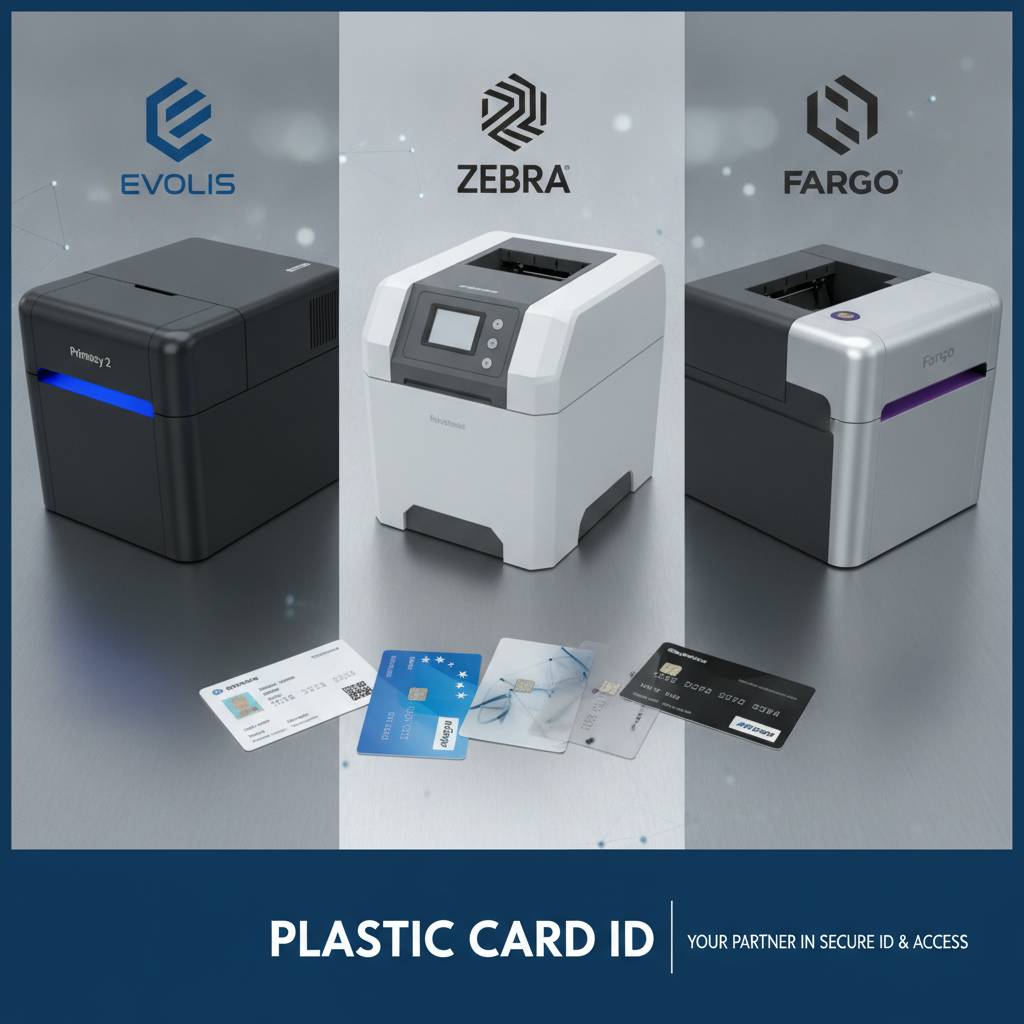 The brand you choose shapes far more than aesthetics - it determines your ribbon compatibility, software ecosystem, service support pathway, and long-term cost of ownership. Plastic Card ID has curated its lineup deliberately, carrying only Evolis, Fargo, Zebra, and Matica because these are the brands that have consistently proven their reliability at scale across the United States market.
Each brand has a distinct identity and a distinct sweet spot. Understanding those differences is genuinely useful whether you're making your first card printer purchase or upgrading an aging system that's been limping along for years.
Evolis: The Versatile Workhorse Across Every Tier
Evolis has built an exceptional reputation for producing printers that balance quality, reliability, and user-friendliness across a remarkably wide range of volume demands. From the compact, budget-conscious Badgy200 - ideal for nonprofits, small schools, or boutique fitness studios printing fewer than 1,000 cards yearly - to the Agilia's premium, edge-to-edge output, Evolis provides a logical upgrade path as your card program scales.
The Zenius and Primacy2 occupy the high-value mid-range. The Primacy2 in particular stands out as a genuinely impressive piece of hardware: capable of printing 1,000 to 6,000 cards per month, available in duplex configuration, and upgradeable with magnetic stripe and smart chip encoding modules. For organizations that want professional-grade results without stepping into industrial pricing, it's a compelling choice.
Fargo and Zebra: Built for Security-Conscious ID Programs
If your card program is tied to physical access control, employee credentialing in regulated environments, or government-adjacent identification, Fargo and Zebra printers warrant serious attention. These brands have long-standing credibility in security-sensitive markets - not by accident, but because their hardware and software ecosystems were designed with layered security features from the ground up.
Both brands offer encoding options, lamination capabilities, and robust construction suited to environments where cards absolutely cannot fail. CPE stocks these alongside the Evolis lineup, giving buyers the flexibility to match the right brand to their specific security requirements rather than forcing a one-size-fits-all solution.
Matica: When the Event Is the Deadline
Conference badges. Concert credentials. Sporting event access passes. These use cases share one critical characteristic: every card needs to be printed, right now, on-site, under time pressure. That's exactly the environment the Matica Event Printer was designed for. Its throughput capabilities allow high-speed badge production that keeps registration lines moving rather than creating bottlenecks.
For organizations that only need event-scale printing periodically but need it to perform flawlessly when the moment arrives, the Matica fills a gap that general-purpose desktop printers simply cannot address. It's a specialized tool for a specific, high-stakes situation - and it delivers.
Choosing Between Brands: A Practical Framework
When narrowing down which brand fits your operation, consider these deciding factors before calling or browsing:
- Volume per month - honest estimates, not best-case scenarios
- Card type - photo ID, access card, loyalty card, event badge, student ID, hotel key
- Encoding needs - magnetic stripe, smart chip, or neither
- Print quality priority - functional output vs. premium brand presentation
- Duplex requirement - does information appear on both card faces
- Budget range - including total cost of ownership with ribbons and consumables
- Growth trajectory - will volume increase meaningfully in 1-2 years
Running through this list before engaging with a product page or sales conversation dramatically sharpens your decision-making and prevents expensive mismatches between equipment and need.
The Hidden Cost of Card Printing: Consumables and Ongoing Supplies
The printer itself is just the beginning. The true long-term cost of any card printing program lives in its consumables - ribbons, cleaning kits, lamination supplies, and the cards themselves. Buyers who focus exclusively on the upfront printer price often find themselves surprised by operational costs that dwarf the initial investment over a 3-5 year lifespan.
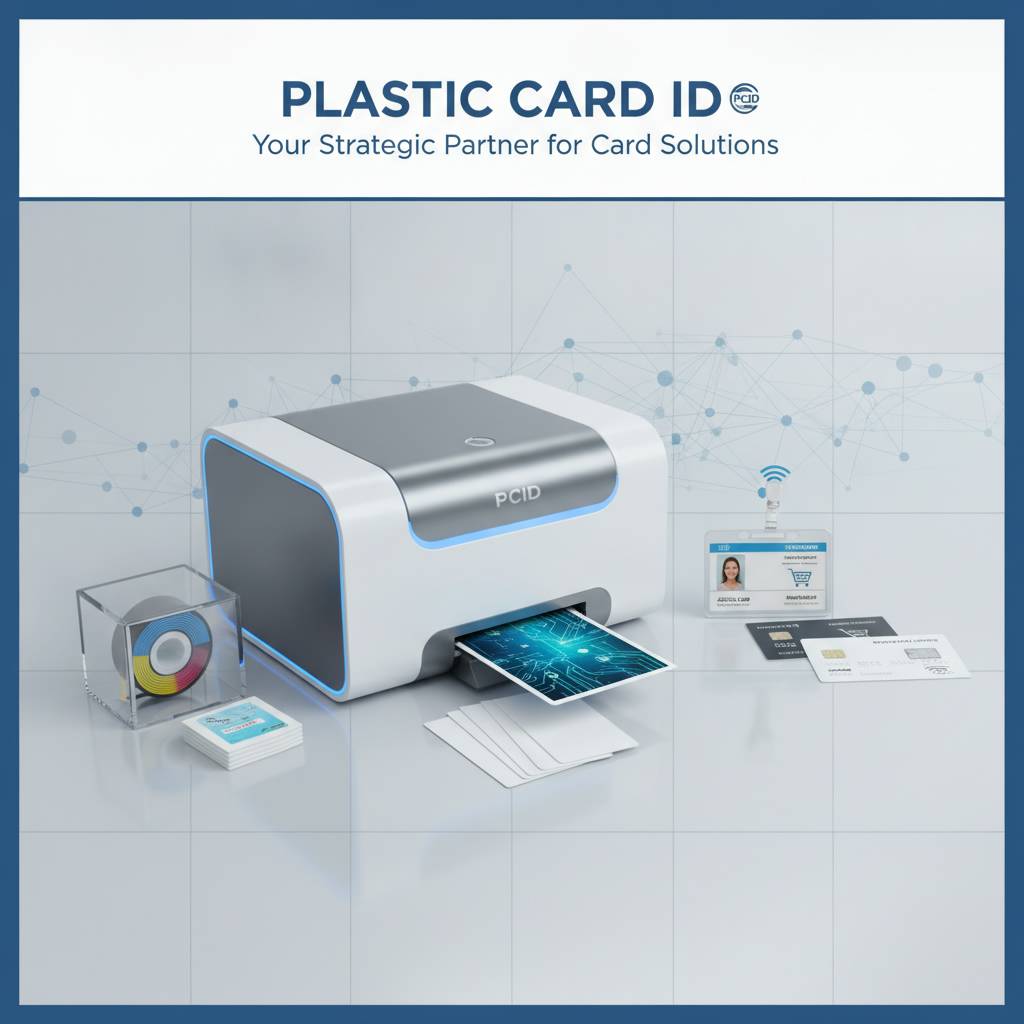
Plastic Card ID supplies a full range of consumables precisely because a card program that runs out of ribbons mid-print run is a card program that's failed at the worst possible moment. Planning your consumables strategy from day one is just as important as choosing the right printer model.
Ribbon Types and Their Cost Per Card
YMCKO ribbons - the five-panel color ribbons that produce full-color output with a protective overlay - are the standard choice for photo ID cards and branded membership cards. Their cost per card typically runs higher than monochrome options, ranging anywhere from $0.30 to $1.00 per card depending on the ribbon and the printer model. Knowing your ribbon cost per card is essential for accurate program budgeting.
Monochrome ribbons print single-color output - black, blue, white, silver, gold - at a significantly lower cost per card. For access control cards, loyalty cards with barcodes only, or any application where color photography isn't needed, monochrome ribbons offer a sharp cost reduction without sacrificing functionality. Specialty ribbons for unique effects round out the selection for organizations with specific presentation needs.
Cleaning Kits and Printer Longevity
A printer that isn't regularly cleaned is a printer that's slowly dying. Dust, card debris, and ribbon residue accumulate on the print head and card transport rollers over time, degrading print quality and ultimately causing mechanical failures. Regular cleaning is the single easiest way to extend printer lifespan - and cleaning kits are inexpensive compared to service calls or premature replacements.
CPE includes cleaning supplies as part of a complete card program supply strategy. Most manufacturers recommend cleaning after every ribbon replacement at minimum, with more frequent cleaning in high-volume environments. Building cleaning into your operational routine rather than treating it as optional maintenance pays dividends in print head longevity and consistent output quality.
Lamination Modules and Card Durability
For cards that endure daily handling - employee badges clipped to lanyards, student IDs stuffed in wallets, loyalty cards swiped dozens of times - lamination adds a protective layer that dramatically extends card life. Lamination modules are available as upgrades for several printer models in the Plastic Card ID lineup, applying a thin film overlay that resists scratching, UV fading, and general wear.
The cost of lamination adds up per card, but so does the cost of reprinting cards that wear out ahead of schedule. For programs where card durability is a genuine operational priority - rather than a nice-to-have - lamination is worth the investment. Factor it into your total cost modeling from the start.
Encoding Capabilities: Magnetic Stripe, Smart Chip, and Beyond
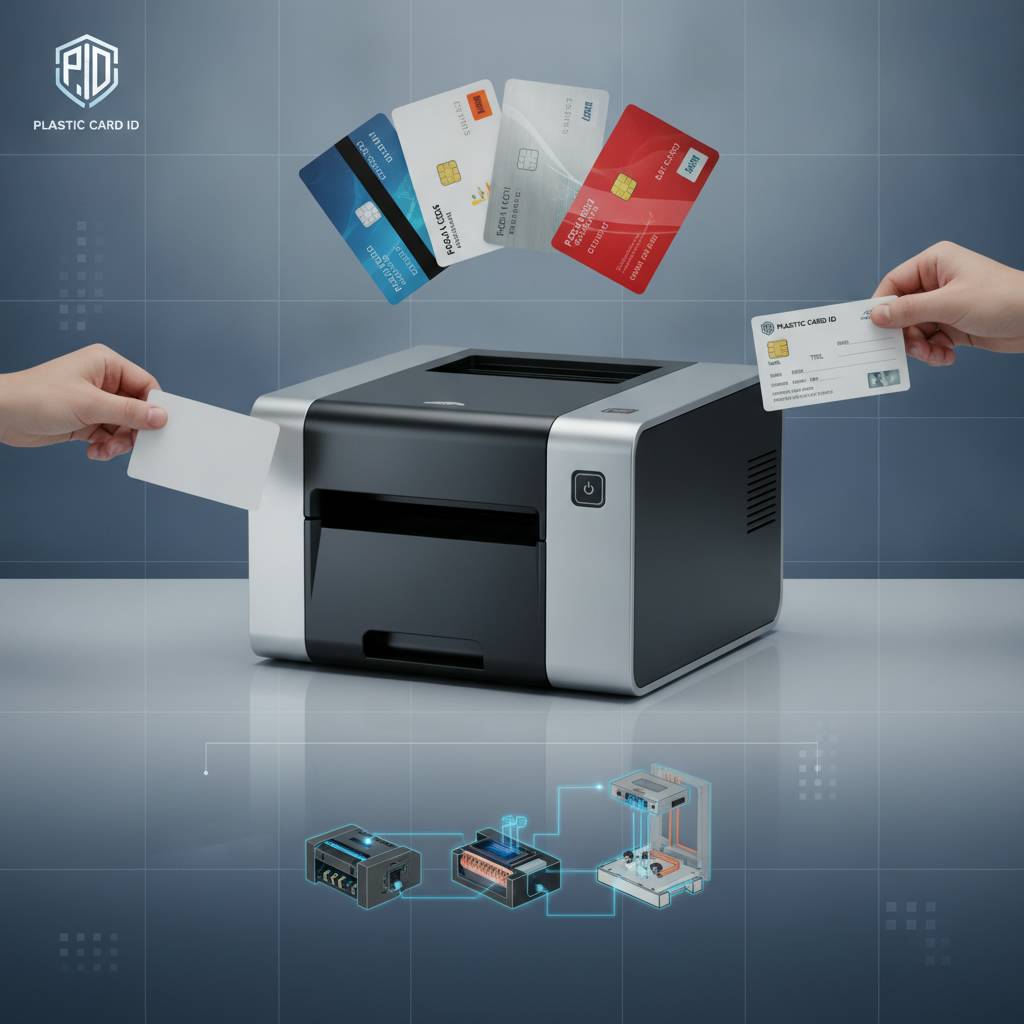 A plain printed card carries visual information. An encoded card carries functional data - the kind that opens doors, tracks attendance, stores value, or authenticates identity. Encoding transforms a card from a branded credential into an active operational tool, and understanding your encoding requirements before selecting a printer is critical.
Not every printer in every configuration supports encoding. Some require factory-installed modules; others allow field upgrades. Getting clarity on encoding needs before purchase prevents the frustration of discovering your printer can't do what your access control system requires.
Magnetic Stripe Encoding
Magnetic stripes remain the most widely deployed card encoding technology in the United States market - hotel key cards, loyalty programs, time and attendance systems, and access control panels all commonly rely on magnetic stripe data. Encoding happens directly during the print run in equipped printers, meaning your card is printed and encoded in a single automated pass.
The Evolis Primacy2 and several other models in the Plastic Card ID lineup offer magnetic stripe encoding as either a standard configuration or an upgrade module. Specifying this need upfront ensures you receive a printer that integrates seamlessly with your existing card readers and access infrastructure.
Smart Chip and Contact Card Encoding
Smart chip cards store significantly more data than magnetic stripes and offer enhanced security through cryptographic protocols. They're common in corporate access control systems, healthcare credentialing, and higher-education campus card programs. Contact chip encoding requires direct electrical contact between the card and a reader, while contactless (RFID) cards communicate wirelessly at short range.
For organizations operating in environments where security requirements are elevated, or where cards must interface with chip-reading infrastructure, selecting a printer with the appropriate encoding module is non-negotiable. CPE can walk you through which printer configurations support which encoding standards for your specific card program.
Input Hoppers and High-Volume Encoding Runs
When you're encoding hundreds or thousands of cards in a single batch - think annual student ID production at the start of a school year - manual card feeding is impractical. Input hopper accessories enable fully automated, unattended batch production, loading cards into the printer sequentially without operator intervention between cards.
Hoppers dramatically change the economics of large production runs, reducing labor requirements and ensuring consistent output quality across the entire batch. If your program includes periodic large-volume print events alongside regular day-to-day printing, confirm that your selected printer model supports hopper attachment and check the hopper capacity to ensure it meets your batch sizes.
In-House Printing vs. Outsourcing: The Real Comparison
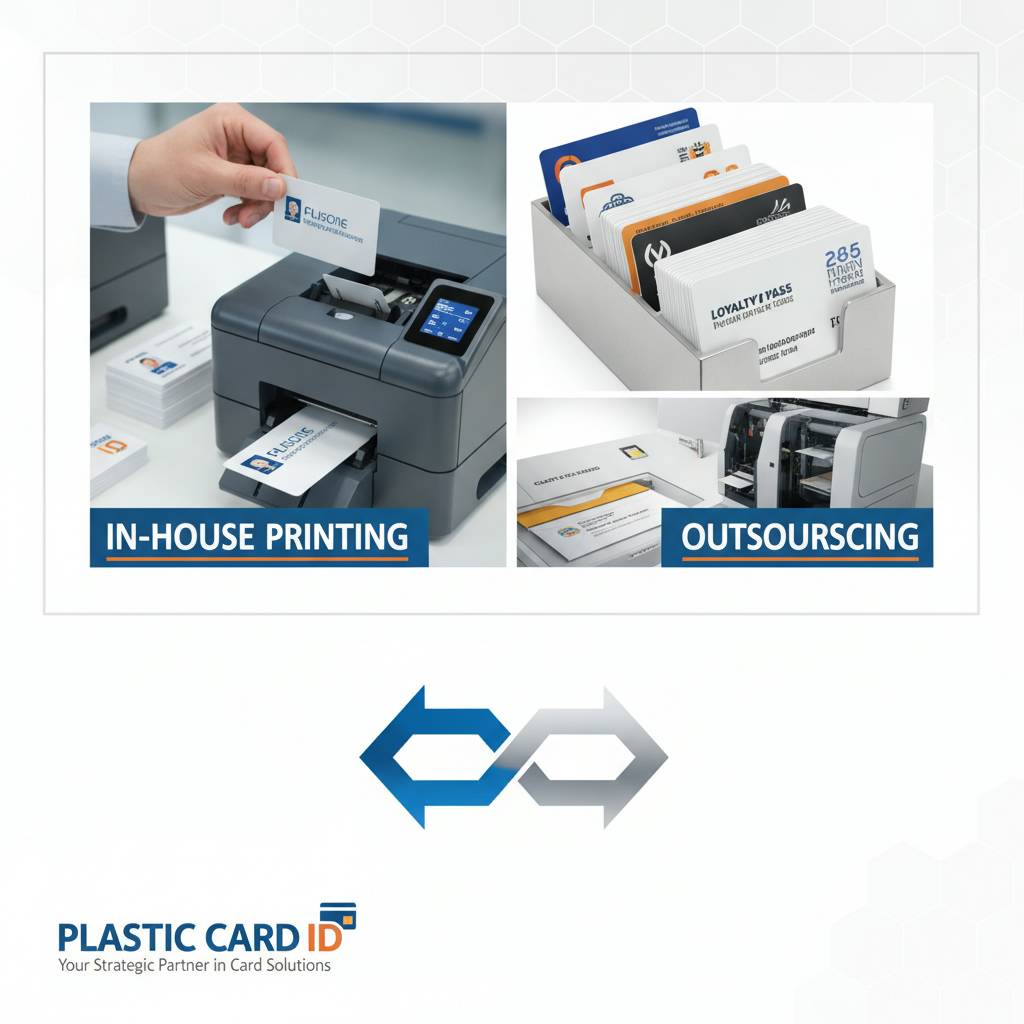 Some organizations still outsource card production to external print bureaus - ordering in bulk, waiting for delivery, and storing cards until needed. This approach works for some use cases, but it carries real costs and limitations that in-house printing eliminates entirely. The case for bringing card production in-house has never been stronger than it is in an era where personalization, speed, and data control all matter.
Consider the lead time reality: an outsourced card order typically takes days to weeks from design approval to delivery. An in-house printer produces a finished, personalized card in under a minute. For employee onboarding, membership enrollment, or access control provisioning, that difference in turnaround time has direct operational value.
On-Demand Personalization
Every card printed in-house can be uniquely personalized at the moment of production - photo, name, title, department, unique ID number, encoded data. With outsourced printing, personalization either means massive minimum order quantities for each variant or expensive per-card customization fees. In-house printing makes true one-card-at-a-time personalization completely economical.
This matters enormously for employee ID programs, student IDs, and membership cards where each card's information is unique to its recipient. The ability to produce a single card on demand - without minimum orders, without lead time, without external vendor dependency - is a practical operational superpower for HR teams, membership coordinators, and facility managers alike.
Data Security and Vendor Independence
When you send card data to an external vendor, you introduce an external party into your data chain. For organizations handling sensitive employee information, student records, or access control data, that external exposure represents a genuine risk worth taking seriously. In-house printing means your card data never leaves your facility.
Beyond security, vendor independence eliminates the risk of supply disruptions, price increases, or vendor discontinuation affecting your card program. Your production capability is fully within your control, available precisely when you need it, operated by your own staff under your own protocols.
Total Cost of Ownership Over Time
The upfront cost of a card printer can look significant compared to a single outsourced order. Stretch the comparison across 3-5 years of ongoing card production, and the math almost always favors in-house equipment - sometimes dramatically. A mid-range printer purchased for $1,500-$3,000 combined with ribbon and card costs typically undercuts outsourcing costs for programs printing even a few hundred cards per year.
For larger programs, the savings compound quickly. Organizations printing thousands of cards monthly can often recover the full cost of their printer within the first year of ownership and enjoy dramatically lower per-card costs for every year thereafter. Factor in the intangible benefits of speed, personalization, and data control, and the in-house case becomes even more compelling.
Frequently Asked Questions About Choosing a Plastic Card Printer
After more than 25 years and over 100,000 customers served, Plastic Card ID has fielded every conceivable question about card printer selection. These are the questions buyers ask most often - and the honest answers that help them make better decisions.
What Types of Cards Can These Printers Produce?
The printers in the Plastic Card ID lineup produce standard CR80 PVC cards - the same dimensions as a credit card - suitable for employee ID badges, membership cards, loyalty cards, access control cards, student IDs, hotel key cards, event credentials, and more. These are durable, professional-grade PVC plastic cards designed for real-world daily use.
What they are not suited for is financial card production - credit cards, debit cards, and similar payment instruments require entirely different infrastructure and regulatory compliance. Plastic Card ID does not supply financial card processing equipment, and their lineup is focused exclusively on identification, access, loyalty, and credential applications.
How Do I Know Which Printer Tier Is Right for My Volume?
A practical rule of thumb: if you print fewer than 1,000 cards per year, the Evolis Badgy200 is built for exactly your scale. Between 1,000 and 6,000 cards per month, the Evolis Zenius or Primacy2 handle that range with room to spare. Organizations with high-volume demands, premium quality requirements, or specialized security needs should explore the Evolis Agilia, Fargo, Zebra, or Matica options depending on the specific use case.
When in doubt, call CPE directly. A five-minute conversation about your card program - volume, card type, encoding needs, budget - yields a recommendation that a spec sheet simply cannot replicate. Contact Plastic Card ID at 800.835.7919 to speak with a specialist who can match your specific needs to the right printer configuration from day one.
What Ongoing Supplies Will My Card Program Need?
Every card printing program requires a regular supply of printer ribbons matched to your printer model, blank PVC card stock, and periodic cleaning kits. Programs with encoding modules need ribbon types compatible with the encoding configuration. Programs using lamination require lamination film stock in addition to standard ribbons.
Building a consumables budget alongside your printer purchase decision ensures your program operates smoothly from launch rather than scrambling for supplies at inopportune moments. Plastic Card ID supplies a complete range of ribbons, cleaning kits, lamination materials, and accessories to support every printer model in their lineup, keeping your card production running without interruption.
Make the Right Choice the First Time with Plastic Card ID
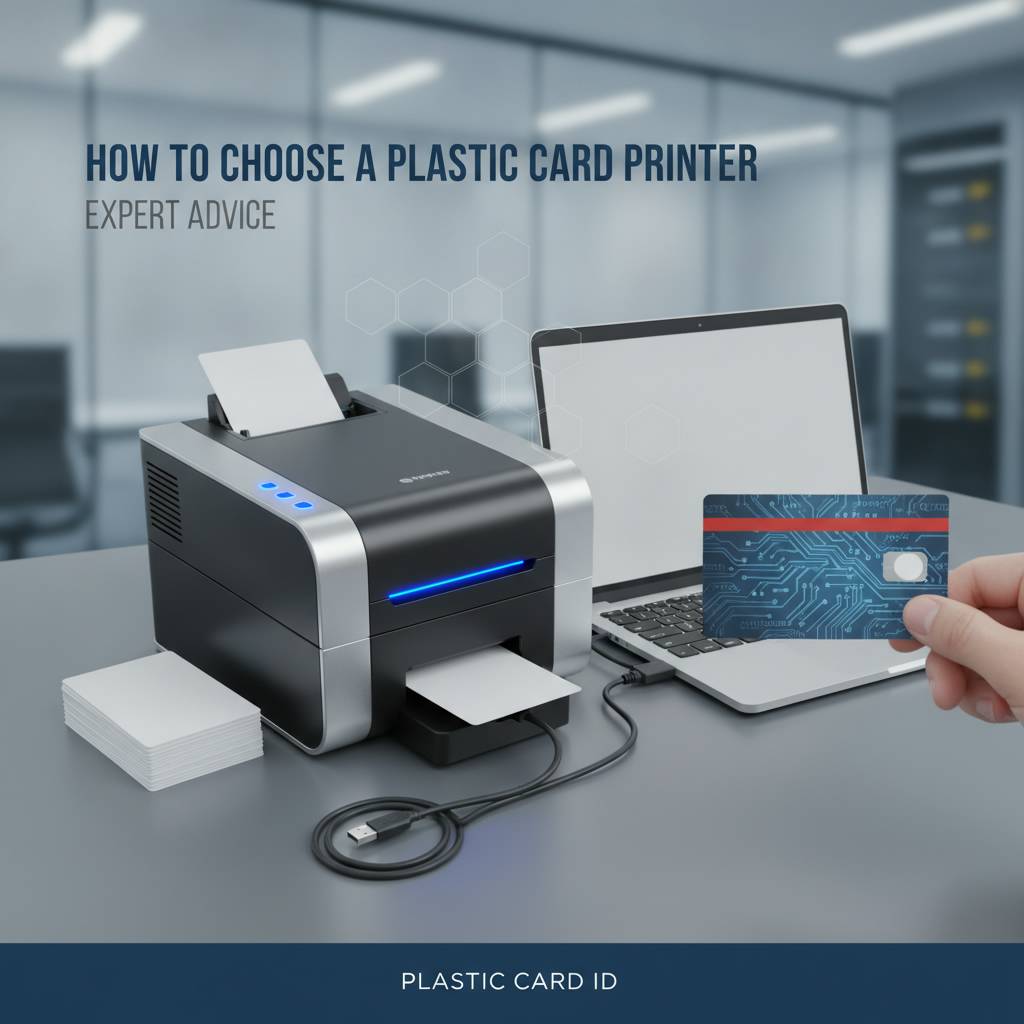 Choosing a plastic card printer is not a decision that benefits from second-guessing. Get it right the first time - the right volume tier, the right brand, the right encoding configuration, the right consumables plan - and your card program will run smoothly for years. Get it wrong and you're dealing with underperforming equipment, unnecessary repurchases, and avoidable frustration.
Plastic Card ID has spent more than two decades building the expertise and the product lineup that makes right-first-time decisions achievable. With Evolis, Fargo, Zebra, and Matica all under one roof, and a team that understands the practical realities of running a card program at every scale, CPE is genuinely positioned to match buyers to the right solution rather than simply pushing a sale.
A Lineup Built for Every Scale
From the Badgy200's accessible simplicity to the Agilia's premium output, from the Primacy2's mid-range versatility to the Matica's event-speed throughput, the Plastic Card ID product lineup covers every realistic card printing scenario a business or organization is likely to face. There's no need to compromise on volume capacity, print quality, or encoding capability when the right tool for your specific situation exists and is readily available.
Equally important: the supporting infrastructure is in place too. Ribbons, cleaning kits, lamination modules, encoding upgrades, input hoppers, card carriers and sleeves - everything your card program needs beyond the printer itself is available from the same trusted source. Consolidating your card program supply chain through a single experienced supplier simplifies ordering, ensures compatibility, and builds a support relationship that pays off every time a question or challenge arises.
Reach Out and Get the Right Answer
The best plastic card printer for your organization is the one that matches your actual production requirements - not the one with the most impressive spec sheet or the lowest sticker price in isolation. Accurate matching takes a conversation, not just a catalog.
Contact Plastic Card ID today at 800.835.7919 and speak with a specialist who will ask the right questions, understand your card program requirements, and recommend the printer, configuration, and consumables that set your organization up for long-term success.
With over 25 years of experience and more than 100,000 customers served, Plastic Card ID knows what it takes to build a card printing program that works reliably, produces professional results, and delivers genuine operational value from day one. Call 800.835.7919 now and let's get your card program running right.
Previous Page