Custom Plastic Card Printer: Create Personalised Cards In-House
Table of Contents []
- Why Plastic Card ID Is the Go-To Source for a Custom Plastic Card Printer
- Choosing the Right Custom Plastic Card Printer for Your Volume
- Printer Supplies That Keep Your Card Program Running
- Buyer's Guide: What to Know Before You Purchase a Custom Plastic Card Printer
- Industries and Applications Served by Plastic Card ID
- Frequently Asked Questions About Custom Plastic Card Printers
- Ready to Print? Plastic Card ID Has Your Custom Plastic Card Printer
Why Plastic Card ID Is the Go-To Source for a Custom Plastic Card Printer
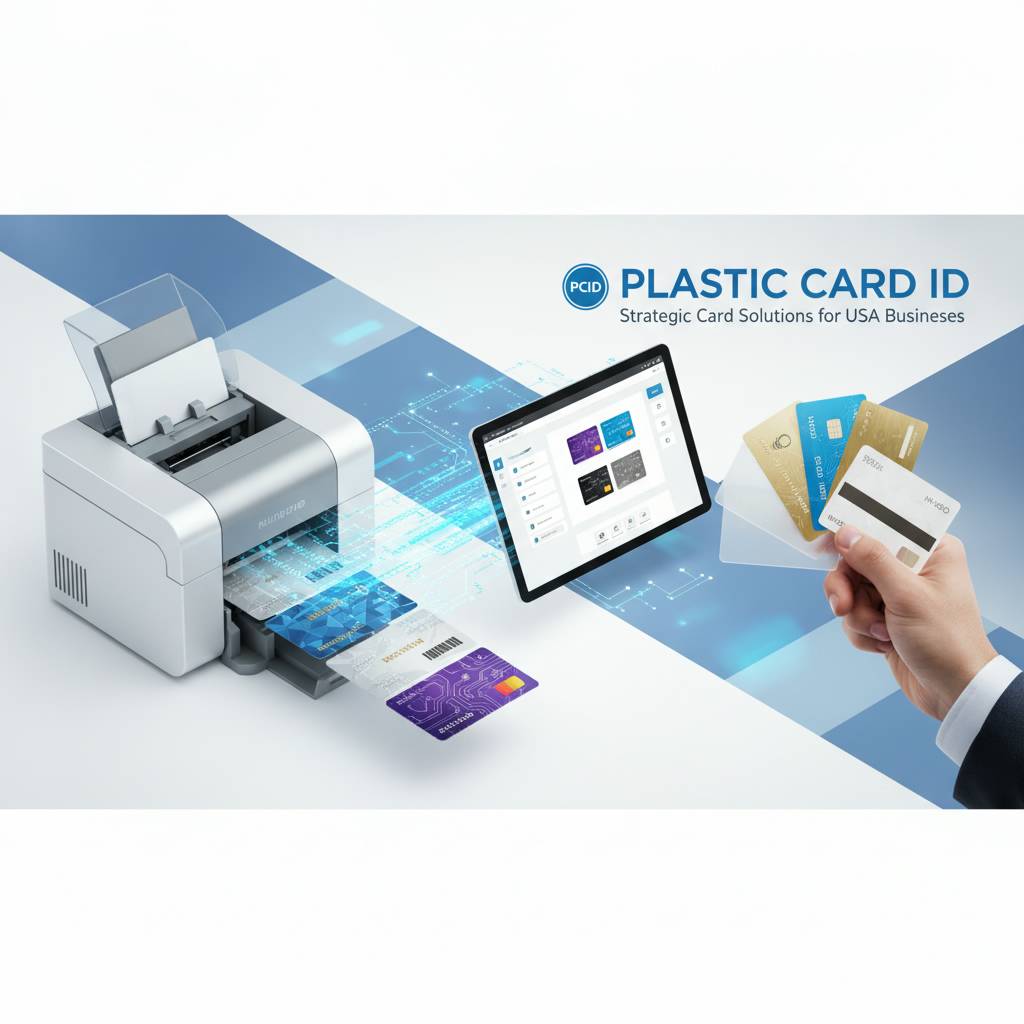 There's a moment every growing organization faces: the realization that outsourcing card production is costing more time, money, and flexibility than it's worth. Whether it's waiting two weeks for a batch of employee badges or paying per-card premiums to a vendor, the inefficiencies stack up fast. That's exactly where a custom plastic card printer changes everything - and where Plastic Card ID steps in with 25 years of hard-won expertise and a customer base exceeding 100,000 businesses across the United States.
What sets Plastic Card ID apart isn't just the breadth of hardware they stock - it's the precision of their curation. Every printer in their lineup has been selected because it solves a specific, real-world card printing challenge. From desktop units suited for modest annual print runs to industrial-grade systems built for relentless daily throughput, CPE has mapped the right tool to every conceivable use case. The result? Buyers don't wade through noise - they find the right printer faster and start printing sooner.
Serving industries from healthcare and hospitality to education and enterprise security, Plastic Card ID supplies not just the printers but the full ecosystem of supplies - ribbons, cleaning kits, encoding modules, and more - so every card program runs without interruption. This is serious, professional-grade equipment built for organizations that need results they can count on.
The Business Case for Bringing Card Printing In-House
Outsourced card printing sounds convenient until you calculate the true cost. Lead times stretch across days or weeks. Rush fees appear when you least expect them. And every time a card needs personalizing - a photo, a name, an encoded stripe - you're back in the queue. Printing cards in-house with your own custom plastic card printer eliminates all of that friction entirely.
With an in-house printer, organizations print exactly what they need, exactly when they need it. A new employee starts Monday? Their badge is ready Monday morning. A member loses their card? Reprint it in under a minute. The control this provides is genuinely transformative - not just operationally, but financially. Per-card costs for in-house printing are a fraction of what vendors charge, and the savings compound rapidly at scale.
Beyond cost, personalization becomes effortless. Every card can carry a photo, a unique barcode, a magnetic stripe encode, or a smart chip credential - all handled at your desk, on your timeline, without involving a third party. For security-sensitive applications like access control or student IDs, that autonomy isn't just convenient - it's essential.
A Quarter Century of Card Printing Knowledge
Over 25 years in this industry means Plastic Card ID has seen card printing technology evolve from its earliest commercial roots to today's high-speed, dual-sided, encoding-capable systems. That institutional knowledge filters directly into how CPE advises customers - matching the right printer to the right workload isn't guesswork here, it's a practiced discipline.
More than 100,000 customers have trusted Plastic Card ID with their card printing programs. That's a remarkably diverse cross-section of American business - school districts, hotel chains, corporate campuses, event organizers, fitness clubs, hospitals, and government agencies, among others. Each brought different needs, different volumes, different card types. And each found a solution in Plastic Card ID's carefully selected lineup.
What Types of Cards Can You Print?
The range of applications for a custom plastic card printer is broader than most buyers initially realize. Once an organization has the hardware in place, the same printer can serve multiple departments and multiple card types - often with nothing more than a ribbon swap and a software template change.
- Employee ID cards and photo badges
- Membership cards for gyms, clubs, and associations
- Loyalty and rewards cards for retail programs
- Access control cards with magnetic stripe or smart chip encoding
- Student IDs and faculty credentials
- Hotel key cards and guest access credentials
- Event credentials, lanyards, and temporary badges
- Healthcare patient ID cards
Every one of these applications benefits from on-demand, in-house printing - and Plastic Card ID supplies the hardware to make each one possible, professionally and affordably.
Choosing the Right Custom Plastic Card Printer for Your Volume
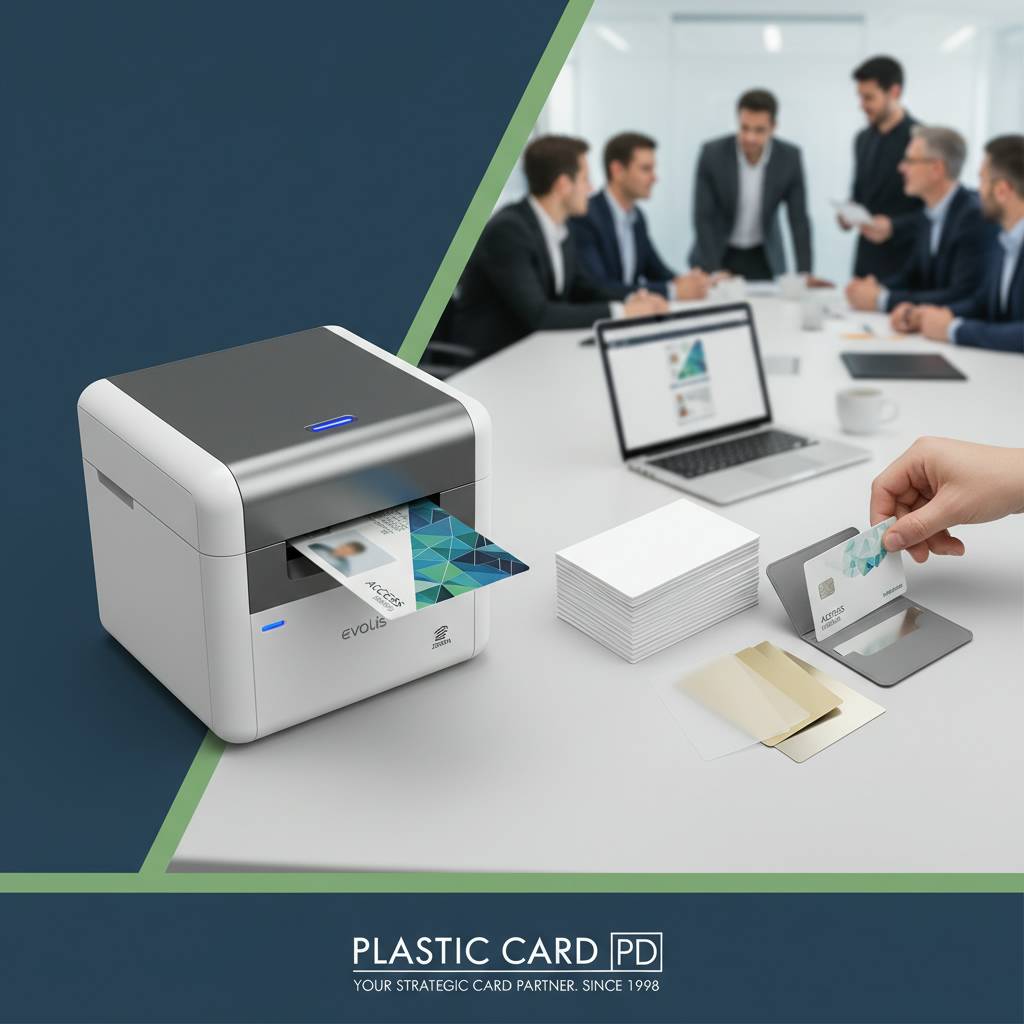 Not every organization needs the same machine. Volume is the single most important variable in selecting a card printer - buy too little capacity and you'll face jams, slow output, and premature wear; buy more than you need and you're tying up capital unnecessarily. Plastic Card ID structures its lineup clearly around this reality, making it straightforward to identify the right tier for your operation.
The decision framework starts with annual card volume, then factors in card complexity - single-sided vs. dual-sided, plain vs. encoded, standard vs. laminated. From there, brand considerations like Evolis, Fargo, Zebra, or Matica come into play, each with distinct strengths for particular application types. What follows is a breakdown of each tier to help clarify the decision.
| Volume Tier | Recommended Printer | Cards Per Year | Key Features |
|---|---|---|---|
| Entry Level | Evolis Badgy200 | Under 1,000 | Compact, easy setup, bundled software |
| Mid Range | Evolis Zenius / Primacy2 | 1,000-72,000 | Dual-sided, mag stripe, modular upgrades |
| Premium Output | Evolis Agilia | High volume | Edge-to-edge, highest quality print |
| Security ID | Fargo / Zebra | Scalable | Robust encoding, secure credential output |
| Event / On-Site | Matica Event Printer | High-speed bursts | Fast badge printing at live events |
Entry-Level Printers: The Evolis Badgy200
For small businesses, nonprofits, schools, or any organization printing fewer than 1,000 cards per year, the Evolis Badgy200 is a compelling starting point. It's compact enough to sit on any desk, straightforward enough that any staff member can operate it after a brief setup, and capable enough to produce professional-quality cards that look sharp and last.
The Badgy200 comes bundled with card design software, which removes one of the common friction points for new card programs - you don't need a graphic designer or specialized software to get started. Templates are included, and adding photos, text, and basic encoding is intuitive from day one. For low-volume use cases, this is often all an organization will ever need.
Mid-Range Workhorses: Zenius and Primacy2
When volume climbs into the range of 1,000 to 6,000 cards per month, the Evolis Zenius and Primacy2 step in as reliable, feature-rich workhorses. These printers support dual-sided printing, magnetic stripe encoding, and modular upgrades - meaning the hardware can grow alongside your program without requiring a full replacement.
The Primacy2 in particular is a favorite among organizations that need consistent, high-quality output across varied card types. Whether you're printing single-sided membership cards one day and dual-sided, mag-stripe-encoded employee badges the next, the Primacy2 handles the transition without missing a beat. It's the kind of printer that earns its place in a card program and stays there for years.
Contact Plastic Card ID at 800.835.7919 to find out which mid-range model best fits your specific volume and card type requirements.
Premium and Specialized Output: Agilia, Fargo, Zebra, and Matica
At the top of the lineup, the Evolis Agilia sets the standard for print quality. Edge-to-edge coverage, vivid color accuracy, and consistent output at high volumes make it the right choice for organizations where presentation matters as much as function - think premium membership programs, executive credentials, or cards that double as brand touchpoints.
Fargo and Zebra printers bring a different set of strengths: security. Both brands are widely trusted in government, law enforcement, and enterprise access control environments where credential integrity is non-negotiable. For ID programs where forgery resistance and encoding precision are paramount, Fargo and Zebra deliver hardware specifically engineered to meet those demands.
The Matica Event Printer rounds out the lineup with a niche but powerful capability: rapid on-site badge printing for conferences, trade shows, and live events. When hundreds of attendees need personalized credentials in a short window, the Matica delivers the throughput to make it happen without lines, delays, or compromises on card quality.
Printer Supplies That Keep Your Card Program Running
A custom plastic card printer is only as reliable as the supplies feeding it. Plastic Card ID stocks a comprehensive range of printer consumables - not as an afterthought, but as a core part of what makes a card program sustainable over the long haul. Ribbons run out. Cleaning cycles accumulate. Encoding modules need replacing. Having a trusted supplier for all of it under one roof is more valuable than it might initially seem.
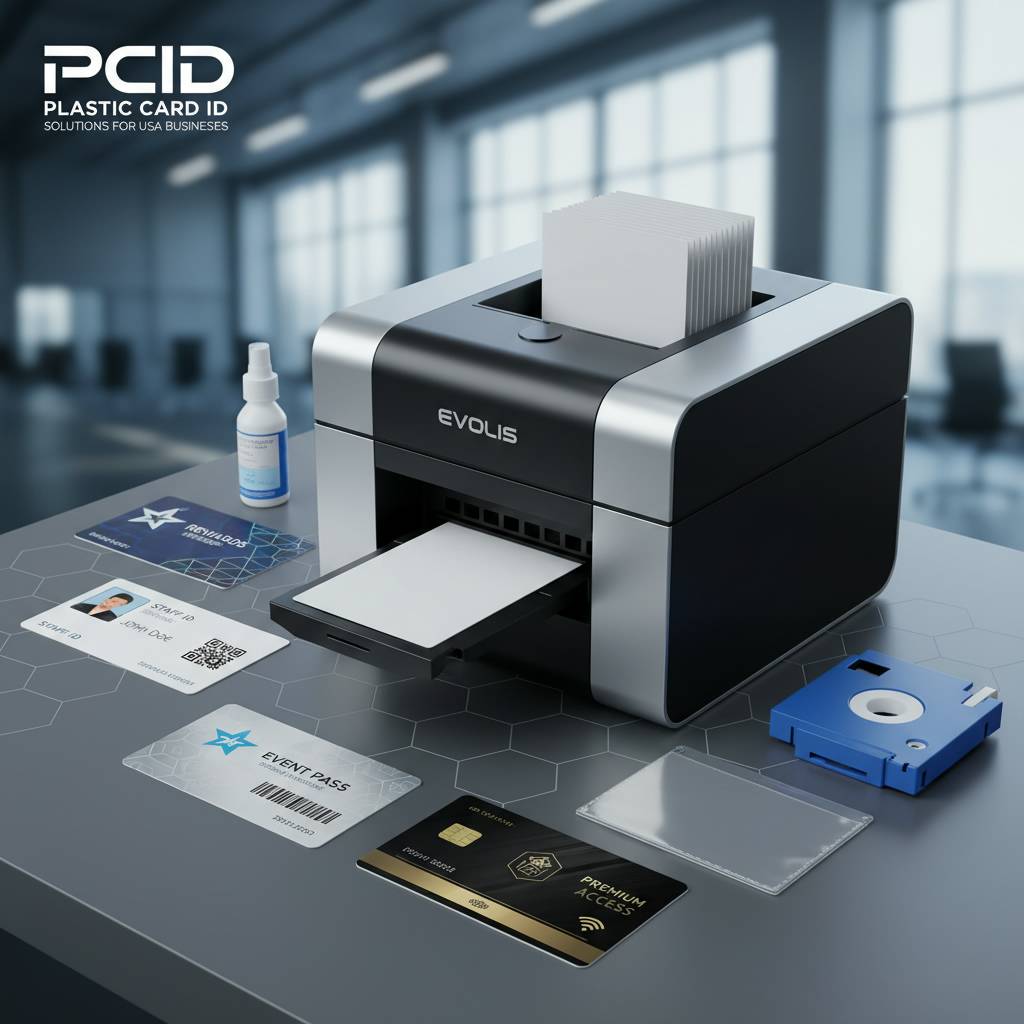
The consumables lineup at CPE covers every major category, sourced to work reliably with the printer brands they carry. This matters more than many buyers realize - off-brand or mismatched supplies can degrade print quality, increase maintenance frequency, and void manufacturer warranties. Using manufacturer-compatible supplies protects both the print output and the printer itself.
Ribbons: YMCKO, Monochrome, and Specialty Formats
Printer ribbons are the most frequently replaced consumable in any card program, and choosing the right type makes a direct difference in output quality and cost per card. YMCKO ribbons - yellow, magenta, cyan, black, and overlay - are the standard for full-color card printing. They produce vivid, photorealistic results and include a protective overlay layer that extends card durability.
Monochrome ribbons, available in black and a range of colors, are the efficient choice for single-color applications like simple text badges or access cards where visual complexity isn't required. Per-card cost is significantly lower than YMCKO, making them the smart selection for high-volume programs where color isn't necessary. Matching ribbon type to card type is one of the easiest ways to control operational costs.
Cleaning Kits and Maintenance Supplies
Card printer maintenance is not optional - it's what separates a printer that delivers consistent quality for years from one that degrades prematurely. Dust, card debris, and ribbon residue accumulate inside the printer over time, and without regular cleaning cycles, they manifest as print defects, jams, and ultimately hardware damage that's expensive to repair.
Plastic Card ID supplies cleaning kits specifically designed for the printer models they carry - cleaning cards, swabs, and rollers that target the components most vulnerable to contamination. Following manufacturer-recommended cleaning intervals, using the right supplies, is the single most impactful maintenance habit any card program can develop. It's straightforward, inexpensive, and pays for itself many times over in avoided downtime.
Encoding Upgrades and Lamination Modules
For organizations that need more than a printed image on a card, Plastic Card ID supplies encoding upgrades for magnetic stripe and smart chip applications. These modules integrate with compatible printers to enable on-the-fly credential encoding - turning a standard ID card into an access control credential, a time-and-attendance token, or a stored-value card in the same print pass.
Lamination modules add a physical protection layer to printed cards, dramatically extending durability and adding a premium finish that resists fading, scratching, and tampering. For applications where card longevity is critical - student IDs designed to last a full academic year, or employee badges expected to survive daily use for two to three years - lamination is well worth the incremental investment in hardware and supplies.
Buyer's Guide: What to Know Before You Purchase a Custom Plastic Card Printer
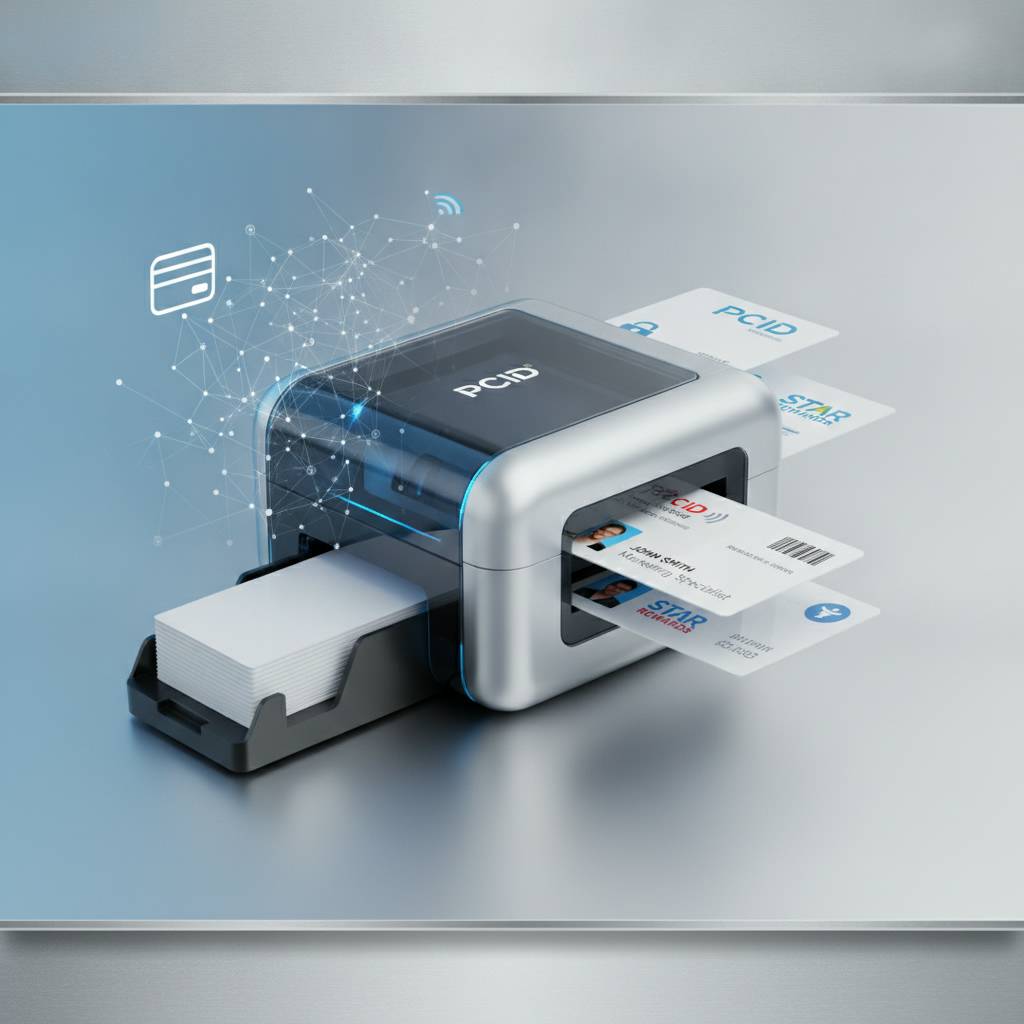 First-time buyers sometimes approach custom plastic card printer selection as a straightforward hardware purchase. In reality, it's a small ecosystem decision - the printer, the supplies, the software, and the card stock all need to work together. Getting that alignment right from the start saves significant time and money down the road.
Plastic Card ID has guided more than 100,000 customers through this decision, and the patterns are clear. The buyers who end up most satisfied are the ones who answered a few key questions before placing an order - questions about volume, card complexity, encoding needs, and budget. What follows is the distilled version of that guidance.
Key Questions to Answer Before You Buy
- How many cards will you print per year? This single number does more to narrow your options than any other factor.
- Do you need single-sided or dual-sided printing? Dual-sided adds utility but also adds cost.
- Will any cards require magnetic stripe encoding, smart chip encoding, or both?
- What's your budget for the printer itself, and what's your expected monthly spend on ribbons and supplies?
- Do you need lamination for extended card durability?
- Will cards be printed at a single location or multiple sites? Multi-site programs may need multiple units or networked configurations.
- Is on-site, real-time printing essential - for example, at events or point-of-enrollment - or is batch printing sufficient?
Answering these questions honestly, before engaging with any vendor, puts buyers in a much stronger position. The right printer is rarely the most expensive one - it's the one correctly matched to actual operational requirements.
Understanding Total Cost of Ownership
The sticker price of a card printer is only part of the cost equation. Ribbons, cleaning supplies, replacement parts, and eventually the printer itself all contribute to what a card program actually costs over time. Buyers who factor in total cost of ownership consistently make better purchasing decisions than those who focus only on upfront hardware cost.
A rough rule of thumb: budget the hardware cost plus one to two years of ribbon and cleaning supply costs when evaluating options. A printer priced at $500-$700 with high per-ribbon costs may be more expensive over three years than a $900-$1,200 unit with lower ongoing supply expenses. CPE can walk through these numbers with any buyer who wants a clear picture before committing.
Common Mistakes First-Time Buyers Make
Underestimating volume is the most common error - and the most consequential. Buyers who purchase an entry-level printer expecting low volume, then find their program growing rapidly, often end up replacing the hardware within a year. If there's any reasonable chance your card program will scale, it's worth investing one tier higher from the start.
Ignoring encoding needs is another frequent misstep. Adding magnetic stripe or smart chip encoding capability after the fact - either through an upgrade module or a hardware replacement - almost always costs more than specifying it correctly at purchase. If there's any chance encoding will be needed, address it upfront. Planning for where your card program will be in two years, not just today, is the mindset that leads to the best purchasing decisions.
Industries and Applications Served by Plastic Card ID
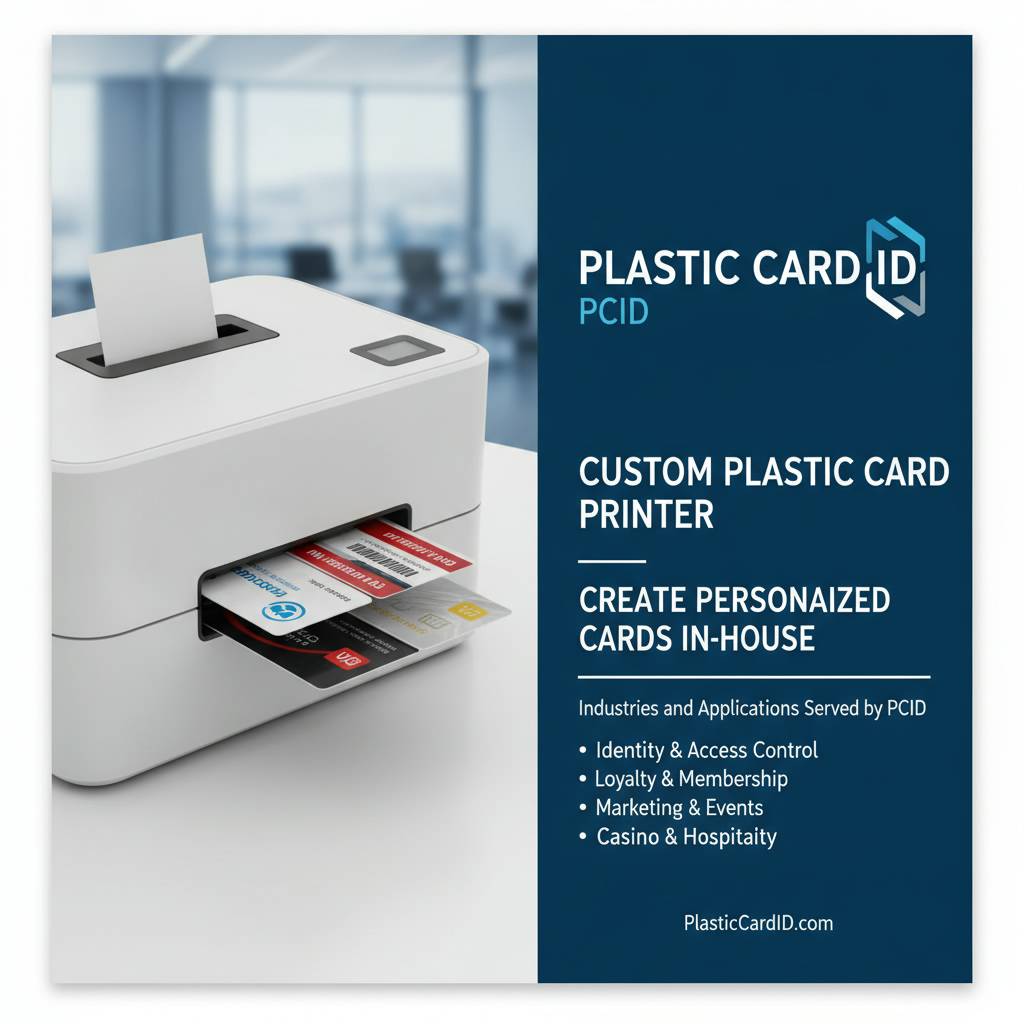 The customer roster at Plastic Card ID reads like a cross-section of American professional life. School districts running student ID programs. Hotel chains issuing key cards at check-in. Corporate campuses managing access control across multiple buildings. Event companies printing thousands of badges on-site at conferences. Each of these organizations found a purpose-built solution within CPE's lineup - and each benefits from the control, speed, and cost efficiency that in-house printing delivers.
What's notable is how rarely the use case stays static. Organizations often start with one application - employee badges, say - and find themselves expanding into loyalty cards, visitor passes, or access credentials once the infrastructure is in place. The printer that handled employee IDs handles all of them, often with nothing more than a software template change and the appropriate ribbon loaded.
Corporate and Enterprise ID Programs
Large organizations with significant employee headcount have the most to gain from in-house card printing. Onboarding cycles accelerate when new hire badges are printed same-day. Security protocols tighten when lost or compromised cards are replaced within minutes rather than days. And when access control credentials are encoded in-house, the IT and security teams maintain full ownership of the credential lifecycle.
Fargo and Zebra printers are particularly well-suited to corporate security environments, with hardware specifically designed to support the encoding standards and tamper-resistance features that enterprise access control systems demand. For organizations where credential security is a compliance requirement, not just a preference, these printers deliver the necessary assurances.
Education: Schools, Universities, and Campus Programs
Student ID programs are one of the most active segments in the card printing market, and for good reason. Schools issue hundreds or thousands of cards per semester - to new students, to replace lost cards, to update photos after grade transitions. An in-house printer transforms what was once a logistical headache into a simple, staff-managed workflow.
Mid-range printers like the Evolis Primacy2 are a natural fit for educational institutions, offering the volume capacity and dual-sided printing needed for cards that carry student photos, barcodes, and library or meal program identifiers on the same card. Many schools also appreciate the flexibility to print faculty and staff credentials on the same hardware - maximizing the return on the initial investment.
Hospitality, Events, and Membership Organizations
Hotels have unique card printing demands: key cards issued at check-in, encoding updated at checkout, and a continuous stream of guests cycling through. The speed and encoding capability of a well-chosen card printer directly impacts front desk efficiency and guest experience. When the printer keeps pace with demand, the guest never waits - and that matters in hospitality.
For events and membership organizations, the Matica Event Printer and mid-range Evolis options offer the speed and reliability to handle registration desk bursts without fallout. Membership clubs appreciate the ability to issue cards immediately at sign-up, reinforcing the brand and eliminating the lag that comes with mailed cards. These are competitive advantages that cost relatively little to implement once the right hardware is in place.
Frequently Asked Questions About Custom Plastic Card Printers
After fielding questions from over 100,000 customers, the team at Plastic Card ID has a clear picture of what buyers most want to understand before making a purchasing decision. The questions below represent the most common and most impactful ones - answered directly, without hedging.
What is the difference between direct-to-card and retransfer printing?
Direct-to-card (DTC) printing applies color directly onto the card surface using a dye-sublimation process. It's the most common method, used by printers like the Evolis Zenius, Primacy2, and Badgy200. It produces excellent results for the vast majority of card types and applications, at a lower per-card cost than retransfer alternatives.
Retransfer printing first prints the image onto a thin film, which is then bonded to the card surface. This method produces true edge-to-edge coverage and works well on cards with uneven surfaces, like smart cards with embedded chips. The Evolis Agilia exemplifies this approach. For organizations where edge-to-edge printing and flawless coverage on complex card surfaces are priorities, retransfer is worth the incremental cost.
How long do plastic card printers typically last?
With proper maintenance - regular cleaning cycles, quality-matched supplies, and appropriate workload management - a professional-grade card printer can reliably serve a card program for five to ten years or more. The key variable is maintenance consistency. Printers that are cleaned on schedule, fed the right supplies, and not overworked relative to their rated capacity simply last longer.
Plastic Card ID recommends establishing a cleaning schedule from day one and stocking cleaning supplies alongside ribbons so the habit never lapses. The cost of a cleaning kit is negligible compared to the cost of a premature printer replacement. Treating a card printer like the professional equipment it is - with regular care and quality consumables - is the straightforward path to a long service life.
Can I upgrade my printer later to add encoding or lamination?
Many printers in the Plastic Card ID lineup support modular upgrades, meaning magnetic stripe encoding, smart chip encoding, and lamination capabilities can be added after the initial purchase. The Evolis Primacy2, for example, is designed with this expandability in mind. However, not all printers support all upgrades, and the availability of upgrade paths varies by model.
This is precisely why it's worth discussing future requirements with Plastic Card ID before buying - selecting a printer that supports the upgrades you might eventually need is far more cost-effective than replacing hardware that has no upgrade path. Call 800.835.7919 and the team will walk through the upgrade compatibility of any model you're considering.
Ready to Print? Plastic Card ID Has Your Custom Plastic Card Printer
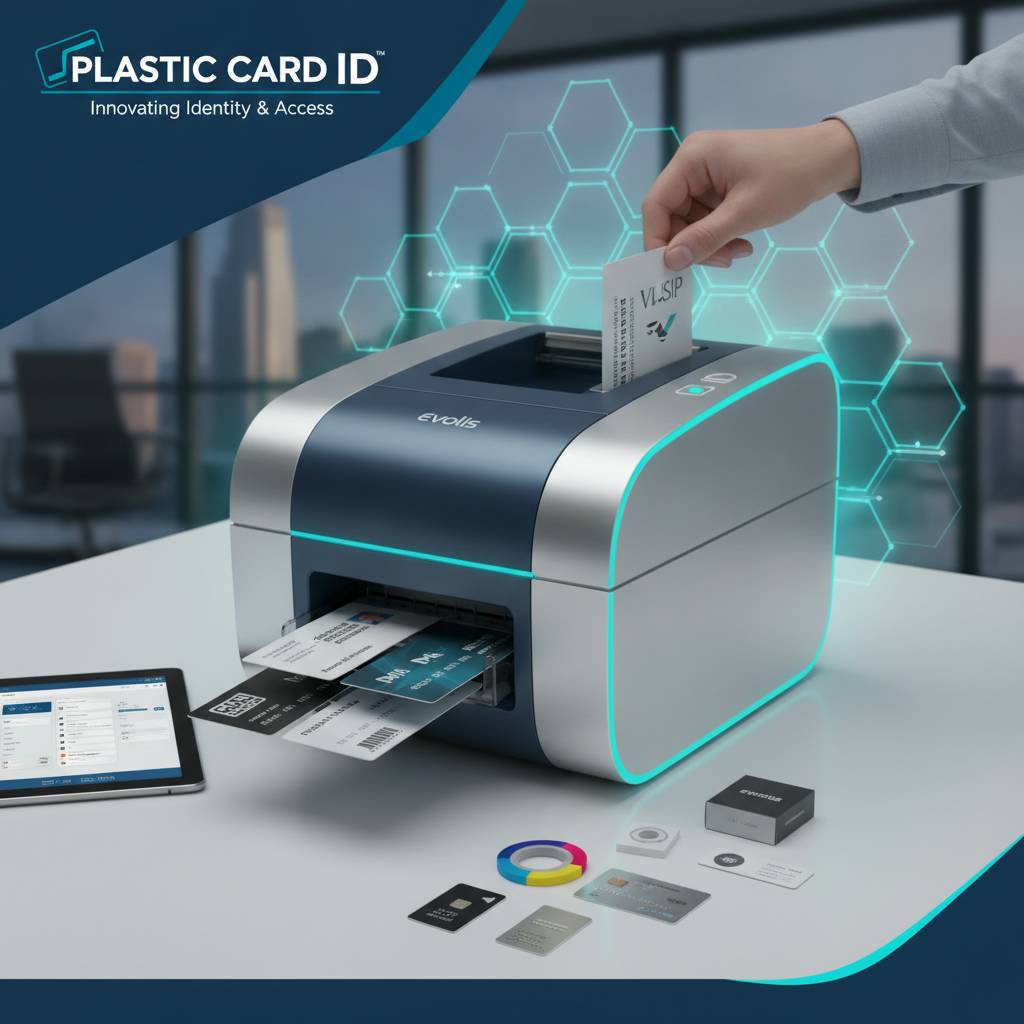 The decision to bring card printing in-house is one that pays dividends almost immediately - in time saved, costs reduced, and control regained. But the quality of that outcome depends significantly on getting the hardware right. That's the value Plastic Card ID delivers: not just a printer, but the right printer, backed by 25 years of expertise and a complete supply ecosystem.
Whether you're launching a new card program from scratch, replacing aging hardware, or scaling up a program that's outgrown its current setup, CPE has the lineup, the knowledge, and the supply chain to support you at every stage. From the Evolis Badgy200 for modest annual volumes to the Matica Event Printer for live-event badge production, every tier is covered - and every printer is backed by the full range of compatible supplies needed to keep it running at its best.
Call Plastic Card ID today at 800.835.7919 to speak with a card printing specialist. Get matched with the right custom plastic card printer for your volume, your application, and your budget - and start printing professional cards in-house, on your terms, starting now.
Previous Page