Zebra Card Printer: Durable and Reliable Card Printing Solutions
Table of Contents []
- Why Plastic Card ID Is the Partner You Need for Your Zebra Card Printer
- Understanding the Zebra Card Printer Lineup
- The Full Supply Ecosystem: What Plastic Card ID Stocks Beyond the Printer
- Comparing Zebra to Other Leading Card Printer Brands
- Choosing the Right Zebra Printer for Your Organization
- In-House Card Printing vs. Outsourcing: The Real Comparison
- Get Your Zebra Card Printer from Plastic Card ID Today
Why Plastic Card ID Is the Partner You Need for Your Zebra Card Printer
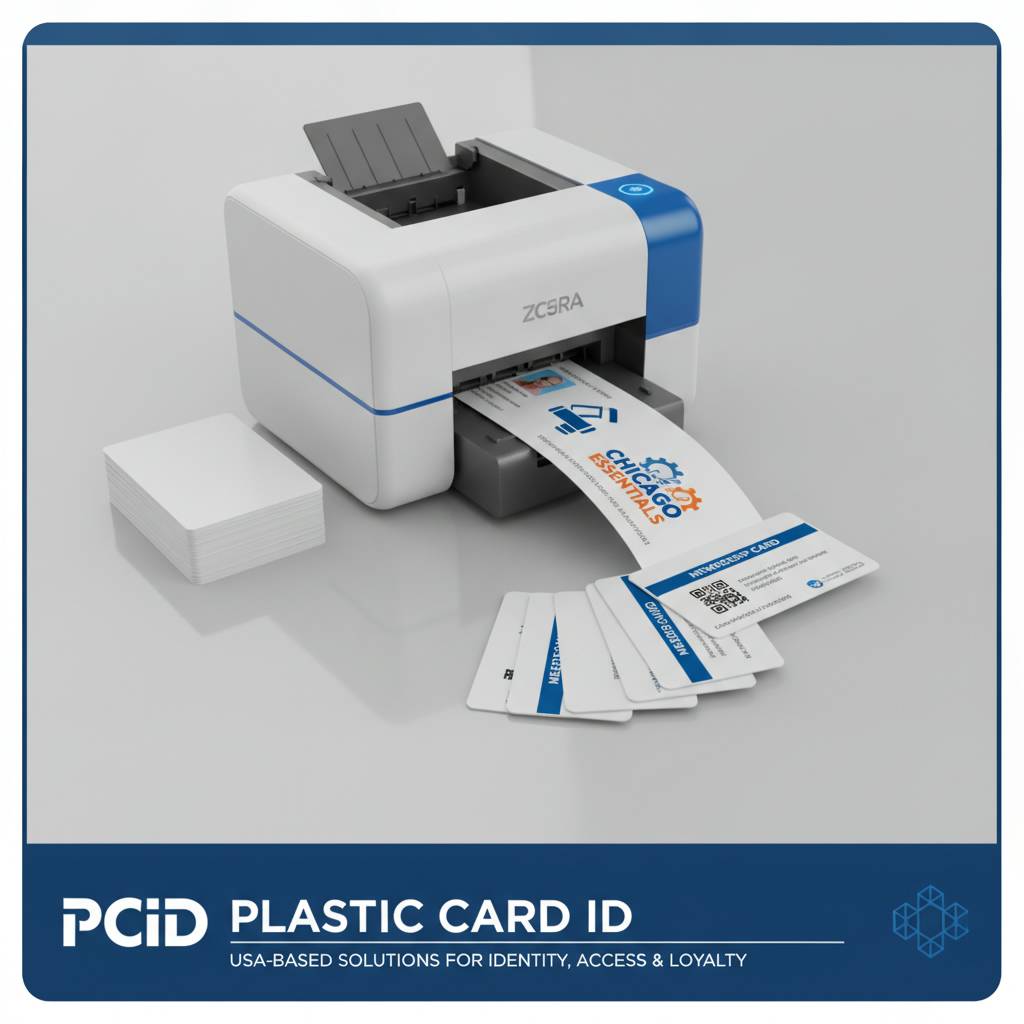 Walk into almost any hospital, university, or corporate campus in the United States and there's a solid chance the ID badges clipped to lanyards were printed on a Zebra card printer. That's not a coincidence - it's the result of decades of engineering precision, reliability-first design, and an ecosystem of supplies and software that just works. The question most organizations face isn't whether Zebra makes good printers. It's where to buy, what model fits, and how to keep the whole program running smoothly once it's live.
That's exactly where Plastic Card ID earns its reputation. With more than 25 years in the plastic card printing industry and over 100,000 customers served nationwide, CPE brings a depth of product knowledge that's genuinely hard to match. This isn't a warehouse shelf-stocking operation - it's a focused, experienced supplier that helps organizations find the right Zebra printer, the right ribbons, the right accessories, and the right workflow for their specific volume and use case.
A Legacy Built on Serious Card Printing Expertise
Most vendors can take an order. Far fewer can tell you the actual difference between a ZC300 and a ZC100 when your use case sits right on the edge of both models' capabilities. Plastic Card ID has been doing this long enough that nuanced guidance is part of the package - not an upsell.
The company's 25-plus-year history means they've watched card printing technology evolve from clunky, slow desktop units to today's sleek, high-throughput systems capable of producing crisp, edge-to-edge color IDs in under 30 seconds. That perspective matters when you're making a capital investment in a printer that needs to last.
Who Needs a Zebra Card Printer?
The honest answer: more organizations than you might expect. Zebra's card printer lineup serves a remarkably broad field - from small businesses printing employee access badges to large enterprises running centralized, high-volume ID issuance programs. Security-conscious environments especially benefit from Zebra's encoding options and durable card output.
Typical Zebra card printer users include corporate HR departments issuing employee IDs, hospitals managing staff credentials, universities printing student ID cards, hotels producing key cards, and event coordinators printing on-site credentials. If your organization depends on professional identity documentation, a Zebra printer is very likely in scope.
Why Zebra Stands Apart in the Card Printer Market
Zebra Technologies has built its reputation on durability, consistent print quality, and deep integration with access control and security systems. Their card printers are engineered with enterprise use in mind - they're not hobby tools. The ribbon and media systems are designed to minimize waste and maximize uptime, which matters enormously in high-traffic ID issuance environments.
Zebra printers also support a wide range of encoding options, from standard magnetic stripe encoding to smart card chip programming. For organizations where the card must do more than just display a face and a name, Zebra's encoding capabilities are a genuine differentiator. You get a finished credential that works with the physical security infrastructure you've already built.
| Model Tier | Best For | Volume Range | Key Features |
|---|---|---|---|
| Entry-Level (ZC100/ZC300) | Small offices, low-volume ID programs | Up to 1,000 cards/year | Color printing, compact design, USB connectivity |
| Mid-Range (ZC300 Dual-Side) | HR departments, universities, hospitals | 1,000 - 6,000 cards/month | Dual-sided printing, magnetic stripe encoding, Ethernet |
| High-Volume / Industrial | Enterprises, government, large institutions | 6,000 cards/month | Smart card encoding, lamination, high input hopper capacity |
Understanding the Zebra Card Printer Lineup
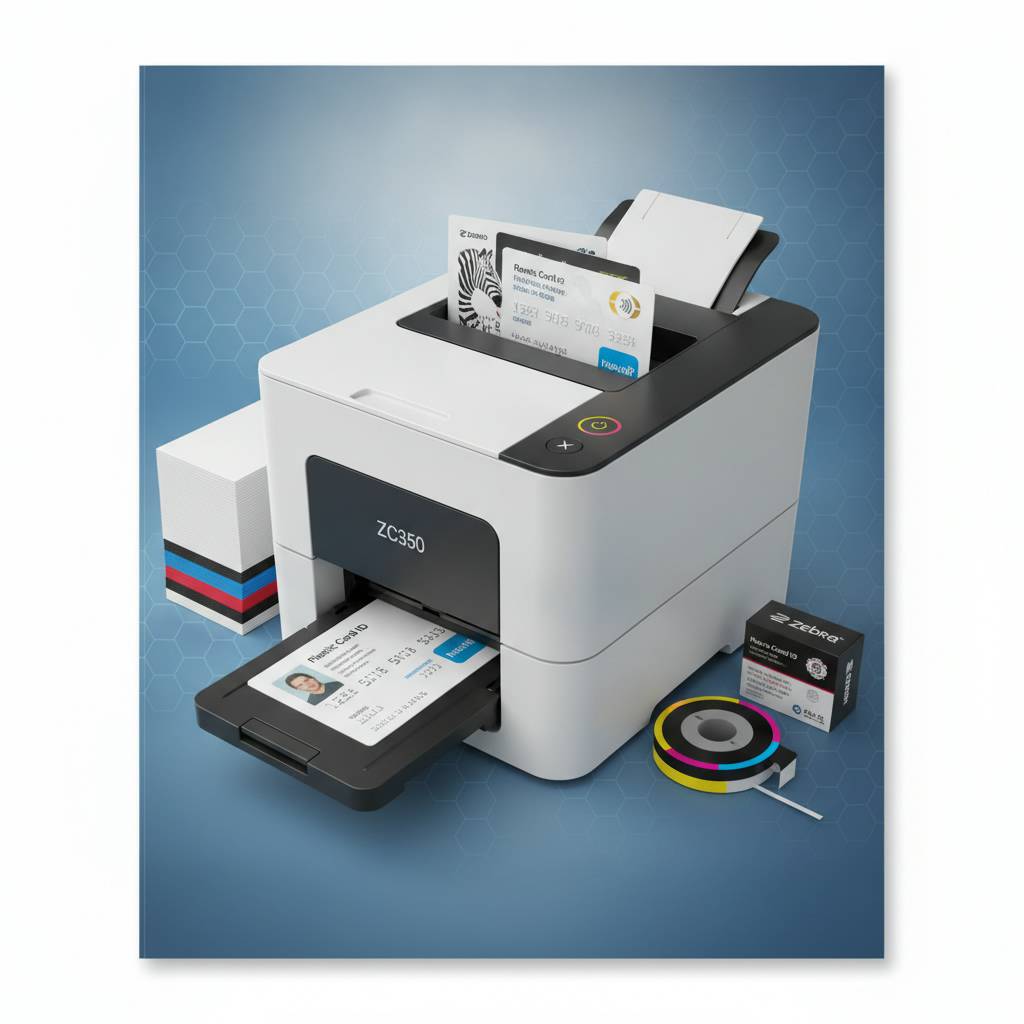 Zebra doesn't produce a one-size-fits-all product. Their card printer catalog is intentionally tiered, giving buyers clear pathways from entry-level to enterprise-grade equipment. Understanding where each model sits - and what it's optimized for - is the first step toward making a smart purchase rather than an expensive mistake. Plastic Card ID makes it a priority to help customers navigate that decision with clarity.
What separates a good card printer purchase from a frustrating one almost always comes down to matching volume requirements to hardware capability. Overspec'd hardware wastes budget. Underspec'd hardware means bottlenecks, breakdowns, and costly replacement cycles. Getting this right upfront is everything.
The ZC Series: Zebra's Core Card Printing Platform
The Zebra ZC series represents the company's mainstream card printing platform, and it's the product family most organizations encounter first. The ZC100 handles single-sided printing with a focus on simplicity and affordability, making it a natural fit for organizations that need color IDs without complex encoding. Clean output, reliable performance, and a compact footprint are the ZC100's calling cards.
The ZC300 steps things up considerably - dual-sided printing, optional magnetic stripe encoding, and Ethernet connectivity bring it into range for mid-size organizations running genuine ID programs rather than occasional print jobs. If you're printing employee badges, student IDs, or access control cards in meaningful volume, the ZC300 is a model worth serious consideration.
Security-Focused Features Worth Knowing About
One reason security administrators consistently gravitate toward Zebra card printers is the platform's native support for layered credential security. Magnetic stripe encoding allows organizations to link the printed card to access control databases - a door doesn't open just because a card looks right. Smart card encoding takes this further, embedding encrypted data on a chip that access readers can verify independently.
Beyond encoding, Zebra supports holographic lamination overlays that protect card surfaces from tampering and forgery. For organizations where credential integrity is non-negotiable, these features shift the Zebra printer from a "nice to have" to a core infrastructure component. CPE stocks the full complement of ribbons and lamination supplies to support these capabilities.
Connectivity and Software Integration
Modern card printing programs rarely operate in isolation. They pull employee photos from HR databases, verify enrollment against student information systems, or feed directly into access control platforms. Zebra card printers are built with this integration reality in mind. USB and Ethernet connectivity come standard on most models, and many support Windows-native print drivers that work seamlessly with popular card design software.
Whether you're running a standalone workstation or a networked issuance station that a dozen HR reps share access to, Zebra's connectivity options give you the flexibility to fit the printer into your workflow rather than rebuilding your workflow around the printer. That distinction matters more than most buyers initially realize.
The Full Supply Ecosystem: What Plastic Card ID Stocks Beyond the Printer
Buying the printer is only the beginning. A card printing program that runs reliably month after month depends on consistent access to the right consumables - the right ribbon for your use case, cleaning kits on a sensible maintenance schedule, and encoding supplies matched to your hardware. This is an area where many buyers underestimate complexity, and where CPE adds substantial value beyond the hardware sale.
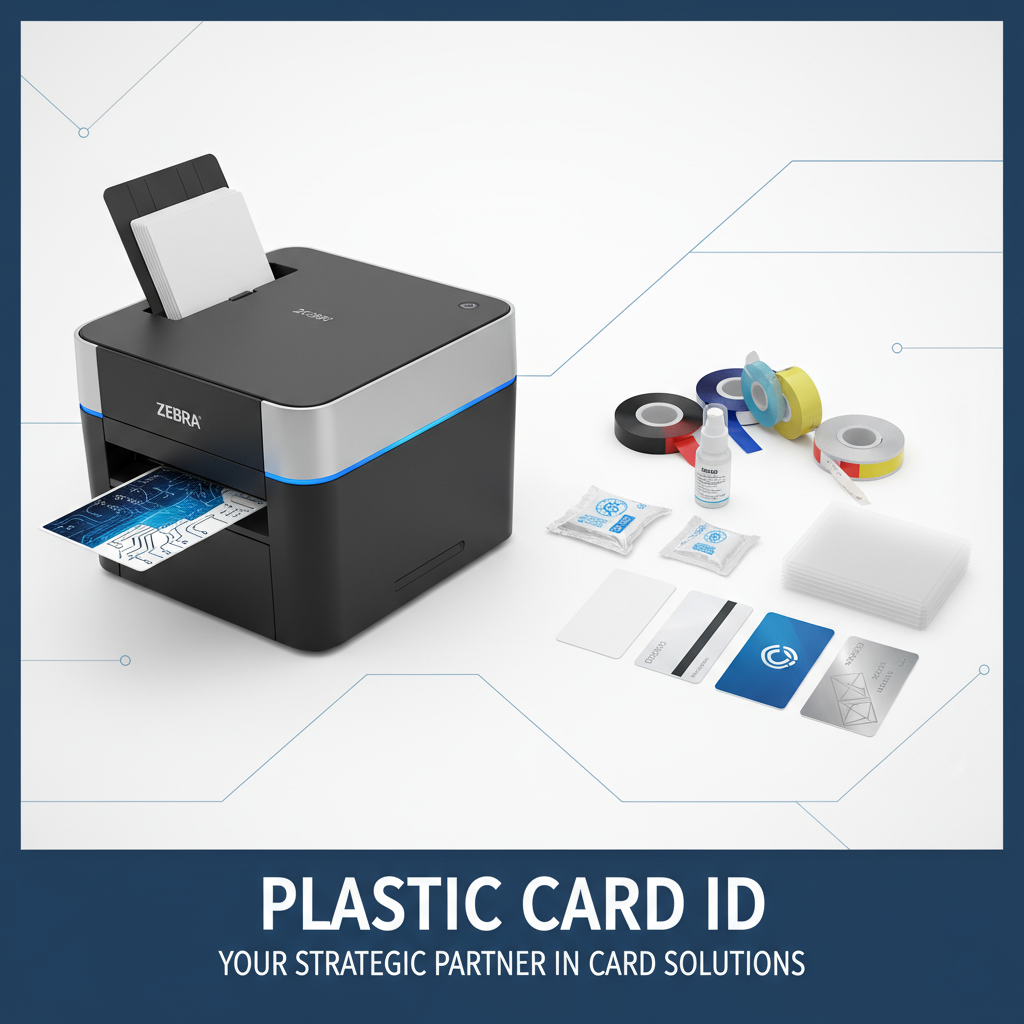
Running out of ribbon mid-batch, using the wrong cleaning kit, or skipping lamination supplies when your security policy requires overlay protection - these are the kinds of operational gaps that create real disruption. Plastic Card ID keeps a full range of Zebra-compatible consumables in inventory so you're never left waiting.
Ribbon Types and What They're Used For
Ribbon selection is one of the most misunderstood aspects of card printing. YMCKO ribbons - yellow, magenta, cyan, black, and overlay panels in a single cartridge - are the standard choice for full-color photo ID printing. They produce the kind of vibrant, professional output that makes a badge look like it cost more than it did. For programs printing only text or barcodes, monochrome ribbons in black, white, gold, silver, or other single colors offer a dramatically lower cost per card.
Specialty ribbons - including those with magnetic stripe encoding panels and security features - serve programs where the ribbon itself contributes to credential security or functionality. Choosing the wrong ribbon is a fast way to inflate your cost per card, which is why Plastic Card ID takes the time to help customers match ribbon type to actual use case before they order.
Cleaning Kits: The Maintenance Step Most Programs Skip
Card printers are precision devices with print heads that accumulate dust, card debris, and ribbon residue over time. Skipping regular cleaning doesn't just reduce print quality - it shortens the life of the print head itself, which is the most expensive component to replace outside of the printer body. Zebra recommends cleaning intervals tied to specific card volumes, and CPE stocks the manufacturer-recommended cleaning kits to support that schedule.
A cleaning kit typically includes cleaning cards and swabs sized for the printer's specific card path and roller geometry. Thirty seconds of maintenance every few hundred cards can add years to a print head's service life. That's not a small return on an inexpensive investment.
Encoding Upgrades, Hoppers, and Card Accessories
Some organizations purchase a base Zebra printer and later realize they need magnetic stripe encoding or smart card capability they didn't originally spec. Encoding upgrades - available as factory-installed or field-install modules depending on the model - extend what a printer can do without requiring full hardware replacement. Plastic Card ID can help you identify whether your specific model supports upgrades and source the right components.
Input hoppers increase the card capacity available for batch printing runs, reducing the need for an operator to babysit the printer through a large job. Card carriers and sleeves protect finished credentials during distribution. These aren't glamorous accessories, but they're the difference between a card program that runs smoothly and one that generates constant small friction. Contact Plastic Card ID at 800.835.7919 to discuss your full supply needs alongside your printer purchase.
Comparing Zebra to Other Leading Card Printer Brands
 Zebra isn't the only brand Plastic Card ID carries, and that's a deliberate choice. Evolis, Fargo, and Matica each bring something distinct to the table - and for certain use cases, one of those alternatives may actually be the better fit. Understanding the competitive landscape helps buyers make decisions they feel confident about rather than decisions they second-guess six months later.
The good news is that you don't have to do that comparison research alone. CPE carries all four major brands and can walk you through the real-world tradeoffs between a Zebra ZC300 and an Evolis Primacy2, for example, based on your specific volume, budget, and encoding requirements. That kind of side-by-side guidance is genuinely useful.
Zebra vs. Evolis
Evolis printers have a strong following in Europe and have built a loyal customer base in the United States as well. Their lineup spans from the entry-level Badgy200 - optimized for organizations printing fewer than 1,000 cards per year - to the premium Agilia, which delivers edge-to-edge output at the highest end of quality expectations. The Zenius and Primacy2 are particularly popular mid-range workhorses for 1,000 to 6,000 cards per month environments.
Zebra tends to edge out Evolis in security-focused enterprise environments, largely due to its deeper integration with access control infrastructure and a broader reseller support ecosystem in the United States. For organizations where IT and physical security teams are deeply involved in the printer selection, Zebra often wins on the compatibility argument. For design-forward or boutique ID programs, Evolis is a compelling alternative.
Zebra vs. Fargo
Fargo (now part of the HID Global family) has long competed directly with Zebra in the enterprise ID market. The two brands share significant overlap in terms of target customer profiles - both are popular in corporate, healthcare, and government environments where credential security is paramount. Fargo's DTC series printers are well-regarded for print quality and encoding versatility.
In practice, the choice between Zebra and Fargo often comes down to existing infrastructure. If your access control readers are already configured for a particular credential format that one brand supports better than the other, that compatibility consideration will likely be the deciding factor. Plastic Card ID carries both and can help you assess the fit.
Zebra vs. Matica
Matica occupies a distinct position in the market - their Event Printer is purpose-built for high-speed, on-site badge printing scenarios like conferences, trade shows, and large-scale events. If you're printing 500 credentials for a conference registration desk in under an hour, Matica's platform is purpose-engineered for exactly that. Zebra's mainstream lineup isn't optimized for that burst-printing scenario.
For day-to-day ID programs with steady volume, Zebra remains the stronger choice. The two brands aren't really head-to-head competitors - they serve different primary use cases. Understanding this distinction before you buy saves organizations from purchasing hardware that's technically capable but operationally mismatched to their workflow.
Choosing the Right Zebra Printer for Your Organization
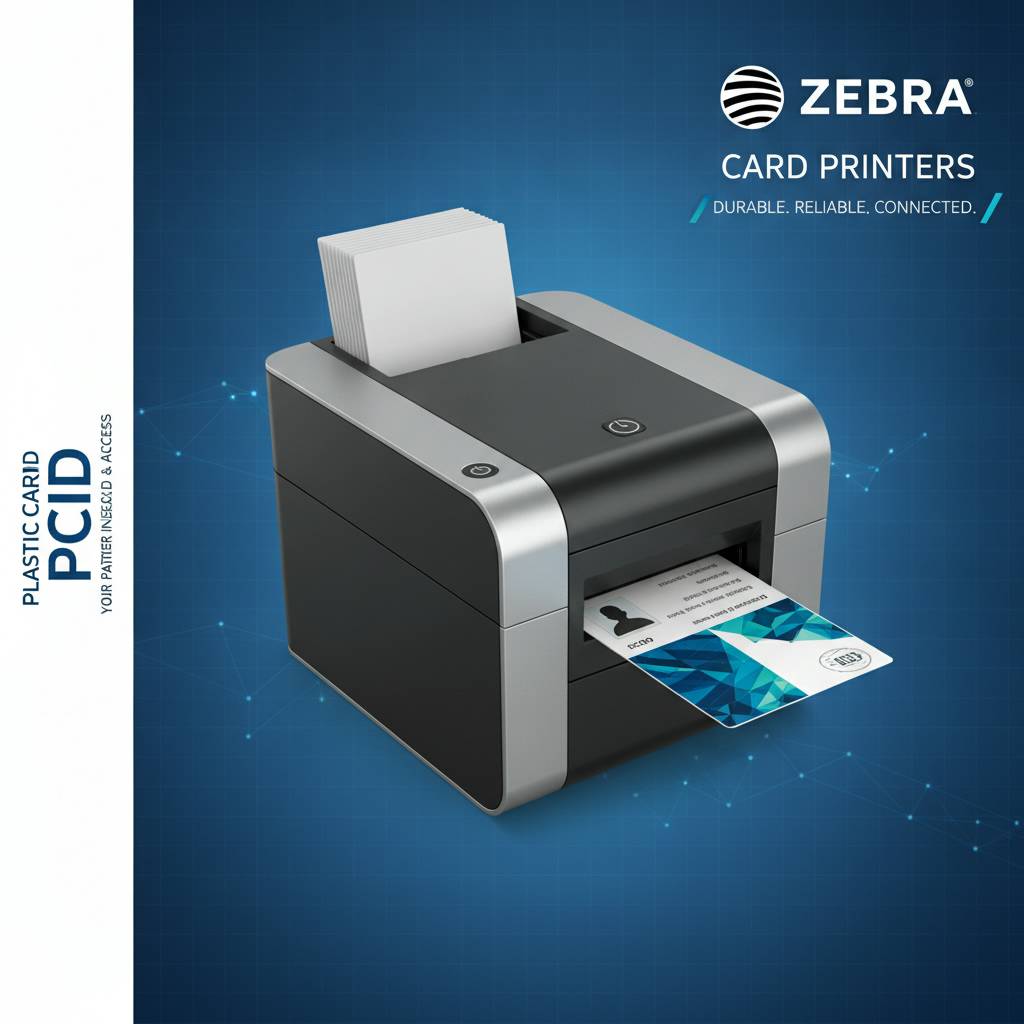 Here's a question worth sitting with before you browse model numbers: how many cards do you actually print in a month? Most organizations dramatically overestimate or underestimate this number when they're buying their first dedicated card printer. Getting close to the real figure is critical for matching hardware to workload - and for keeping your cost per card where it needs to be.
Beyond volume, encoding requirements and print quality expectations shape the decision significantly. An organization printing simple text-and-photo employee IDs has different needs than one issuing access control credentials with magnetic stripe data or smart chip encoding. Both scenarios have the right Zebra printer available - the key is identifying which one fits your reality.
Buyer's Checklist Before You Select a Model
- Annual card volume: Under 1,000 cards per year points toward entry-level; 1,000 to 6,000 per month points toward mid-range; higher volumes require industrial-class hardware.
- Single or dual-sided printing: Dual-sided printing is essential when the card back carries barcodes, contact information, or legalese.
- Encoding requirements: Magnetic stripe encoding, smart card chip encoding, or both? Confirm this before selecting a base model.
- Connectivity: USB-only works for single-workstation setups; Ethernet is required for networked issuance environments.
- Budget: Entry-level Zebra card printers typically start in the $300-$600 range; mid-range models run $600-$1,500; high-volume industrial systems can reach $2,000-$5,000 or more.
- Lamination: If holographic overlay or surface protection is required by your security policy, confirm the model supports lamination modules.
Common Use Cases and Recommended Approaches
Corporate HR departments issuing employee ID badges typically print a few hundred to a few thousand cards per year, often with magnetic stripe encoding for building access. A mid-range Zebra ZC300 with magnetic stripe encoding module and YMCKO ribbon is a natural fit for this profile. The dual-sided option is worth adding if the card back carries any variable data.
Universities and colleges face higher volume with more complex requirements - student IDs often double as library cards, meal plan cards, and access credentials. A dual-sided Zebra printer with both magnetic stripe and smart card encoding gives campus IT the flexibility to issue multipurpose credentials from a single platform. Larger campuses may need multiple printing stations or a high-volume central issuance setup.
What to Ask Before You Place an Order
The most expensive mistake in card printer procurement is buying hardware that doesn't match your actual workflow. Before placing any order, it's worth confirming a few things: Does your card design software support the specific Zebra model you're considering? Does your access control system require a particular encoding format? Will you need to print cards on demand, or in scheduled batches?
These aren't trick questions - they're the kind of operational details that determine whether a printer becomes a workhorse or a headache. CPE is set up to help you answer them before the purchase, not after. Reach out to the team before you commit to a model if any of these questions feel uncertain.
In-House Card Printing vs. Outsourcing: The Real Comparison
Some organizations still outsource card production to third-party print vendors - sending artwork files off and waiting days or weeks for finished cards to arrive. For low-volume, static programs where cards rarely change, that model can work. But for organizations that need to issue cards quickly, personalize each card individually, or maintain tight control over credential data, in-house printing is a fundamentally different capability.

The financial case for in-house printing gets stronger the higher your volume climbs. Vendor markups on personalized card runs are substantial, and lead times add operational risk. Owning your card printing infrastructure means you print when you need to, not when a vendor's schedule allows.
Control, Speed, and Confidentiality
When an employee starts Monday morning and needs a badge by 8 AM, an in-house Zebra card printer delivers. Waiting for an outsourced order to arrive is not an option in that scenario. On-demand printing eliminates the gap between credential issuance and employment start, which matters for security-sensitive environments where an employee without a valid badge is a genuine access control problem.
Credential data - photos, names, employee IDs, access levels - is sensitive by nature. Sending that data to a third-party print vendor introduces confidentiality exposure that many organizations' security policies explicitly prohibit. In-house printing keeps credential data on your systems, under your control, without ever leaving the building.
Long-Term Cost Analysis
The upfront cost of a Zebra card printer is real, but so is the cost-per-card math over time. At scale, in-house printing typically achieves a cost per card in the range of $0.50-$2.00 depending on ribbon type and whether lamination is used - significantly below what most outsourced vendors charge for personalized card production. The hardware pays for itself, and the ongoing consumable costs become the actual operating expense.
Organizations printing more than a few hundred cards per year should run this comparison honestly before defaulting to outsourcing. The breakeven point arrives faster than most buyers expect, and the operational benefits of on-demand printing exist independently of the cost argument. Together, they make a compelling case for in-house investment.
Get Your Zebra Card Printer from Plastic Card ID Today
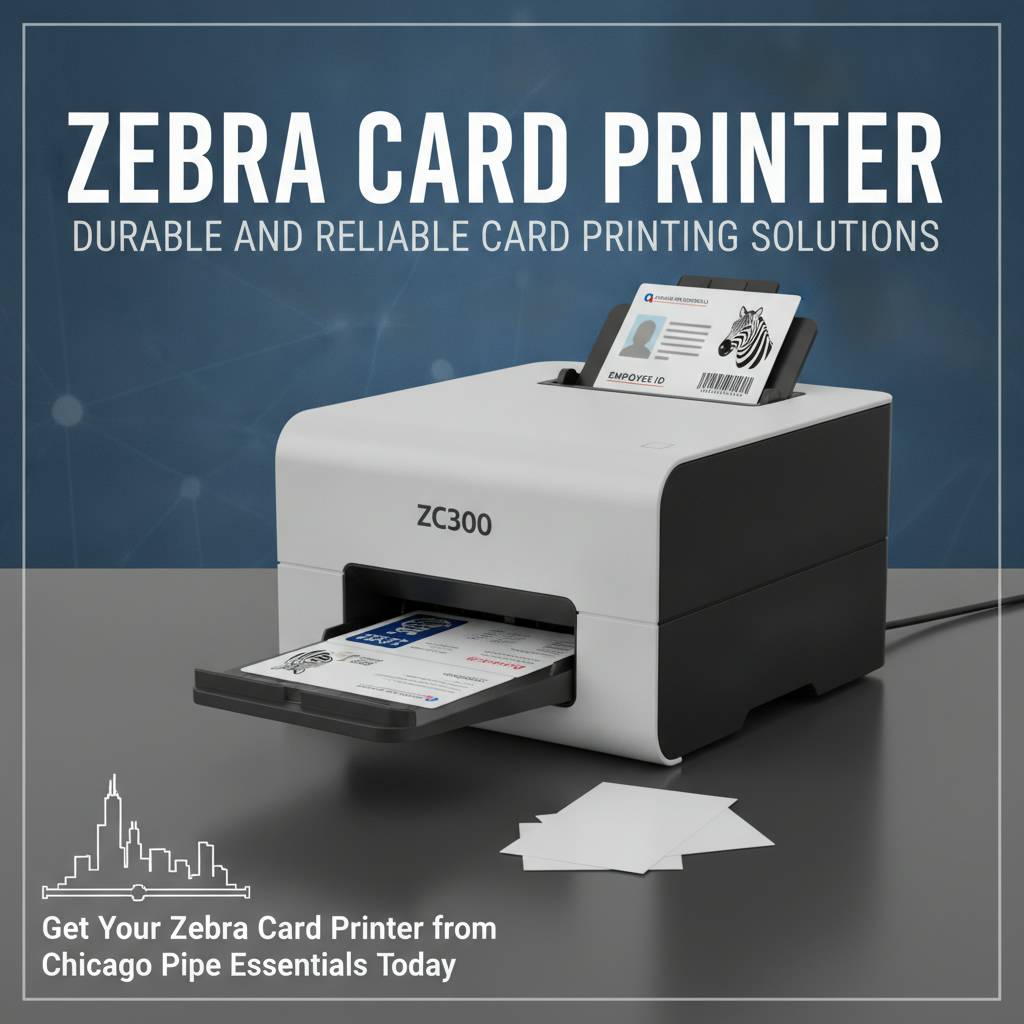 There's a reason Plastic Card ID has served over 100,000 customers across the United States over the past 25-plus years. The combination of a curated, professional-grade product lineup, deep product expertise, and a full consumable supply ecosystem creates a buying experience that's genuinely different from a generic online retailer. When you're making a hardware investment that will anchor your organization's ID program for years, that difference matters.
Whether you're buying your first Zebra card printer and need guidance on model selection, or you're an experienced card program manager looking to upgrade hardware and streamline your supply chain, CPE is equipped to help. The right printer, the right ribbons, the right accessories - sourced from one trusted partner.
Start Your Zebra Printer Inquiry Now
The fastest path to the right Zebra card printer for your organization is a direct conversation. The team at Plastic Card ID can help you narrow down models based on your actual volume, encoding needs, and budget - without the sales pressure to overspec. Call 800.835.7919 to speak with a card printing specialist who knows the Zebra lineup inside and out.
Every serious ID program deserves hardware that keeps up with demand, supplies that arrive reliably, and a supplier that knows what they're talking about. That's what Plastic Card ID delivers - consistently, professionally, and backed by a quarter century of focused expertise in plastic card printing.
Contact Plastic Card ID today at 800.835.7919 - your Zebra card printer program starts here.
Previous Page